
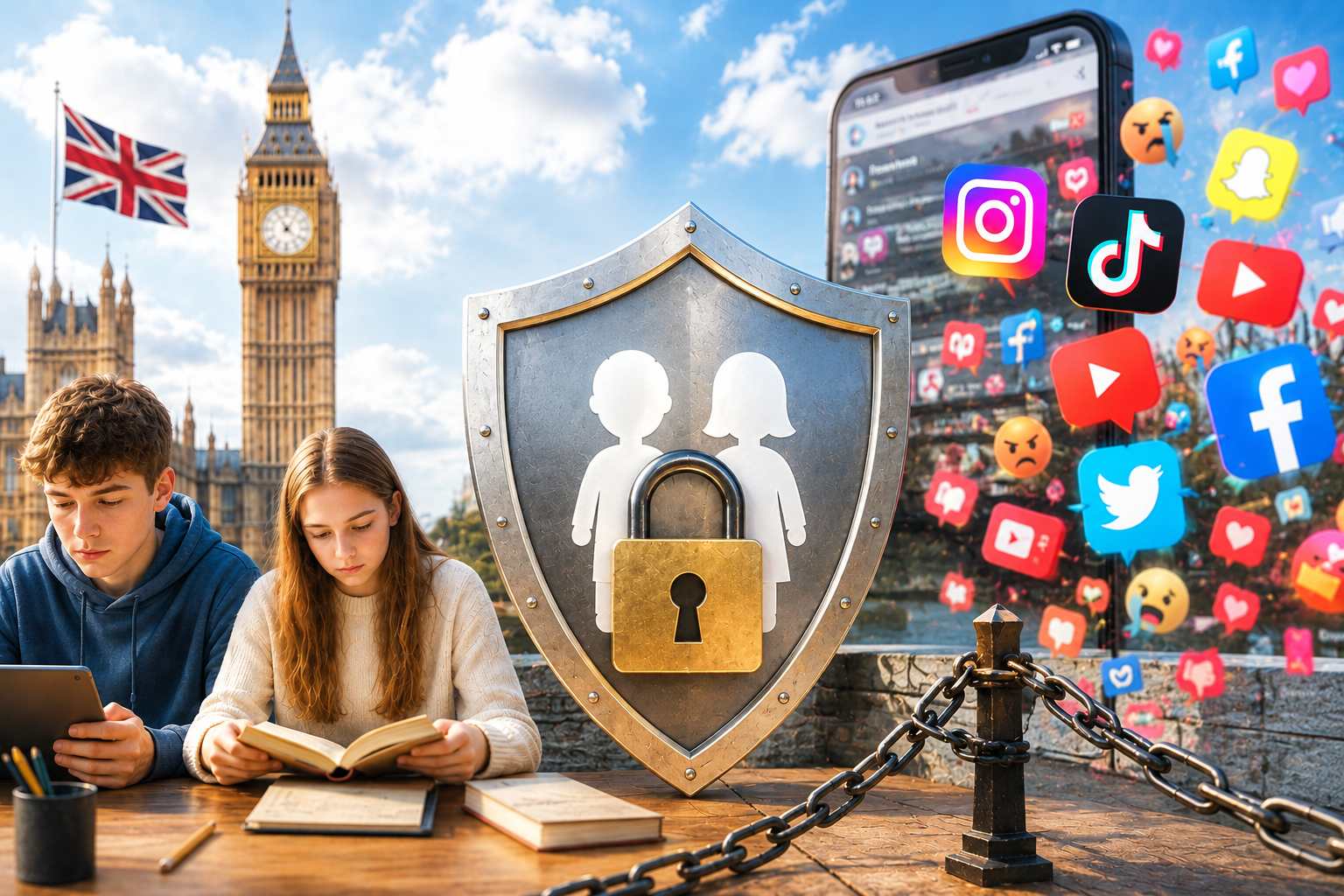
UK Prime Minister Keir Starmer has announced plans to ban users under 16 years old from major social media platforms, including TikTok, Instagram, Threads, Facebook, X, YouTube, Snapchat, and Reddit. The package also includes limits on minors accessing romantic and sexual AI chatbots, along with daily usage caps for under-16 users. Under the current timeline, the rules could take effect as early as spring 2027.
Government to use existing legal authority
The measure would be introduced under Section 70 of the Children’s Wellbeing and Schools Act by adding Section 214A to the Online Safety Act 2023, allowing ministers to draft the rules without starting a new legislative process from scratch. The government expects to put the proposal before Parliament by the end of 2026.
A public consultation drew about 116,000 responses, making it the second-largest public policy consultation in UK history. The findings showed that 44% supported a full ban on social media use for under-16s, while 39% favored even stricter controls. Culture Secretary Lisa Nandy said on the BBC that a ban on its own is not a “silver bullet” and needs to sit alongside education measures, platform accountability, and support for parents.
Age checks are central to enforcement
Enforcement is expected to hinge on age verification. Australia, which moved ahead with a similar ban in December 2025, exposed clear weaknesses after rollout. Survey data showed that three in five teenagers aged 12 to 15 were still able to access at least one restricted account by using VPNs or false birth dates. The UK government has identified closing those gaps as a core part of its own approach.
Reaction has split across advocacy groups and public bodies. The Molly Russell Foundation has expressed reservations, arguing that without effective age checks the policy could create only an “illusion of safety.” The National Education Union has taken the opposite view, backing a full ban and saying any softer option would amount to a concession to large tech companies. A child online safety coalition including 5Rights Foundation, NSPCC, and Girlguiding said age limits alone will not solve the problem, pointing instead to platform business models built around algorithmic promotion of harmful content.
Support for regulation does not equal trust in ministers
Polling points to another tension. IPPR found that 51% of respondents trust parents to decide how their children use social media, 49% trust independent regulators, and only 15% trust government ministers. That gap suggests the policy may still face resistance over who should enforce it, even where support for tighter controls exists.
If enacted on schedule in 2027, the UK would become the second major country after Australia to impose a statutory nationwide restriction on minors’ social media use. That would raise compliance pressure on TikTok, Meta, Google, and X. The companies have so far kept their public response muted, while regulatory pressure on youth online activity continues to expand across other major markets, including the EU and several US states.