
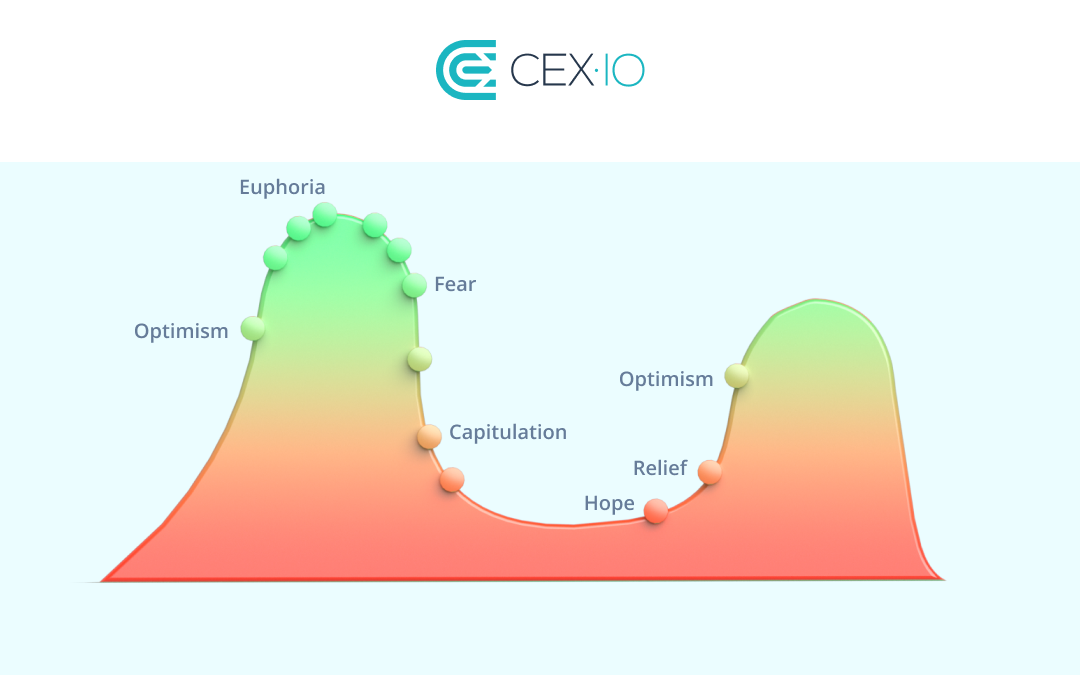
Financial markets do not move in a straight line. The source explains that stocks, commodities, currencies, and cryptocurrencies usually pass through four major cycles: accumulation, mark-up, distribution, and mark-down. For traders, identifying the current phase matters because it shapes whether the better choice is to buy, sell, or hold.
Accumulation begins while sentiment is still deeply bearish
In the accumulation phase, the market is usually forming a bottom. Prices may still be falling, but large investors do not build positions all at once. They buy gradually so they do not trigger a sharp spike. The article says this period is often dominated by extreme pessimism, negative headlines, and forecasts that prices could fall much lower. By that point, many retail participants have already sold, and some institutions may have turned short. On the other side of those exits, more experienced capital starts building positions quietly.
Mark-up starts once price structure turns higher
The mark-up cycle begins when the decline ends and price starts printing higher highs and higher lows. Sentiment shifts from bearish to mildly bullish, and the rising trend attracts speculators, trend followers, and retail buyers. The source also notes that financial markets can recover before the broader economy does, with money entering markets first while employment and the real economy react later. As the move continues, greed and fear of missing out push more buying into the trend, pullbacks become shallower, and the rally can accelerate.
Late in the advance, early buyers often start selling into strength. Each new peak can come with heavier selling pressure, and price action may turn choppier. Newcomers continue chasing the move while smart money locks in profits, creating a visible struggle between demand and supply.
Distribution can form quickly and reverse faster than many expect
Distribution is the stage where the market shifts from bullish to bearish. Sellers start taking control, and prices may move sideways for a time before the top is fully formed. According to the source, tops often form faster than bottoms, and a reversal can happen in as little as one month or even a few weeks. Traders may wait for confirmation from chart patterns such as a double top, triple top, head and shoulders, or a descending triangle.
Once those patterns confirm, the decline can be sharp. The article makes the point plainly: bears can destroy in one month what bulls built in three. Traders who failed to take profits may see positions slide from gains to break-even or losses. If the sell-off keeps going, fear replaces optimism and more participants rush to exit.
Mark-down ends in capitulation and sets up the next cycle
During the mark-down phase, panic selling becomes more complete. Investors still holding losing long positions often capitulate near the end of the decline, closing trades after extended pain. That is also the point where more seasoned investors begin accumulating again, preparing for the next cycle.
The source mentions bottoming patterns such as the double bottom, triple bottom, inverse head and shoulders, and ascending triangle as possible signs that the slide is giving way to accumulation. When mark-down transitions into accumulation, the prior downtrend is likely exhausting itself and the opening stage of a new uptrend starts to take shape.
Cycle length depends on the time frame
The article does not assign a fixed duration to any market cycle. Instead, timing depends on the trader’s chosen horizon. A day trader may observe a full cycle within days, while a long-term investor may view an uptrend across two to three years and a downtrend over about one year. Even then, the source treats those numbers as rough references rather than rules.
The central message is simple: markets rotate through rising and falling phases again and again. Uptrends are made up of accumulation and mark-up, while downtrends consist of distribution and mark-down. The practical edge does not come from calling the exact top or bottom, but from recognizing the phase that is already in progress and aligning decisions with that dominant direction.