
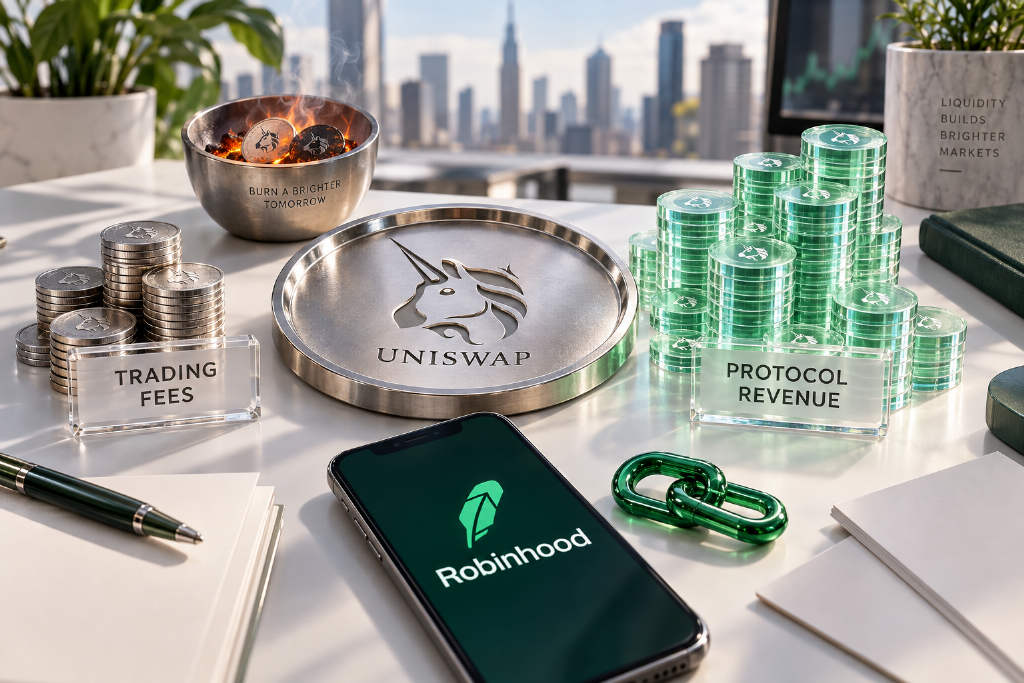
Uniswap’s fees rose 129% over the past 30 days, while protocol revenue climbed 165%, a faster pace than fee growth itself. In the source article, Lanhu Biji says that points to improving protocol take-rate efficiency rather than volume growth alone.
Why protocol revenue outpaced fees
Every trade on Uniswap generates fees. Previously, most of those fees went directly to LPs, or liquidity providers, and the protocol did not take a share. Under that setup, UNI mainly functioned as a governance token and did not directly capture value.
That changed late last year, when UNI turned on the protocol fee switch. Since then, the protocol has been taking a portion of trading fees, creating a direct source of protocol revenue.
If the only change were higher trading volume, fee growth and protocol revenue growth would usually move at roughly similar rates. This time, though, protocol revenue rose 165%, clearly ahead of the 129% increase in fees. The article attributes that gap to a broader set of pools now charging protocol fees. More pools across more chains and more Uniswap versions have started sending part of fees to the protocol, and more of the incremental trading activity is happening in those fee-enabled pools.
Robinhood Chain is singled out as a major driver.
How the revenue is tied to UNI burns
The article says the revenue is not distributed directly. Instead, it is routed into a UNI burn process built around TokenJar:
- Fees are accumulated in TokenJar.
- Users swap UNI for the assets that have built up there.
- The UNI spent in those swaps is permanently burned.
Under that structure, more trading activity means more protocol revenue and, in most cases, more UNI burned.
Robinhood Chain’s tokenized stock flow
The article adds that Uniswap has settled a cumulative $2.6 billion in tokenized stock trading volume on Robinhood Chain and has captured nearly all such stock trading on that chain. It presents that activity as one of the main reasons protocol revenue has been rising faster than fees.
The piece was written by Lanhu Biji. The original page also states that the article reflects the columnist’s views, not PANews’ position, and does not constitute investment advice.