
Uniswap has formally entered the token launchpad business on Robinhood Chain. At 00:00 on Aug. 6, the protocol rolled out pools.trade, opening token issuance and trading on the network. The platform supports auto-compounding liquidity, permanently locked liquidity and anti-sniping protections. It does not charge an extra launchpad fee, keeping only the standard 0.25% LP fee used by Uniswap v4 pools, while creators can choose to take 0.05% as income. Users can create tokens through either a crowdfunding launch or an instant launch model.
Volume passed $150 million on the first day
After going live, pools.trade quickly became the most active launch venue on Robinhood Chain. According to Dune data cited in the report, Uniswap v4 trading volume on Robinhood Chain reached about $73.6 million on the first day of the rollout, surpassing Ethereum mainnet’s roughly $47.2 million.
On Aug. 6, Uniswap founder Hayden Adams said publicly that cumulative trading volume on pools.trade had already topped $150 million. Part of that activity came before the official user interface was released, when some users traded through an earlier smart-contract version. Adams also said the product remains in beta and that the team will continue shipping upgrades and optimizations.
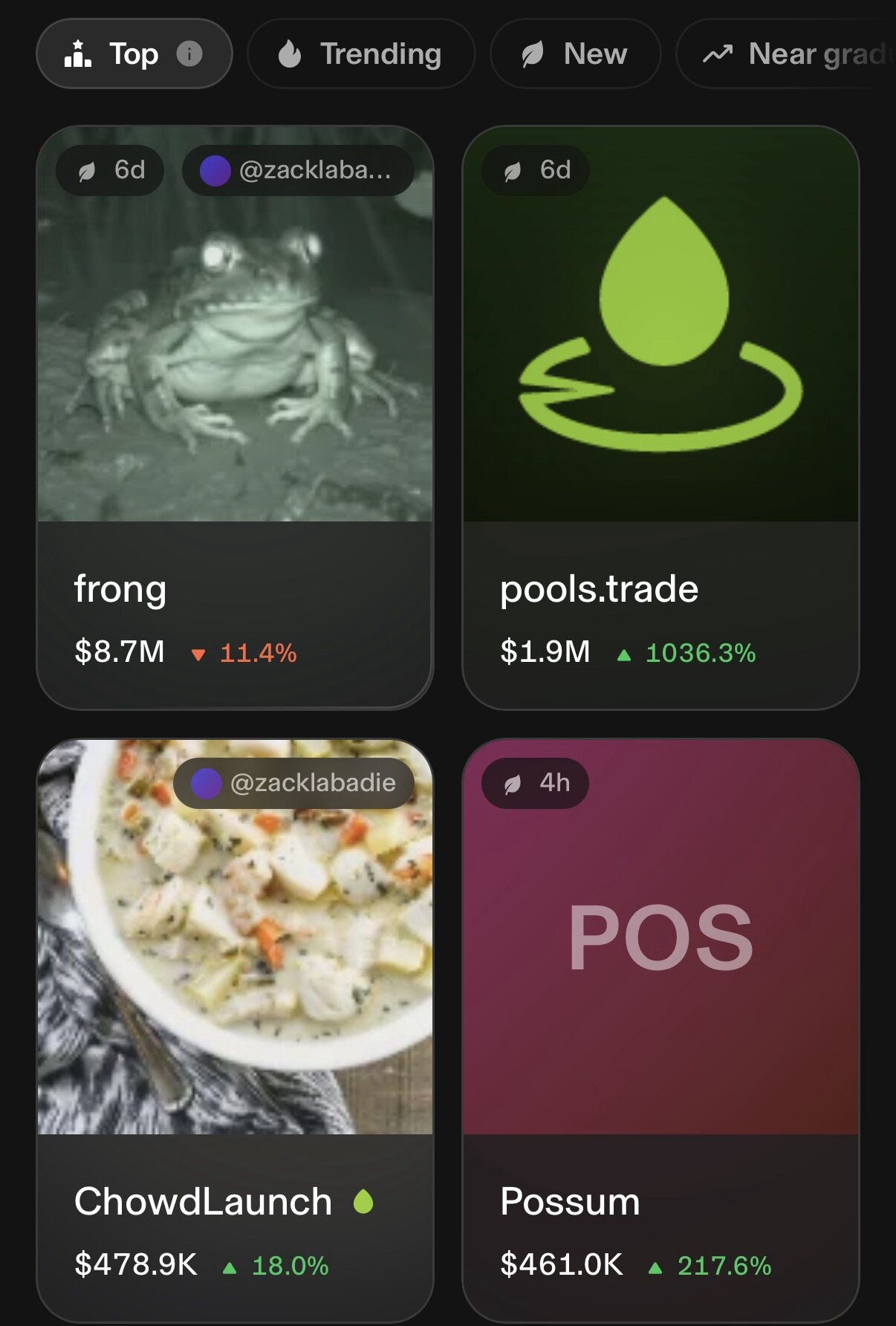
By press time, two tokens in the pools.trade ecosystem had already moved above a $1 million market cap. FRONG was valued at about $8.7 million, with 24-hour trading volume of $30.8 million and about 12,300 holder wallets. The pools.trade token was valued at about $1.9 million, with roughly $15.3 million in 24-hour volume and around 6,580 holder wallets.
Robinhood Chain metrics shifted with the launch
Uniswap’s revenue mix on Robinhood Chain also changed after the launch. As of Aug. 6, Uniswap’s on-chain revenue on Robinhood Chain stood at about $187,000, versus about $65,000 on Ethereum mainnet. The former was nearly 300% higher than the latter.
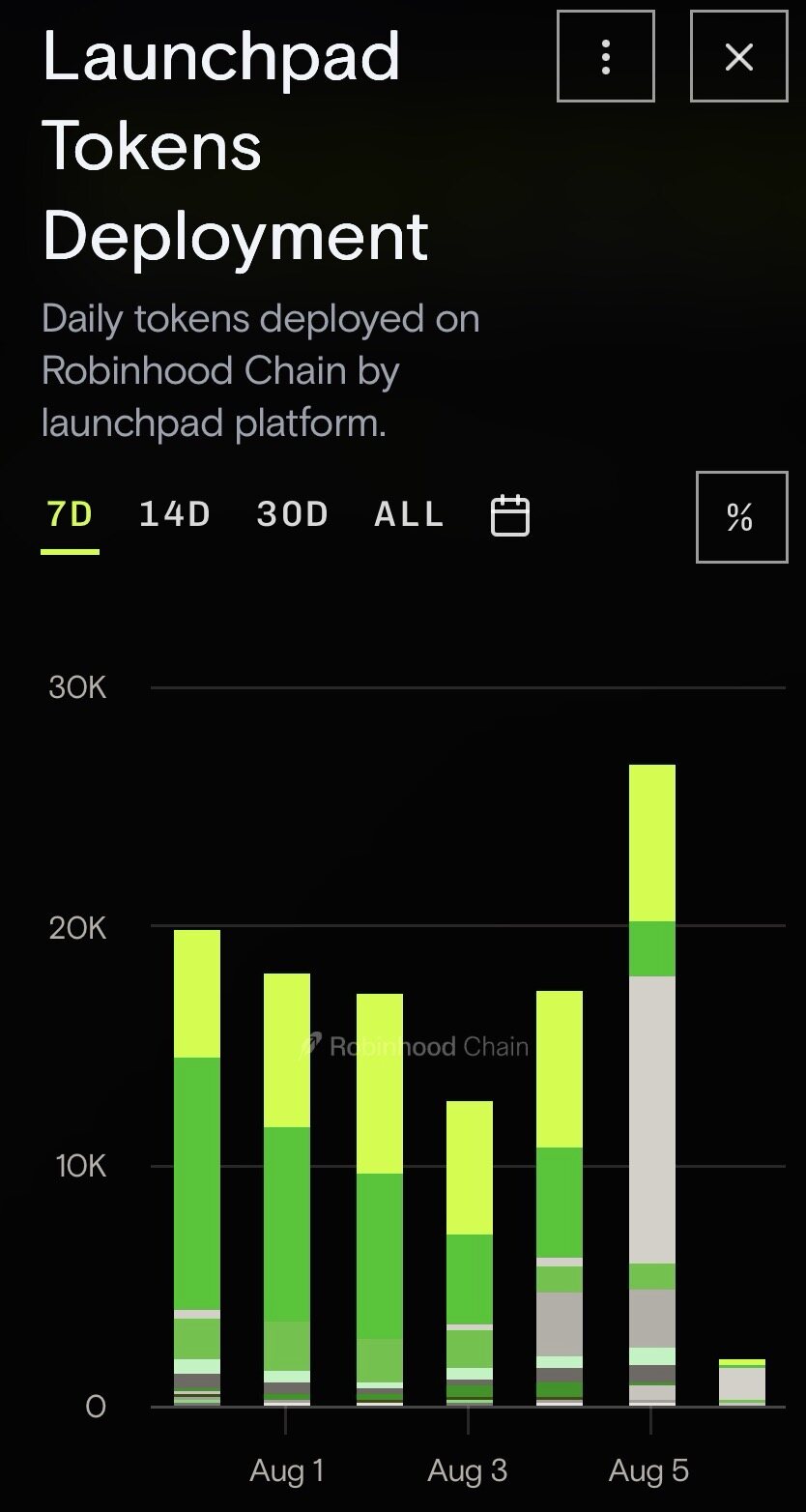
Token launch figures offered another view of the changing competitive picture. On Aug. 4, Uniswap launched 457 tokens, compared with about 6,500 on Flap, about 4,600 on Pons and about 2,600 on Pons v2. By Aug. 5, Uniswap’s count had surged to 12,000, while Flap stayed near 6,500, Pons was around 2,200 and Pons v2 around 2,500. On that daily measure, Uniswap’s launch count exceeded the combined total of those three rivals.
Why Uniswap moved into launchpads now
The report frames the move as an attempt by Uniswap to extend its reach from execution into the user entry point for token creation on Robinhood Chain. DefiLlama data shows Meme token trading has been highly active on the chain since launch. Total value locked is currently about $433 million, while DEX trading volume over the last 24 hours is about $550 million.
Within that market, Uniswap handles more than 90% of trading and liquidity provision on the chain. Over the past 24 hours, Uniswap generated about $2.15 million in fees there, far above the roughly $355,000 recorded by Pons V1. Even with that dominance at the trading layer, token issuance had previously been controlled by third-party launchpads such as Flap and Pons. In that setup, Uniswap largely served as backend infrastructure rather than a direct gateway for creators and early traders.
Robinhood Chain has many launchpads, but only a small number have reached meaningful scale and brand recognition. The report says capital strength has been the main dividing line. Flap arrived with an existing reputation from BNB Chain, giving it a built-in user base and brand credibility when it expanded to Robinhood Chain. That helped it kick-start network effects on both sides of the market. Pons, by contrast, drew attention through the performance of its platform token PONS. On July 27, PONS briefly climbed above a $55 million market cap, and that wealth effect helped it gather a sizable base of creators and traders. Smaller launchpads, lacking both brand support and capital strength, have struggled to compete with leading platforms on user acquisition costs and liquidity incentives.
Distribution reach and lower fees are central to the pitch
Uniswap’s entry raises the competitive bar. As one of the largest protocols in decentralized trading, it brings millions of existing users, deep integrations with major wallets such as MetaMask and Ledger, and distribution across trading APIs and aggregators.
Adams said pools.trade was connected from day one to the Uniswap web app, wallet, trading API, Bitget, Fomo, GMGN and OKX Wallet, among other ecosystem entry points. The platform does not charge an additional launchpad fee and keeps only the standard 0.25% LP fee, below the roughly 1% commonly seen on competing launchpads. All LP fees are automatically reinvested into locked liquidity pools, with 80% going back into compounding and 20% allocated to creators. The report also notes that UNI rose about 5% on Aug. 5, which it described as an initial market response to Uniswap’s move into launchpads.
Fee structure has become a flashpoint in the community
As pools.trade gained attention, its fee design became the focus of a heated debate. Some users argued that a 0.25% LP fee is far friendlier to traders than the roughly 1% often charged by similar platforms and can materially cut trading costs. Others, including creators and community members, pushed back, saying the structure is not creator-friendly and describing it in some cases as “more extractive” or “anti-builder.”
The main criticism centers on the reduction in creator income. One community comparison cited in the report suggested that at $1 million in trading volume, a creator on another launchpad charging about 1% could receive around $6,000 in revenue share, while under pools.trade’s 0.25% structure the creator might receive only about $500.
Some critics also said a native Uniswap launchpad could squeeze third-party platforms such as Pons and Flap, both of which have long relied on Uniswap liquidity. In that view, it is unfair for the protocol itself to compete directly with ecosystem projects built on top of it. Others argued that the low-fee model itself shows limited support for ecosystem builders, questioning whether Uniswap has the same commercial posture as platforms such as pump.fun, which they say scaled by leaning on higher fees.
Hayden Adams says higher launchpad fees amount to hidden extraction
Adams addressed the criticism on X on Aug. 6. He said the 1% liquidity pool fee used by some token launch platforms amounts to roughly a 2% bid-ask spread and serves as the main mechanism for extracting revenue. In his view, that raises trader costs and makes the initial liquidity pool less efficient as a token grows.
He said pools.trade’s 0.25% fee and auto-reinvestment model are better suited to supporting long-term liquidity growth. Responding to concerns about creator earnings, Adams added that launchpad liquidity often comes from locked assets acquired at zero cost, so there is no price risk that would justify high fees as compensation. Under those conditions, he argued, high fees are effectively a hidden tax that sacrifices trader interests to subsidize creators and platforms. The approach at pools.trade, he said, is to reduce friction, expand trading scale and let both creators and traders benefit from deeper liquidity pools.