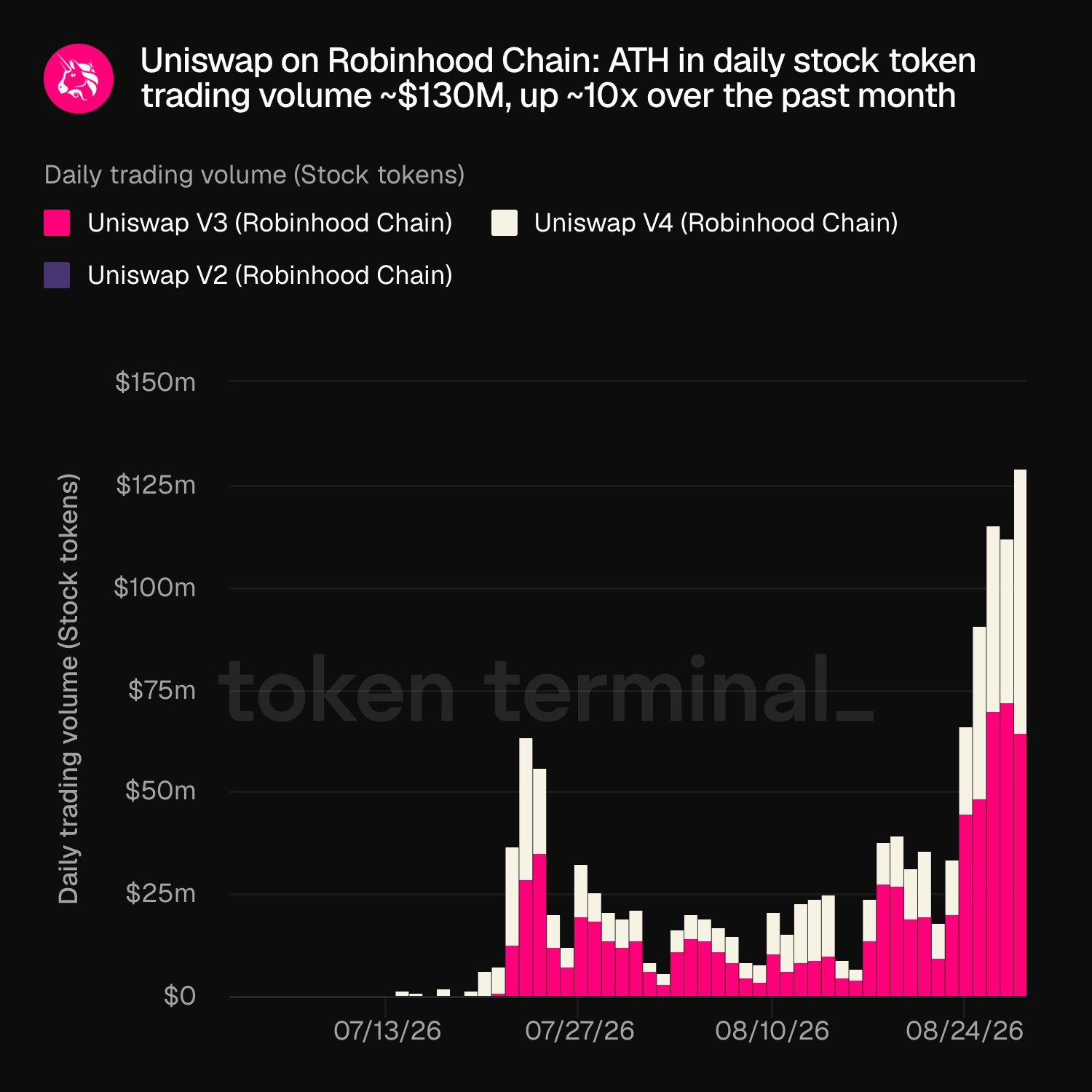
Uniswap’s daily stock-token trading volume on Robinhood Chain has climbed to about $130 million, a record high and roughly 10 times the level from a month ago. On Aug. 31, UNI briefly moved above $5.4, marking its highest price since January 2026.
UNI had fallen to $2.31 in June before rebounding. It is now up more than 100% over the past three months. During the 2020-2021 DeFi boom, Uniswap was one of the most prominent decentralized exchange protocols. In the current cycle, however, market attention had faded and the token spent a long period in a weak range.
Robinhood Chain launch lifted Uniswap activity and revenue
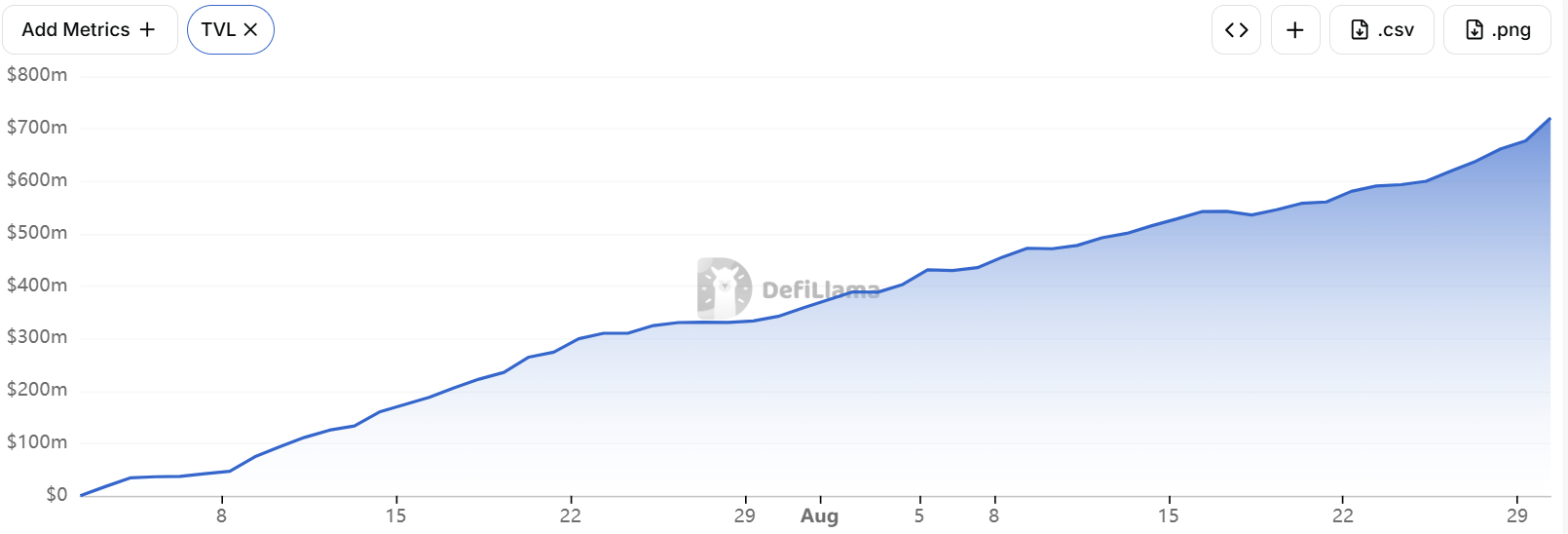
Robinhood Chain mainnet went live in July. As of Aug. 31, data from DefiLlama showed total value locked on the chain had risen above $700 million.
Uniswap said v2, v3, v4 and UniswapX were the public primary AMM on Robinhood Chain from the chain’s first day, with web, wallet and API access available at the same time.
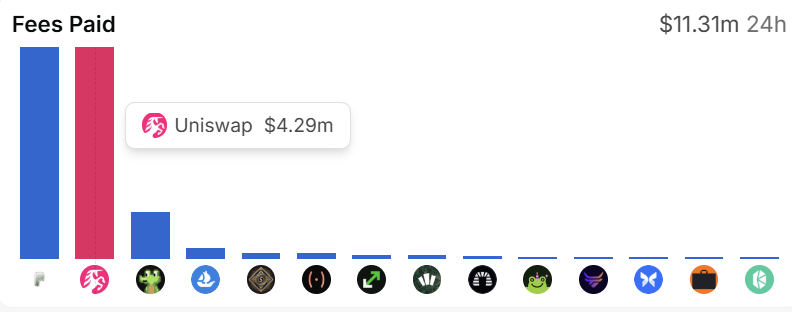
The latest figures show Uniswap generated $4.29 million in revenue over the past 24 hours. That accounted for nearly half of Robinhood Chain’s fee revenue over the same period, second only to token issuance platform Pons and well ahead of other rivals.
Token Terminal provided another data point cited in the report: Uniswap’s daily stock-token volume on Robinhood Chain reached a record of about $130 million, up roughly 10x over the past month. Volume on v3 and v4 was almost even.
UNI burn activity has expanded
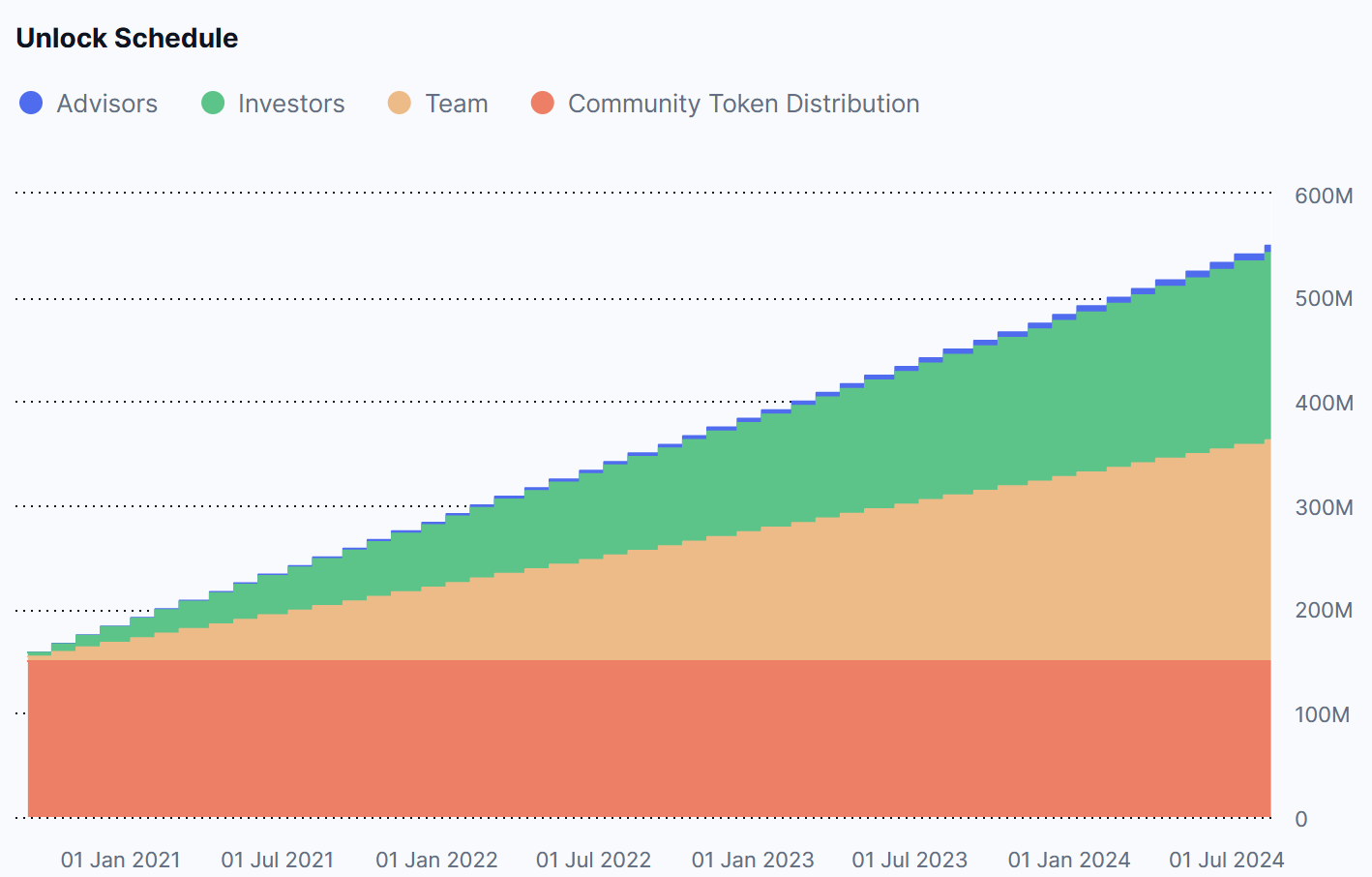
UNI was fully unlocked in 2024, yet the token’s price performance remained muted for a long stretch.
Uniswap pools have always generated fees. From 2020 through the end of 2025, nearly all of that income went to liquidity providers, while UNI was mainly used for governance voting. The protocol could produce hundreds of millions to more than a billion dollars in annual fees, but the token itself carried no cash flow. That is the backdrop for the years-long debate over the fee switch.
In December 2025, a final vote on UNI tokenomics passed. The key measures included burning 100 million UNI after a voting window of about two days and turning on the protocol fee switch.
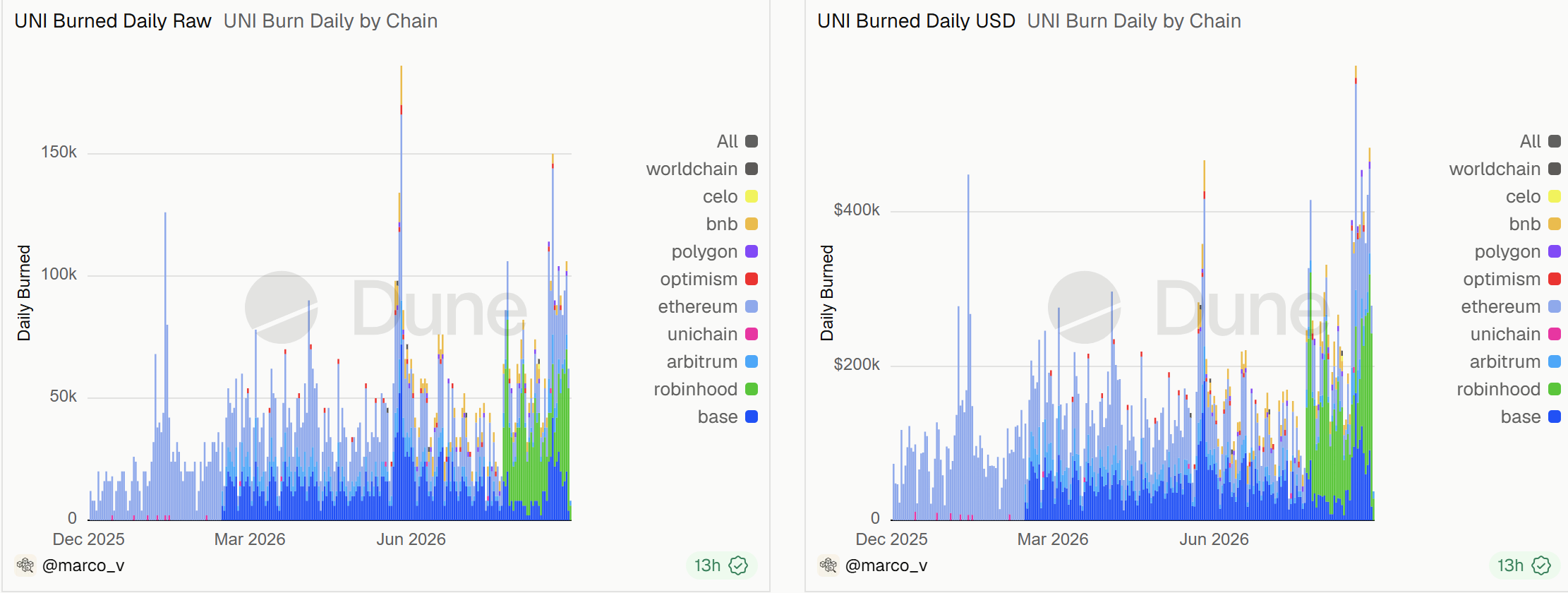
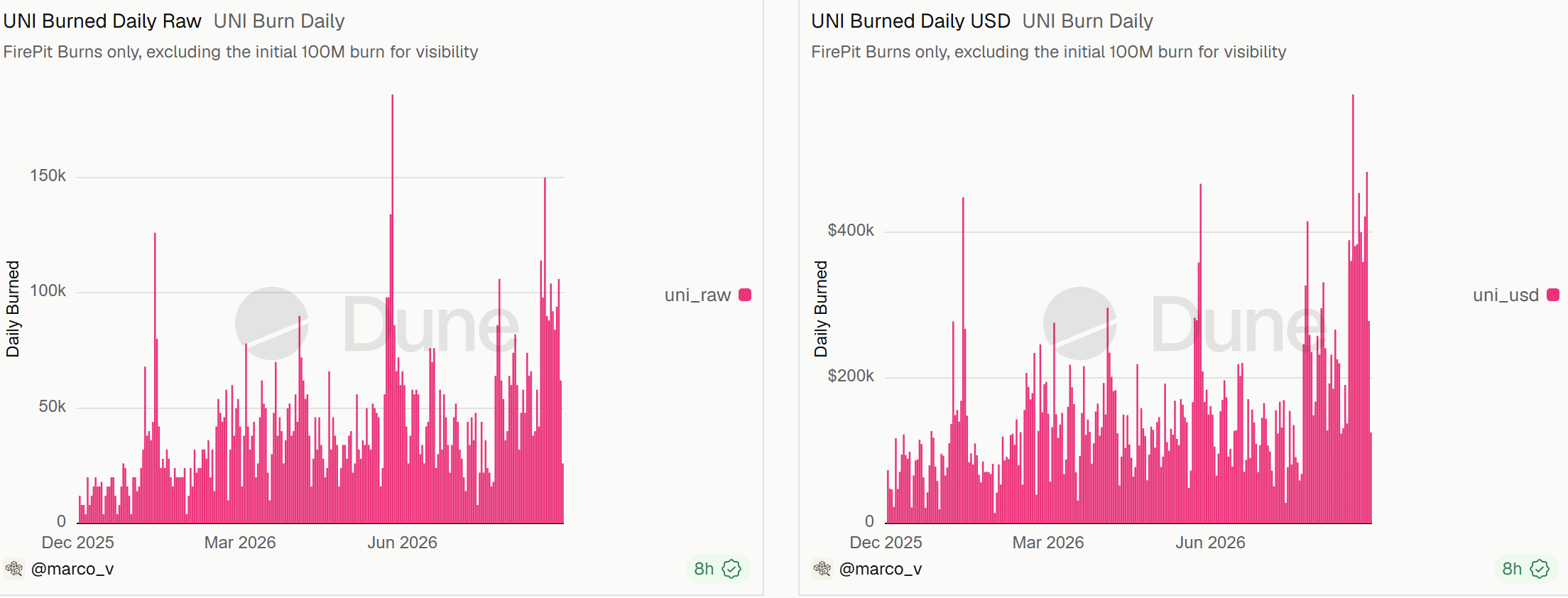
The latest Dune data showed that as of Aug. 31, cumulative UNI burns had reached about 110 million tokens, with a total burn value of $630 million.
Since the start of August, UNI has recorded multiple days with burns above 100,000 tokens. Average daily burn value has topped $400,000, and Robinhood Chain has contributed nearly half of that amount.
How the Firepit mechanism works
The report says UNI burns are not a simple process of buying back UNI with assets such as USDT or USDC.
Most fees collected in Uniswap pools still go to liquidity providers, while the protocol only takes a small share. On Robinhood Chain, that share is about 6%, according to the article. Instead of flowing into Uniswap Labs’ bank account, the assets are sent to a contract called TokenJar. That contract can hold ETH, stablecoins, altcoins and stock tokens, depending on what each pool collects in fees.
Anyone who wants to withdraw those assets from TokenJar must first burn an equivalent value of UNI. This step is called Firepit.
Arbitrage bots monitor the net asset value inside the TokenJar contract in real time, burn an equivalent amount of UNI to extract the fee assets, and then sell those assets on the secondary market to complete what the article describes as risk-free arbitrage.
The article argues that stronger on-chain trading activity increases the value the protocol can capture, which then gives more arbitrageurs an incentive to burn UNI and redeem that value. In that framing, the setup creates a deflationary loop for UNI. The piece describes it this way: the team has turned a “corporate buyback” into an “on-chain auction of protocol revenue.”
Dune data cited in the report shows burn figures are still rising steadily.
Why Robinhood Chain matters for Uniswap
The article says Robinhood chose to route non-U.S. retail users and stock tokens to a public AMM instead of keeping them only in its own RFQ system. It links that choice to two considerations: cutting the cost of running in-house market makers and avoiding strict U.S. Securities and Exchange Commission scrutiny over tokenized securities listed by traditional brokerages. Within that setup, Uniswap holds a key position on Robinhood Chain.
Under the thesis laid out in the report, trading volume on Robinhood Chain can translate into a steady net reduction in UNI supply, which then supports the token’s price. For Uniswap, the arrangement introduces external revenue to support a deflation model after years of criticism that UNI had zero cash flow. For Robinhood, it provides a settlement layer with substantial depth and a decentralized structure for handling stock tokens.
The article ends by saying TradeFi and DeFi are moving into deeper integration.