
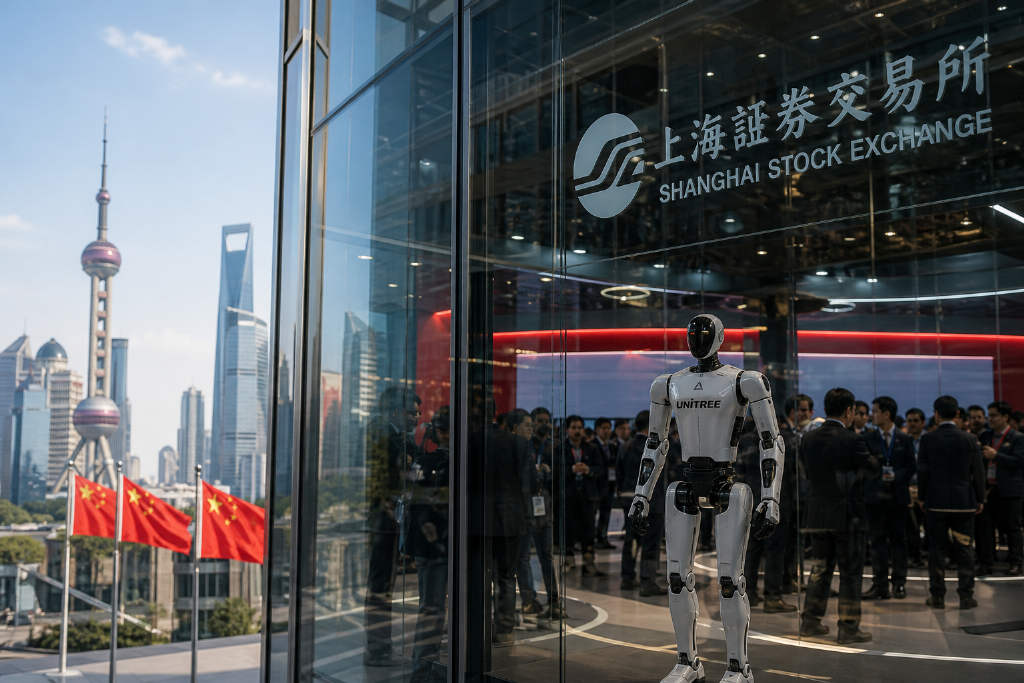
Unitree Technology began trading on Shanghai’s STAR Market on Aug. 19, formally bringing the label of A-share’s first humanoid robot company into the public market. The stock opened at 1,100 yuan, up 629.44% from its 150.80-yuan offering price. Its market capitalization briefly reached 445 billion yuan.
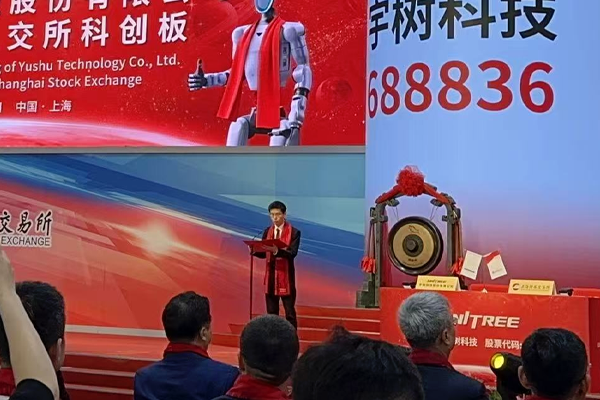
By the time the source article was written, Unitree was trading around 892 yuan, with a market value of about 361 billion yuan, a turnover rate of 55.25%, and trading volume above 15.3 billion yuan. The IPO was also one of the year’s biggest retail subscription wins in China’s equity market: one lot of 500 shares generated paper gains of about 475,000 yuan at one point, roughly 6.3 times the subscription principal.
A market-implied valuation range of 350 billion to 450 billion yuan
Debate around Unitree’s fair value started before the shares were listed. The source says Odaily had previously compiled a range of market views in an earlier article focused on how much the company might be worth after the IPO. In hindsight, one of the more aggressive estimates turned out to be closest to actual pricing.
Yu Wenchao, an early Unitree investor and partner at Dunhong Asset, had said: 「A post-listing market cap above 200 billion yuan is reasonable. I think it could even exceed 400 billion yuan in the short term. Compared with overseas peers, that would not be exaggerated.」 Based on the intraday peak near 445 billion yuan and the later level above 360 billion yuan cited in the story, the article says the market has effectively lifted Unitree’s plausible valuation range from an earlier 200 billion to 250 billion yuan to around 350 billion to 450 billion yuan.
High valuation, low float: a structure that amplified the first-day move
The article attributes Unitree’s surge to more than enthusiasm for humanoid robots. It also points to a classic “high valuation, low float” setup, something it compares with certain crypto projects as well as marquee IPOs such as SpaceX and CXMT.
According to information disclosed by the Shanghai Stock Exchange, Unitree priced its offering at 150.80 yuan per share. Post-IPO, the company had total share capital of 404 million shares. Of those, 30.0877 million shares were freely tradable at the initial stage of listing, equal to 7.44% of the total. At the issue price, the company traded at 35.89 times 2025 diluted static price-to-sales, above the average of comparable companies.
The subscription figures show how tight the distribution was. Unitree issued 40.4464 million shares, equal to 10% of total post-listing share capital. After the clawback mechanism was activated, the final online offering was 9.707 million shares. Valid online subscription accounts reached 9.7846 million, and the final winning rate was only 0.0181%. The source says that set STAR Market records for both the lowest allotment rate and the highest number of participating accounts.
There were 19,414 winning numbers in total. One winning lot of 500 shares required payment of 75,400 yuan. Online abandoned subscriptions totaled only 8,734 shares, while there were no abandoned institutional offline subscriptions. The article also says the strategic placement structure and founder Wang Xingxing’s sizable ownership reduced potential first-day selling pressure.
Strategic placement and lock-up details
Nine investors, including the National Social Security Fund, DeepSeek, Tencent, PetroChina Kunlun Capital, China Southern Power Grid and China Telecom Tianyi Capital, were allocated about 8.09 million shares in total, with combined subscription funds of about 1.22 billion yuan.
DeepSeek received 933,400 shares worth 141 million yuan and accepted a 36-month lock-up, much longer than the 12-month term typical for institutional investors. The article says Unitree and DeepSeek signed a strategic cooperation memorandum covering joint R&D in general artificial intelligence, high-performance robotics and AI foundation models. The National Social Security Fund obtained the same number of shares across three portfolios, with a 12-month lock-up. Tencent, PetroChina, China Southern Power Grid and Tianyi Capital each received about 900,000 shares, with allocations valued at roughly 136 million yuan apiece.
The valuation debate remains, but the issue price is being reassessed
One of the biggest points of friction before the listing was Unitree’s headline price-to-earnings ratio of 219 times.
The article then recalculates the picture using different metrics. Based on 2025 non-recurring-adjusted net profit, Unitree’s P/E would be 92.92 times. On a 2025 diluted static price-to-sales basis, the figure was 35.89 times. Those levels were still above the average for comparable companies, but they looked less extreme than the 219-times figure that drew most of the attention.
The source argues that the issue price of 150.8 yuan may, in hindsight, have been a value gap. It cites several supporting points: Unitree recorded 600 million yuan in non-recurring-adjusted profit in 2025, shipped more than 5,500 humanoid robots that year, ranking first globally, and many comparable companies at home and abroad were still not profitable.
Wang Xingxing’s holdings jump in value, giving him the “post-90s richest” title in China
Unitree’s rise sharply increased founder Wang Xingxing’s paper wealth.
The prospectus shows that Wang, who serves as chairman, general manager and chief technology officer, directly holds 86.714964 million shares, equal to 21.4395% of the company after the offering. Before the IPO, he also indirectly held another 9.5367% through the equity incentive platform Shanghai Yuyi. Combined, his direct and indirect stake comes to a little more than 31%. Based on the article’s calculations, the value of that stake exceeded 110 billion yuan, enough to make him China’s richest person born in the 1990s.
The article says the previous holder of that title was Insta360 founder Liu Jingkang, whose fortune at one point stood at 20.2 billion yuan.
The wealth effect also extended to core employees through the same incentive platform. Yang Zhiyu, head of mechanical structures, Chen Li, who leads the sales and service system, and Zhang Yangguang, head of algorithms and software, indirectly held 0.49%, 0.26% and 0.15% respectively. At a 350 billion yuan valuation, the article estimates their holdings at 1.715 billion yuan, 910 million yuan and 525 million yuan.
Who gained on paper: Meituan, Liang Wenfeng and Lei Jun
Meituan-related entities held about 35.1236 million shares
The source identifies Meituan-affiliated capital as Unitree’s largest outside shareholder group. Through Hanhai Information, Chengdu Longzhu, Galaxy Z and other entities, Meituan-related investors held about 35.1236 million shares in total. At the intraday peak, the article says their paper gain exceeded 33.3 billion yuan.
Liang Wenfeng-linked entities received about 1.1916 million shares
DeepSeek founder Liang Wenfeng, through DeepSeek, High-Flyer Quant and Jiuzhang Asset, obtained about 1.1916 million shares through strategic placement and offline subscription channels. Based on the 150.8-yuan issue price and the 1,100-yuan opening price, the article says Liang’s paper gain briefly topped 1.1 billion yuan. Using the later market value of around 360 billion yuan cited in the report, those holdings were worth about 1.06 billion yuan, still leaving paper gains of roughly 882 million yuan.
Astrend IV held 16.106 million shares
Astrend IV, an overseas investment vehicle linked to Shunwei Capital founded by Lei Jun, held 16.106 million Unitree shares, or about 3.98% of post-offering share capital, making it the company’s fifth-largest shareholder. According to the article, the position’s paper gain at one stage exceeded 15.2 billion yuan.
The story notes that Shunwei had invested in Unitree as early as 2021 during its Series A financing round, which totaled tens of millions of U.S. dollars. Earlier this year, Lei Jun commented on the investment and said: 「Thank you to Wang Xingxing for giving us the chance to invest in Unitree five years ago.」
Other names on Unitree’s shareholder roster include Sequoia China, Matrix Partners China, Tencent, Alibaba and ByteDance. The article gives Sequoia China’s combined stake as 7.11% and Matrix’s as 5.45%.
Can Unitree move from China’s first humanoid robot stock to a global leader?
The article argues that the IPO is not an endpoint for Unitree. The next question is whether the company can grow from the first humanoid robot stock in China into the leading listed name in the global segment. At a market value of about 360 billion yuan, the company’s position is strong, but not unchallenged.
Overseas peers: Figure AI, Boston Dynamics and Tesla Optimus
Among overseas companies, the highest valuation cited in the article belongs to Figure AI, at about $39 billion to $40 billion, or around 280 billion yuan. The article also notes that Figure AI’s monthly output is only about 150 units and that it remains private.
Boston Dynamics is valued at about $3.4 billion, or roughly 22.9 billion yuan, and is currently owned by Hyundai Motor. The source says it plans to begin its first wave of commercial deliveries in 2026.
Other names and values listed include 1X Technologies at about $10 billion, Physical Intelligence at about $5.6 billion, Apptronik at about $5.5 billion, and Agility Robotics at about $2.1 billion to $2.5 billion, with the latter already public through a SPAC structure.
Tesla’s Optimus does not carry a standalone valuation. It sits within Tesla’s overall market capitalization, which the article puts at about $1.33 trillion. Mass production is planned to start by the end of 2026.
Domestic peers and the next IPO pipeline
Within China, the article lists Zhiyuan Robot at a market value of about 68.3 billion yuan after a backdoor listing via Sunway New Material. UBTECH is valued at about HK$42.7 billion, or roughly 36.7 billion yuan, while Dobot is valued at about HK$10.9 billion, or around 9.36 billion yuan.
At the same time, more embodied AI and robotics companies are lining up for public listings. On July 24, Zhiyuan Robot announced that it had started the process for a Hong Kong listing. Market talk cited in the article puts its target valuation at about $20 billion, with cornerstone-round targets of HK$40 billion to HK$50 billion. DEEP Robotics has had its STAR Market IPO application accepted. The article also names Galaxy General, Leju Robotics, Zhifang, Variable Robot, LimX Dynamics, EngineAI and Stardust Intelligence among companies pushing ahead.
Xinghaitu, Songyan Dynamics, RobotEra, Fourier Intelligence and Yuanli Lingji are also said to have completed shareholding reforms. Based on incomplete statistics cited by the source, more than 50 robotics-related companies are already queued up at the Hong Kong exchange alone.
The article points to another issue in the sector: valuation and actual delivery volumes are often badly mismatched. Figure AI had previously traded at more than four times Unitree’s valuation while delivering far fewer units annually. Unitree’s listing narrowed that gap, but the valuation spread between Chinese and overseas firms still exists. To become what the article calls the global first humanoid robot stock, Unitree would need to move toward a valuation of at least 500 billion yuan.
What Wang Xingxing said on valuation, competition, FCC restrictions and commercialization
The source groups market thinking on Unitree’s post-listing path into three broad camps.
- The bullish view says Unitree is a scarce pure-play humanoid robot name in China’s A-share market, already profitable and the global leader in humanoid shipments. With a strategic link to DeepSeek and backing from long-term investors such as the Social Security Fund and Tencent, scarcity could push the market cap back above 400 billion yuan in the short run.
- The cautious view says a 219-times diluted P/E already prices in strong growth. First-quarter profit weakness shows earnings volatility, more than 70% of humanoid robot revenue still comes from scientific research and education, industrial penetration remains shallow, and the path to absorbing planned annual capacity of 190,000 units still needs to be proven. U.S. FCC restrictions also create uncertainty for the certification and export of future new models.
- The neutral view sees a period of high-level volatility after the initial spike, followed by an earnings validation phase. On that view, the next move will depend more on industrial deployment and whether embodied foundation models make commercial progress.
Wang addressed some of those issues during the IPO roadshow, according to the article.
On valuation
Wang said most listed and pre-listing companies with similar core businesses in the sector are still unprofitable, while Unitree has already built strong profitability. He described the IPO valuation as the result of market-based pricing, consistent with the company’s operating condition and the industry outlook. He also urged investors to buy the stock because they recognize the company’s value, not for speculation, and said the company would continue to disclose detailed information through legal channels in a timely way.
On advantages versus overseas peers
Wang said companies in China and overseas are still in the testing and deployment phase when it comes to embodied foundation models and application scenarios. He described Unitree’s edge across five dimensions: scalable engineering and mass production, product iteration speed, product matrix, motion control and an open-source ecosystem. In his words, those factors create a platform effect based on “open ecosystem + product portfolio + continuous delivery,” rather than dependence on any single client or channel.
On U.S. FCC restrictions
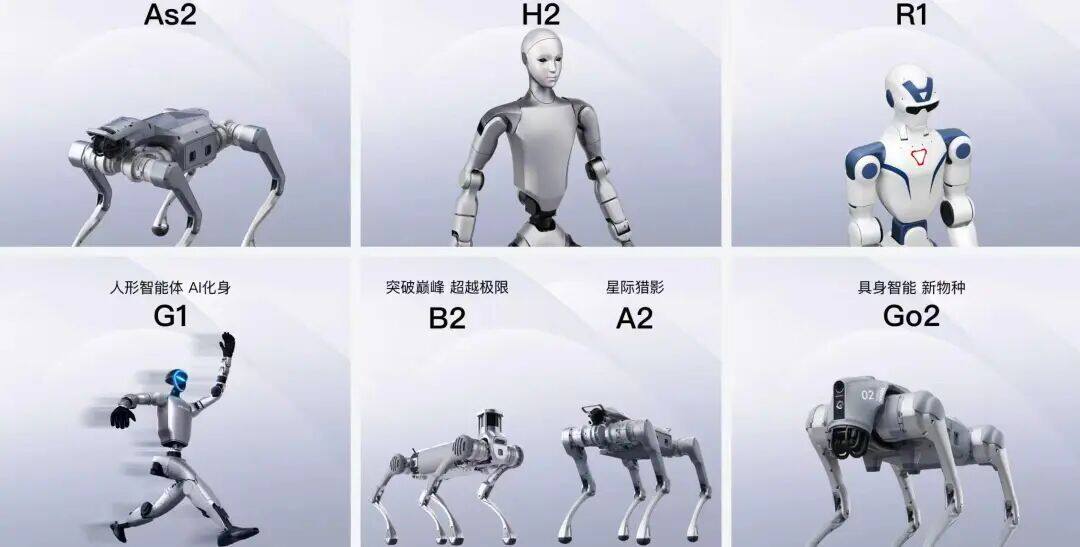
Referring to the prospectus, Wang said Unitree’s six main products currently on sale — humanoid models G1, H2 and R1, along with quadruped models Go2, B2 and A2 — have all received FCC certification. Policy changes do not affect the continued sale of those models in the U.S.; the new restrictions apply only to future model certifications.
Prospectus data cited in the article show that overseas revenue accounted for 43.65% of Unitree’s total in 2025. The U.S. share within that overseas business fell from 18.39% in 2023 to 13.30%. The article also says an internal review by the Association for Advancing Automation found that nearly 90% of the latest robotics research papers from U.S. universities used Unitree products.
On commercialization pace and earnings volatility
Wang said humanoid robots are likely to be used mainly in scientific research, application development, education, cultural performances and intelligent services in the short to medium term. Factories and households are longer-term destinations. Unitree shipped more than 5,500 humanoid robots in 2025, ranking first globally, but more than 70% of related revenue still came from scientific research and education, while industrial applications accounted for only about 9%.
The article adds that first-quarter 2026 non-recurring-adjusted net profit fell 52.55% year over year, mainly because of higher R&D spending and brand promotion linked to the Spring Festival Gala. The company said it would balance investment and revenue, but it did not provide a timetable for a profit rebound.
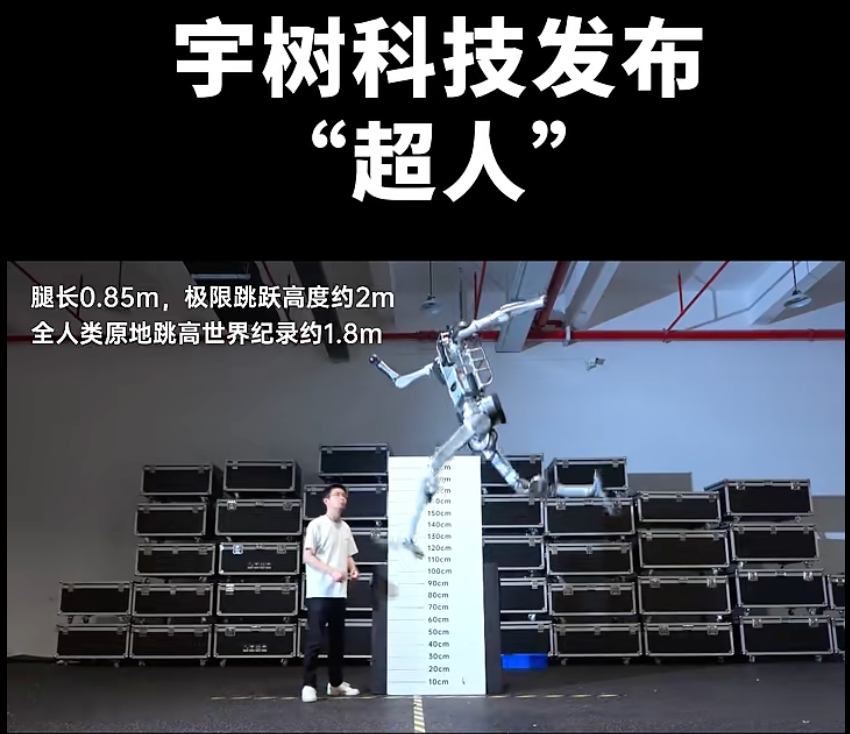
Just before the IPO, Unitree also introduced a humanoid robot called “Superman.” The article says the market response was positive and describes its athletic ability as breaking past human limits.
Where Unitree sits in the A-share technology trade
The source places Unitree’s listing inside a broader shift in China’s equity market toward deeper technology themes. In August 2026, it says, capital was accelerating out of traditional sectors and into future-tech areas, with several major lines standing out.
The first was AI computing hardware plus semiconductor import substitution. According to the article, investor focus had moved away from pure concept-driven AI applications and toward hardware segments with real orders and profit visibility, including high-speed optical modules, AI servers, liquid cooling and thermal management, PCB carrier boards, and domestic alternatives in semiconductor equipment and materials. As companies entered the earnings-reporting window in August, names with verifiable results were attracting more interest.
The second was humanoid robots and embodied AI. The article calls August a “super catalyst month” for humanoid robots, citing Unitree’s listing, the opening of the 2026 World Robot Conference, the start of the second World Humanoid Robot Games, and a concentrated wave of product launches. Data from the Ministry of Industry and Information Technology, as quoted in the source, show that domestic robot model count has exceeded 400, accounting for more than half of the global total. China’s global market share in quadruped robots is close to 70%, and the domestic substitution rate for core components is above 70%. In that context, the article says Unitree’s listing provides a valuation anchor for the entire segment.
The third was what the article calls the “six networks,” meaning computing networks plus a new-style power grid. It says national integrated computing network construction is continuing, with China’s intelligent computing power reaching 2,185 EFLOPS by the end of June. Over the past two years, 70 national-level computing corridors have been completed. New power grids and computing networks are developing in tandem, benefiting ultra-high-voltage infrastructure, smart grids and related energy storage systems.
The article also lists low-altitude economy, commercial space, quantum technology and CPO silicon photonics as active themes. It sums up the broader investment logic as a market that prizes earnings first and technology as the organizing framework. In that setting, funds are shifting toward hard-tech companies with real orders and durable institutional backing.
Risks listed in the source article
- Valuation digestion risk: the issue P/E remains high, and valuation could come under pressure if earnings growth misses expectations.
- Commercialization risk: industrial and household adoption of humanoid robots remains uncertain, and the path to absorbing annual planned capacity of 190,000 units still needs to be verified.
- Geopolitical policy risk: U.S. FCC restrictions may affect certification and sales of future new models overseas.
- Competition risk: Tesla, Figure AI and domestic peers such as Zhiyuan and UBTECH are all increasing investment, which may pressure pricing and market share.
- Technology iteration risk: the technical route for embodied foundation models has not converged, while R&D costs remain high and commercialization cycles long.
- Short-term trading volatility: during the first five trading days after listing, the stock is not subject to the standard 20% daily price limit, leaving room for sharp moves driven by sentiment.