
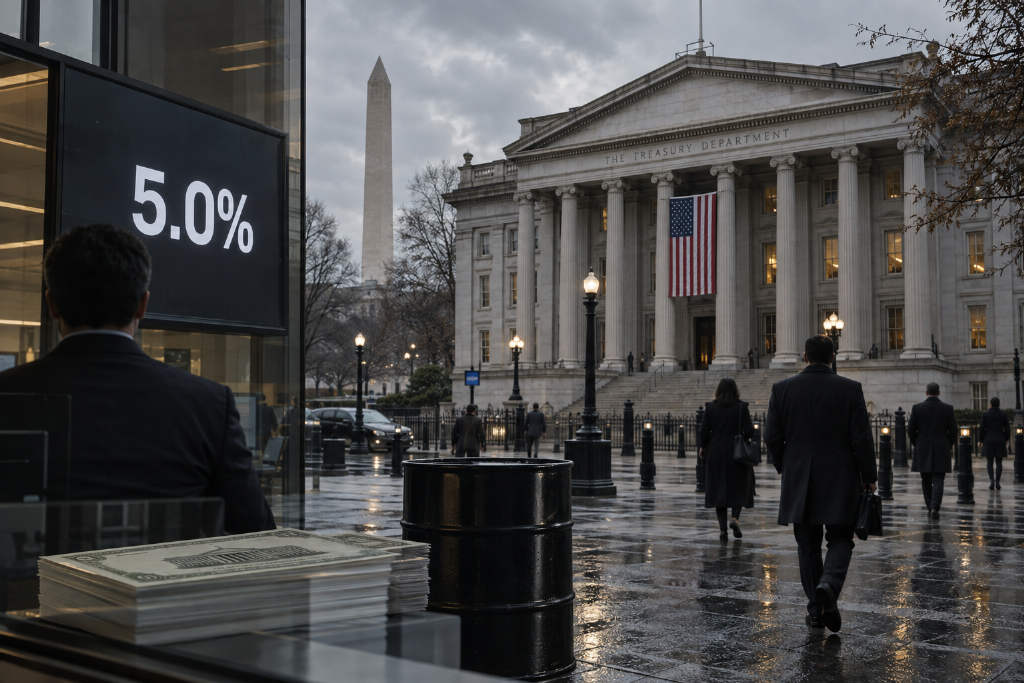
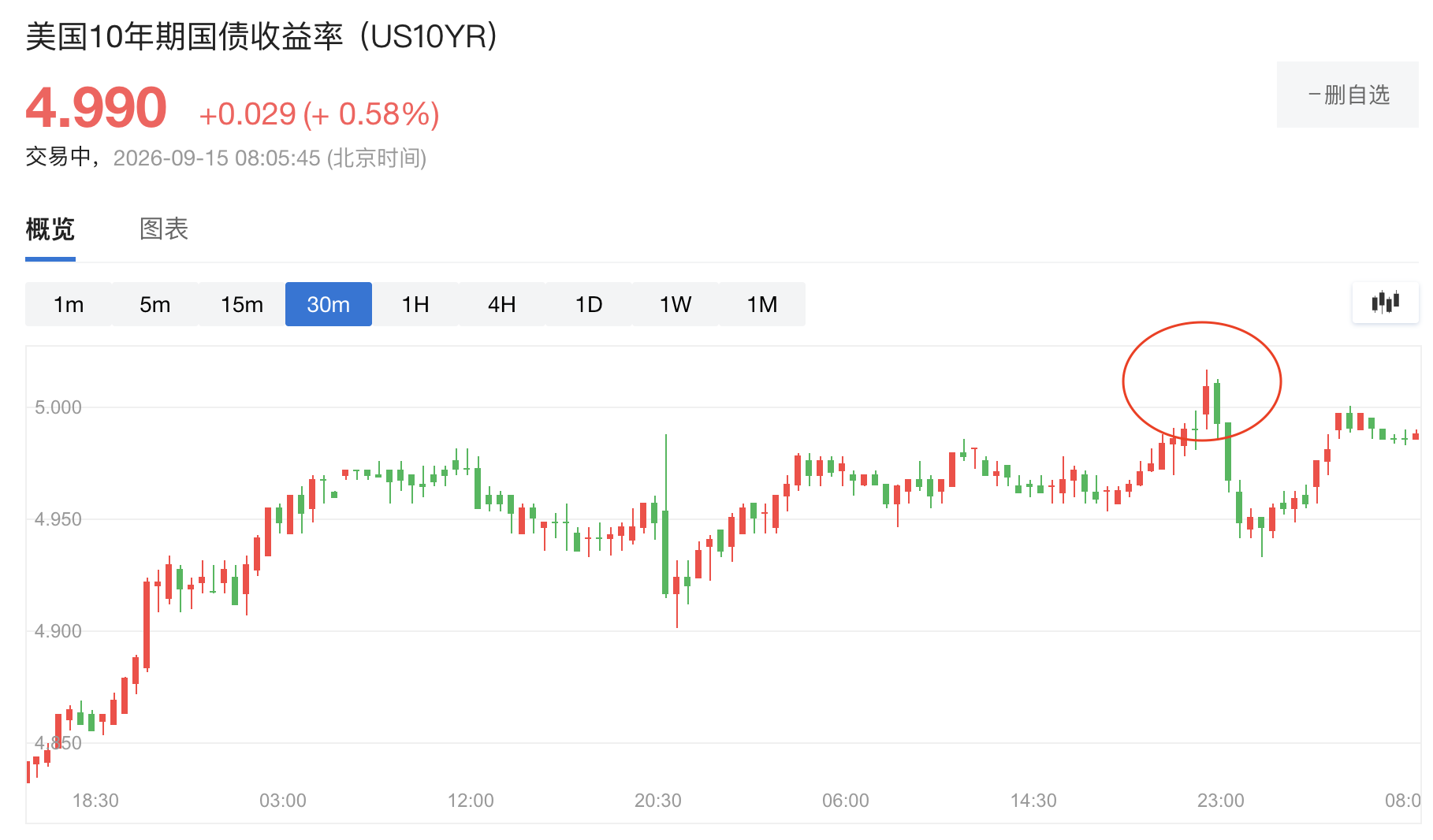
The US 10-year Treasury yield climbed to 5.012% intraday overnight, the highest intraday reading since 2007, before pulling back to close at 4.960%. For investors, the move put a closely watched line back in play. Outside of the brief jump to 5% in 2023, the last time the 10-year yield spent time above that level was in the run-up to the global financial crisis.
That has sharpened a basic question across markets: is the bond market approaching another temporary peak, or entering a new period of persistently high long-term yields? The answer matters well beyond Treasuries, because the 10-year yield is a benchmark for trillions of dollars in global assets and a major driver of borrowing costs for households, companies, and the US government. The article also said the outcome could shape the coming midterm elections.
Oil, conflict, and inflation fears pushed yields higher
According to the original article by Zhao Ying, published by Wallstreetcn and cited by Odaily, the immediate trigger for the latest move was a surge in energy prices tied to escalating tensions in the Middle East. Brent crude rose nearly 9% last week after the Iran-backed Houthis effectively took control of another shipping chokepoint on Yemen’s west coast. As of Monday, Brent was up another 1% at $105.68 a barrel.
Higher energy prices reinforced expectations that inflation could stay elevated. Strong inflation data released on Friday led investors to almost unanimously expect that the Federal Reserve will raise rates at its meeting on Wednesday and keep monetary policy tight afterward. The article added that Donald Trump has repeatedly called on the Fed to cut rates, leaving Fed Chair Warsh in a difficult position, while market expectations for a hike have continued to build.
The 10-year Treasury yield is a key reference point for rates across the US economy. Its latest rise has already pushed mortgage rates back toward 7%. Treasury Secretary Scott Bessent had previously taken unconventional steps in an effort to restrain yields, but the article said those measures have had limited effect so far.
Two competing market narratives are taking shape
Some investors were reminded of Oct. 23, 2023, when the 10-year yield also touched 5% early in the session and then fell back sharply to above 4.8% by the end of the day. That move was seen as a classic example of bond buyers rushing in once a symbolic milestone had been reached.
This time, though, the retreat was much smaller. That has led some investors to argue that a cleaner break above 5% over the coming weeks or months cannot be ruled out.
Greg Peters, co-chief investment officer of PGIM Credit, said: “I keep asking myself, ‘OK, what would be the catalyst for rates to move lower?’ Outside of a recession, it’s hard to find an answer. Conditions right now are very supportive of yields staying high or moving even higher.”
Meghan Swiber, senior US rates strategist at Bank of America, took the other side. “If the Fed hikes this week and signals that it will do whatever it takes to control inflation, we think that could actually help bring down long-end yields,” she said.
Debt growth and supply pressure are part of the longer-term story
Some investors see the rise in yields as part of a broader normalization in the economy, a move back toward conditions that prevailed before the 2008 financial crisis, before central banks were buying bonds on a massive scale and before ultra-low rates became entrenched.
Still, the current backdrop has its own features. US federal debt has recently surpassed $40 trillion, roughly double the level of a decade ago. A larger debt stock points to heavier Treasury supply, which can weigh on bond prices and lift yields. Under Bessent, the Treasury has recently stepped up buybacks of longer-dated bonds, but the article said those purchases remain tiny relative to the overall stock of outstanding Treasuries.
Representative David Schweikert, a Republican from Arizona, wrote on social media Monday: “Today’s number should terrify Congress.”
AI spending is helping offset the drag from higher rates
Several analysts said enthusiasm around AI investment and the strength of the stock market are cushioning part of the economic impact from higher yields.
Eric Winograd, chief economist at AllianceBernstein, said: “Normally, higher yields and borrowing costs could restrain corporate investment. But many technology companies now see spending on AI as an existential strategic choice. I think they react to financial conditions very differently from other companies.”
That dynamic has supported a more constructive view on whether the economy can absorb a 5% 10-year yield without slowing quickly. It has also given more weight to the argument that yields could stay elevated for longer.