
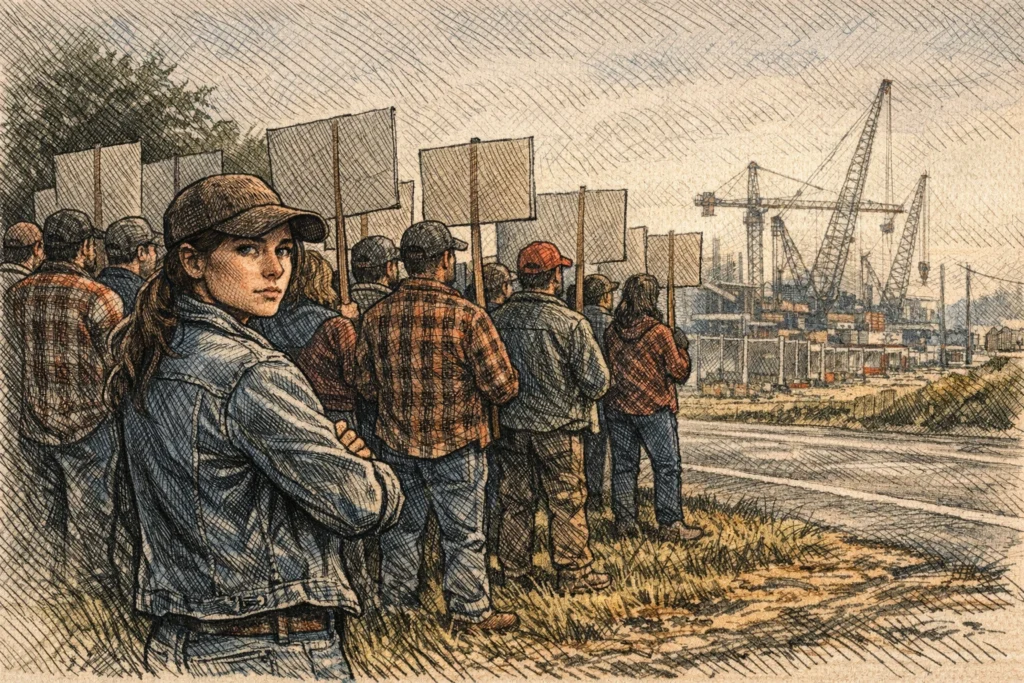
Protests against AI data center expansion were held across at least 142 locations in 42 U.S. states on July 19 local time, with grassroots group Humans First leading the coordinated action. Demonstrators argued that new facilities are pushing up electricity costs, consuming local water resources, and adding to environmental pollution.
Nationwide action across 42 states
Reuters reported that the protests spanned at least 142 sites nationwide, making them the first synchronized national action in the U.S. aimed specifically at AI data centers. Humans First listed participating cities and event times on its official campaign page.
From New York to California and from Texas to Maine, protesters called on technology companies and developers to slow the pace of expansion and give local communities a meaningful voice in the approval process. Their complaint was consistent across regions: data centers consume local electricity and water, while residents do not necessarily share in the economic gains.
Reuters poll points to weak local support
A Reuters poll released in June suggested public tolerance for rapid data center construction is fading.
- Only 33% of respondents said rapid data center construction is “more beneficial than harmful” overall
- Only 14% said they support building a data center in their own community
That means more than 60% of respondents held either neutral or negative views on further expansion. The report said the poll covered major towns and cities across the U.S., indicating that the backlash is not limited to coastal urban centers.
Four “hidden costs” highlighted by protesters
The demonstrations focused on four main effects tied to data center development.
- Higher electricity bills: heavy power use by data centers can raise local electricity prices, with annual household increases reaching 5% to 12%
- Water diversion: cooling systems consume large volumes of water, affecting agriculture and household supply
- Worsening pollution: gas-fired generation and coolant emissions can intensify air pollution
- Approvals shielded by nondisclosure agreements: some local officials and developers have signed confidentiality agreements, allowing projects to move ahead with limited public scrutiny
Humans First sets out four demands
Humans First also laid out four policy demands tied to gaps in the current development process.
- Transparent planning and review: data center construction plans should be opened to community input rather than handled through confidential arrangements
- Protection for local resources and the environment: power-use caps, water allocations, and environmental review standards should be put in place
- Shared economic gains: high-paying union jobs should go first to local residents so communities benefit from AI infrastructure spending
- Stronger accountability: developers should be tracked against their commitments to prevent broken promises after projects are approved
Taiwan mentioned as another area facing pressure
The report also pointed to Taiwan, describing it as a major global semiconductor manufacturing hub now facing similar pressure from fast data center expansion. It cited Taiwan Semiconductor Manufacturing Co.'s expansion plans in the Southern Taiwan Science Park, along with data center investments in Taiwan by Google, Microsoft, and Amazon Web Services.
According to data from Taiwan's Ministry of Economic Affairs cited in the report, more than 40 large data centers were either in operation or under construction across Taiwan as of the first half of 2026, mainly in Taoyuan, Hsinchu, and the Taipei metropolitan area. The report added that Taipower had warned last year that the rising share of electricity used by AI data centers could push up power rates over the next two to three years.
The article said the U.S. protests show that AI infrastructure expansion is no longer a background issue and is increasingly becoming a visible public concern.