
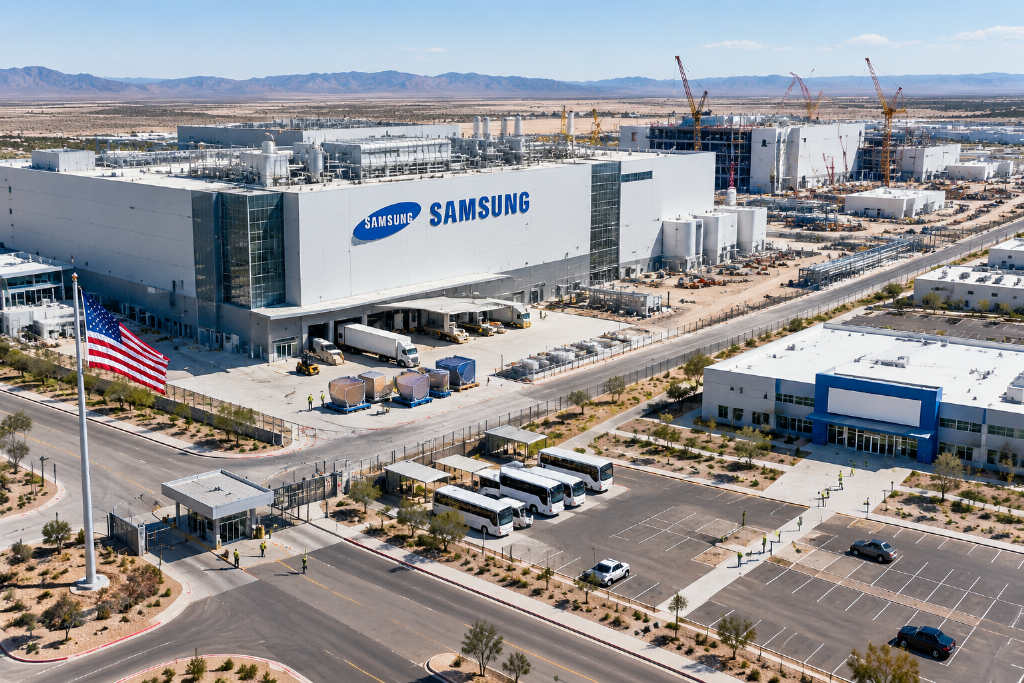
Asian chipmakers are stepping up advanced fab construction in the US, but the expansion is still running into a severe labor shortage. Industry specialists cited in the report said the lack of local skilled workers in the US is becoming more acute.
McKinsey and the Semiconductor Industry Association Foundation project that the US semiconductor industry could face as many as 157,000 job vacancies by 2030. Chip manufacturers are offering strong pay packages, yet only about 3% of US engineering graduates choose to enter the sector, leaving more than 70% of companies struggling to recruit talent.
The US semiconductor talent pipeline is under strain
Driven by US chip policy incentives and demand tied to artificial intelligence, Asian semiconductor manufacturers have launched a broad wave of factory construction in the US. On the production side, though, the labor pipeline is not keeping up. McKinsey survey data cited in the report shows that 73% of chip companies are having difficulty hiring for engineering roles.
Taylor, executive vice president at Samsung’s semiconductor division, told CNBC that the reserve of technical talent is clearly insufficient at this stage. As more fabs move toward completion and start-up, competition for workers has turned into a race against time. The report contrasts that with layoffs across the broader tech sector, saying the gap highlights the shortage of talent available to wafer manufacturers.
Asian manufacturers expanding in the US are adding to labor demand
Major Asian foundry and memory companies are pressing ahead with US projects. TSMC has already started production at its Arizona campus and plans to continue increasing investment there.
On the memory side, Samsung’s Texas plant is expected to begin risk production, while SK hynix is building an HBM, or high-bandwidth memory, packaging plant in Indiana aimed at AI data center demand. The report says these projects together require tens of thousands of skilled technical workers and supply-chain staff, widening the local labor gap.
Universities and companies are building programs, but pay remains central
To ease the labor crunch, academic institutions including Purdue University and Arizona State University have established semiconductor-related degree programs. Companies such as Samsung and Intel are also investing in internship programs and scholarship plans to train future workers.
Compensation remains a key draw. Many US chip plants offer average annual salaries of about $127,000 to $187,000, while senior positions can exceed $238,000. Even so, the report says that still trails the appeal of recent bonus payouts in South Korea that have reached into the hundreds of thousands of dollars.
The report uses TSMC as an example. In Taiwan, a newly hired engineer with a master’s degree earns an average annual salary of NT$2.2 million, or about $70,000. Average annual pay across the company’s workforce has risen above NT$4 million. At TSMC’s Arizona fab, by contrast, entry-level engineers need base salary plus bonuses in the range of $100,000 to $110,000. Once local living costs and the pay gap with Silicon Valley software jobs are taken into account, salary becomes the first issue in US hiring.
Key figures cited in the report
- The US semiconductor industry could face about 157,000 open positions by 2030.
- 73% of chip companies said they are struggling to recruit for engineering jobs.
- Only about 3% of US engineering graduates enter semiconductor manufacturing.
- Companies named in the report as expanding in the US include TSMC, Intel, Samsung, Micron, and SK hynix.
The report says that while major manufacturers offer above-average pay in both Taiwan and the US, recruitment into the US semiconductor industry still hinges on salary structure once differences in living costs and South Korean bonus systems are factored in.