
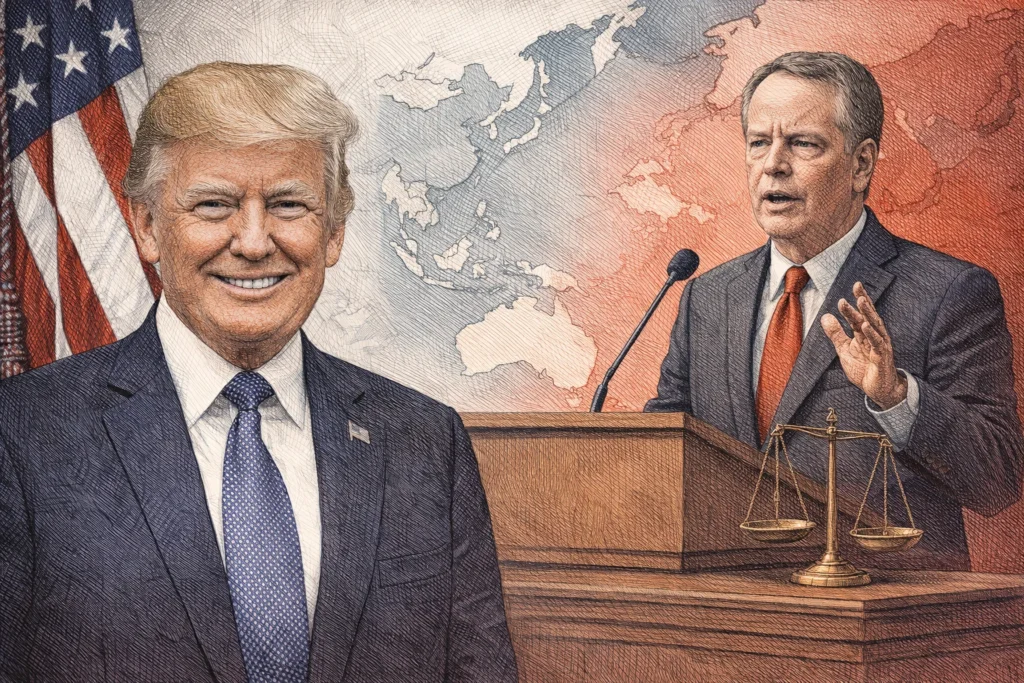
The United States is preparing a new tariff measure as its current 10% temporary global tariff approaches its July 24 expiration date. U.S. Trade Representative Jamieson Greer said in a July 21 interview with CNBC that the next round of tariffs could be announced soon, but he did not give a precise timetable.
Temporary 10% tariff nears expiry
According to the report, the White House turned to Section 122 of the Trade Act earlier this year after a February ruling by the federal Supreme Court found multiple tariff measures previously used by Donald Trump invalid. That move allowed Washington to impose a 150-day, 10% temporary tariff on global imports.
That temporary measure is now set to expire on July 24. The report said U.S. officials do not plan to let the rate drop to zero. Instead, the administration is expected to move to Section 301 of the Trade Act, with forced labor replacing trade imbalances as the stated basis for the tariffs. Analysts cited in the report estimate the new rate will likely fall between 10% and 12.5%, close to the current temporary level but built on a different legal foundation.
Greer said the new measure would cover most U.S. trade relationships, suggesting a broader impact than many had expected.
Taiwan placed in the lower-rate group
Based on the classification outlined in the report, U.S. trading partners have broadly been split into two camps. Taiwan is in the lower-rate group together with Canada, the United Kingdom, the European Union and Mexico. Those economies are expected to face a 10% tariff because they have been recognized as having taken concrete steps to address forced labor.
The higher-rate group includes Japan, South Korea and China, along with India, Brazil and Switzerland. The report said that camp covers more than 40 major economies and could face a 12.5% tariff. In total, the classification is said to span roughly 60 economies and includes many of the United States' largest trading partners.
A separate Section 301 track is also in motion
Greer also said tariffs tied to forced labor are expected to raise trade tensions again. At the same time, another Section 301 investigation is moving forward on a separate track, this one focused on overcapacity.
The Office of the U.S. Trade Representative is currently reviewing 16 major trading partners, including Taiwan, China, Japan, South Korea and the European Union, according to the report. That means Taiwan's placement in the lower-rate forced-labor group does not remove the risk of changes coming from that parallel probe.
July 24 is the key near-term date
With the current 10% temporary tariff about to expire, the immediate question is whether Washington will release details of the new forced-labor tariff framework on time. For Taiwan's export-oriented industries, being placed in the lower-rate camp is described in the report as a relatively positive signal. Still, trade tensions remain in play, and the separate investigation is ongoing. Whether the final rate stays at 10%, and whether additional conditions are attached, remains for U.S. officials to decide.