
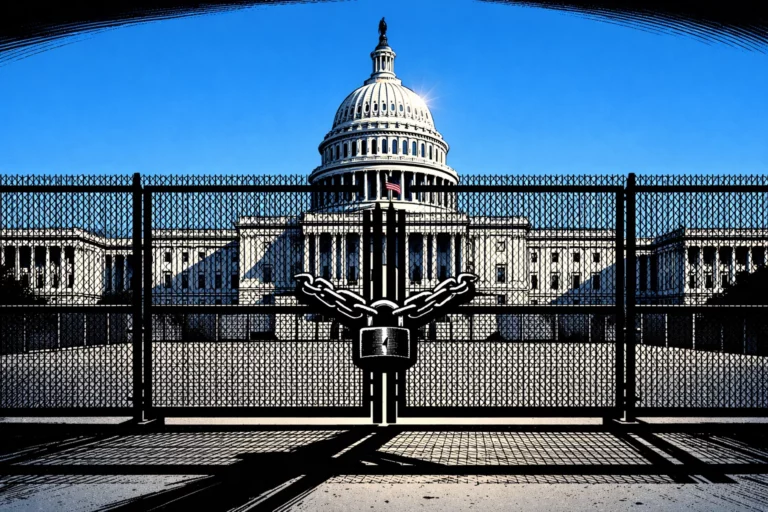
The U.S. federal government officially entered a partial shutdown at 0:00 a.m. Eastern Time on January 31, 2026, after failing to pass all necessary appropriations for fiscal year 2026. While most departments secured funding before the deadline, key areas including defense, health, and education saw their spending authority lapse, forcing non-essential federal employees to furlough and potentially delaying some public services.
Over $1.2 Trillion Omnibus Passed, DHS Carved Out
The Senate passed an omnibus spending bill worth approximately $1.2 trillion just before the funding deadline, covering core agencies such as the Department of Defense, Education, Health and Human Services, Transportation, Housing and Urban Development, Labor, State, and Treasury. This funding would last through the end of the fiscal year (September 30). However, the Department of Homeland Security (DHS) was excluded from the omnibus and received only a two-week temporary extension. The carve-out came after two fatal incidents involving federal immigration enforcement in Minneapolis, Minnesota, which prompted Democrats to demand reforms and more accountability on ICE’s use of force. The two parties agreed to separate DHS funding temporarily to continue negotiations on reform details.
Shutdown Impact: Non-Essential Staff Furloughed, Essential Functions Continue
The affected agencies account for more than three-quarters of federal discretionary spending. During the shutdown, non-essential employees face unpaid leave, while routine administrative and regulatory work may be delayed. However, national security, border enforcement, Social Security payments, and Medicare reimbursements will continue as “essential” functions. The White House expressed “deep regret” over the shutdown, calling it a procedural issue tied to the congressional calendar rather than a fundamental policy impasse. It urged the House to reconvene quickly to approve the bill. The House, currently in recess, cannot vote until February 2 at the earliest. If GOP leadership can persuade hardliners within its narrow majority, the shutdown could end within days—likely by early next week.
While the shutdown primarily affects traditional government operations, crypto market participants often monitor such events as potential policy uncertainty signals. Some analysts suggest the pause in federal operations could temporarily slow discussions on digital asset regulation, though concrete impacts remain to be seen.