
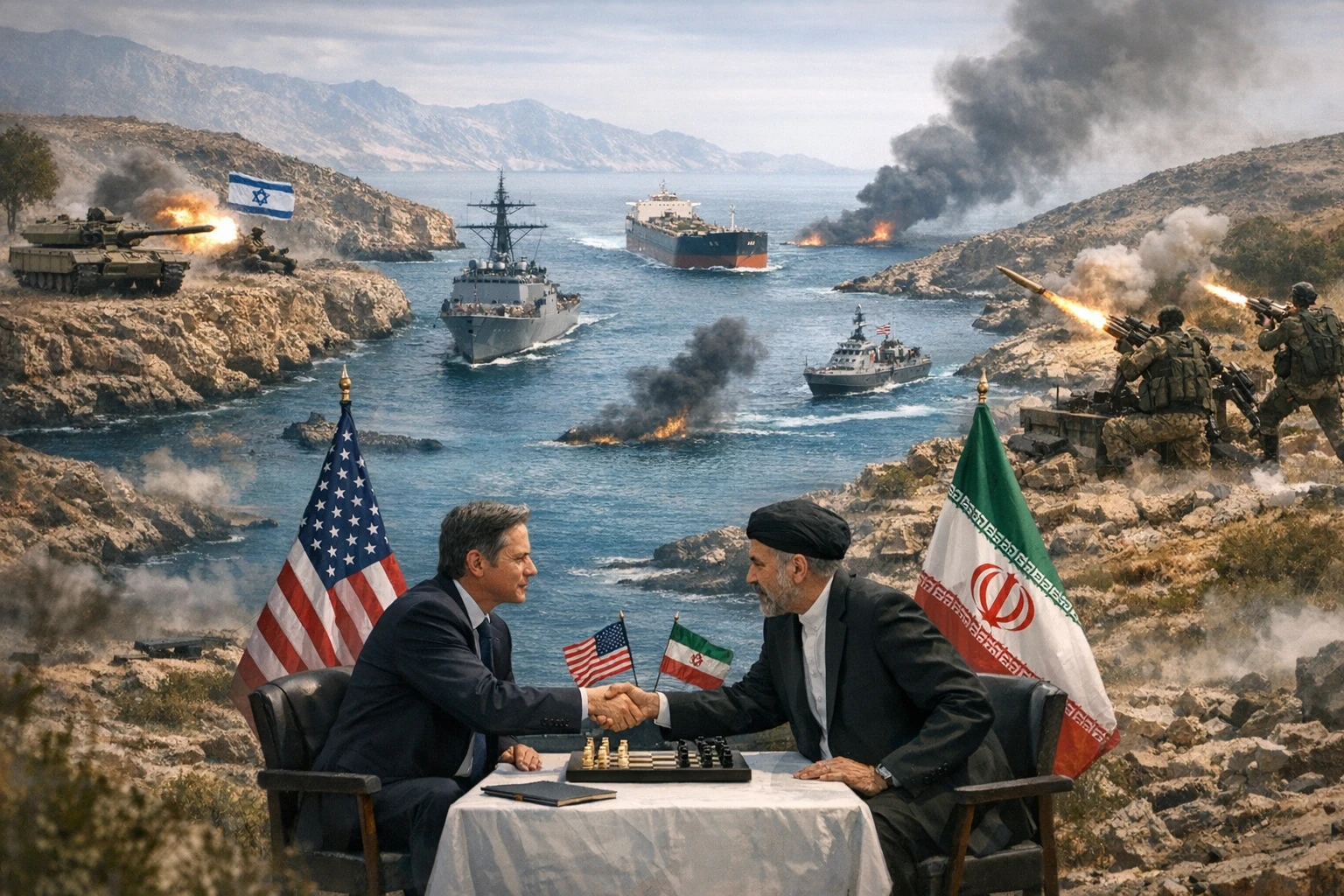
The United States and Iran continued to exchange revisions to a ceasefire draft over the weekend, with no firm outcome in sight. President Donald Trump repeated his demand that Iran halt its nuclear program and restore free passage through the Strait of Hormuz, while Iran-linked Tasnim News Agency said both sides could still reject the proposed changes, leaving the deal at risk of collapse.
Draft revisions continue without a clear breakthrough
According to CNBC TV18, Washington and Tehran have been working on changes to a draft agreement designed to extend the ceasefire and reopen the Strait of Hormuz. It remains unclear whether either side has made real progress on the main sticking points. Trump, who said after a White House Situation Room meeting last weekend that he expected an agreement to be announced, has not spoken publicly on Iran since then. He did, however, restate on social media that Iran must suspend its nuclear program and return the strait to its previous status as a free international waterway.
Tehran says current reports are still speculation
Iranian Foreign Minister Abbas Araghchi said talks and information exchanges are still ongoing, and that no judgment should be made before a final result is reached. He described current public claims as “speculation” and warned against overinterpreting them. That response showed no sign that Tehran sees a deal as imminent. Tasnim added another layer of uncertainty by reporting that both Washington and Tehran may ultimately refuse the latest revisions, which would sink the broader agreement.
Israel-Hezbollah fighting intensifies alongside the talks
While the diplomatic track remains unsettled, the conflict on the Israel-Lebanon front has worsened. The report said Israel launched its largest attack on Lebanon in 25 years, while Hezbollah, one of Iran’s key regional allies, increased strikes on northern Israel. The Israeli military said Hezbollah fired more than 300 warheads at Israeli soldiers over the weekend. Israel’s defense minister also said Israeli forces raised the Israeli flag at the historic Beaufort Castle near Nabatieh, describing it as a sign of Israel’s “permanent presence” in the area.
Hormuz shipping remains a major energy concern
The overlap between uncertain US-Iran negotiations and the escalation in Lebanon has added pressure to the broader Middle East situation. The report noted that if the ceasefire effort fails, direct military confrontation between the US and Iran could reappear. The Strait of Hormuz remains one of the world’s most important energy transit routes, carrying about 21 million barrels of crude oil per day, making its status critical for oil prices and global supply chains.