
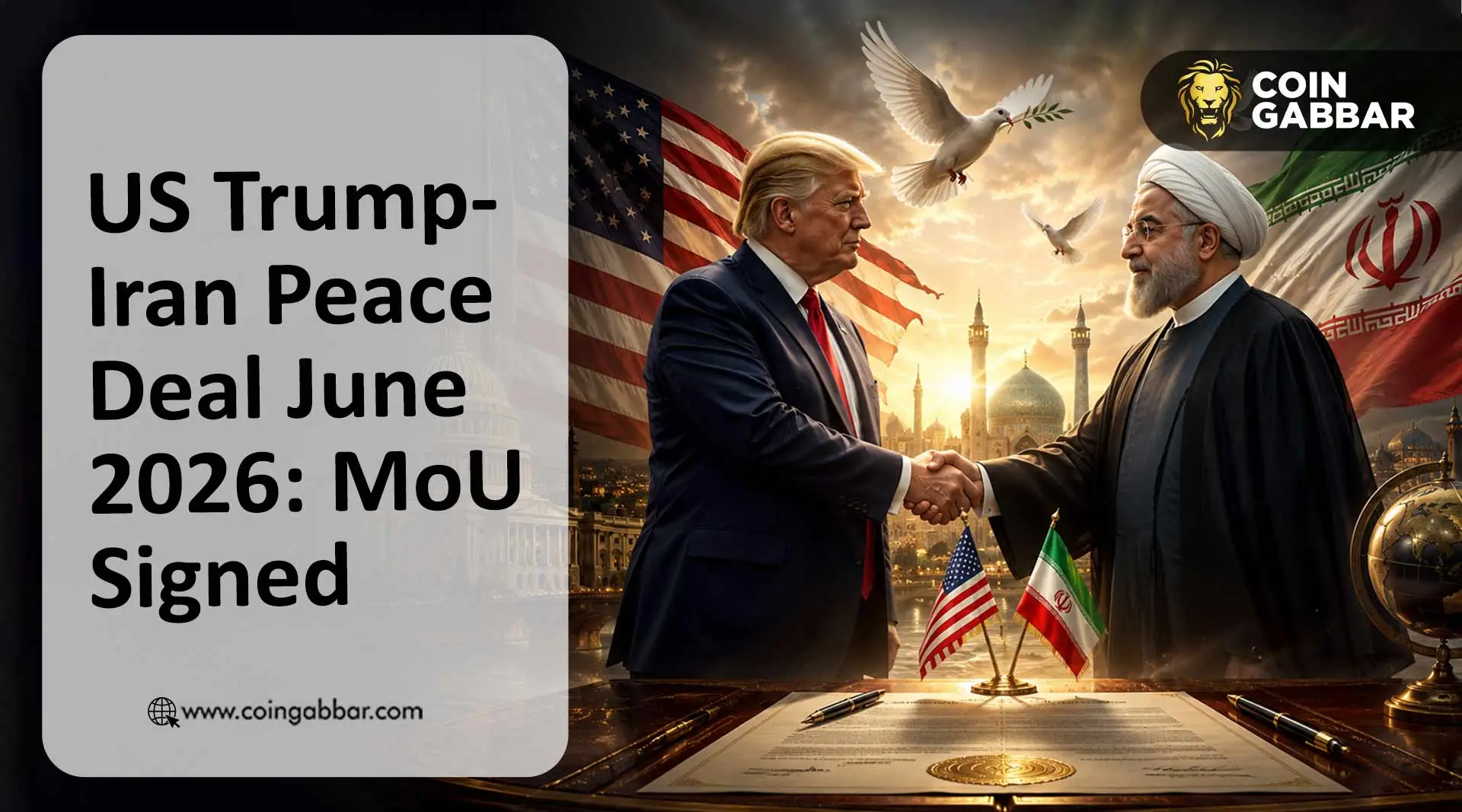
The United States and Iran have formally put the “Islamabad Memorandum of Understanding” into effect, with the agreement taking force on June 18. As that happened, WTI crude dropped below $74 a barrel for the first time since March 5, 2026. Iran publicly posted the signed document, and the deal sets an immediate ceasefire across active fronts while opening a 60-day negotiation window aimed at reaching a permanent arrangement backed by a UN Security Council resolution.
US CENTCOM said American forces have completely stopped enforcing the naval blockade in the Arabian Gulf and the Gulf of Oman. Ships traveling to and from Iranian ports are now able to move freely. The MoU also says Iran will guarantee safe passage through the Strait of Hormuz for 60 days at no charge, while sanctions termination is listed as a target and Iran receives a temporary export waiver during that same period.
Core terms focus on shipping access and frozen funds
Under the terms described in the report, $6 billion in frozen assets will be released in phases for humanitarian purposes and for US goods that are not under sanctions. On the nuclear side, Iran reiterates that it will not pursue nuclear weapons, and IAEA monitoring remains in place. The document also outlines a $300 billion development plan for Iran, though the report says the US denies this involves direct American payment.
Trump rejected the claim that the United States would directly send $300 billion to Iran, calling that narrative “Democrat propaganda.” The structure described in the article points instead to Gulf state contributions, private investment and performance-linked compliance phases, not a one-time transfer from the US Treasury. The report also states that access to the $6 billion is directly tied to Iran keeping Hormuz open. If the strait is closed again, the release of funds stops.
Oil, equities and macro risk are back in focus
The first market reaction showed up in energy. Crude slipping below $74 signals lower pressure from fuel costs. The source article argues that softer energy prices can ease inflation expectations and reduce pressure for Federal Reserve rate hikes, a backdrop that tends to support risk assets such as Bitcoin and altcoins. Trump wrote on Truth Social that “oil is flowing” and that “stock markets are roaring,” while also pointing to the Dow Jones nearing highs around 52,000.
The Strait of Hormuz carries roughly 20% of global seaborne oil. Its reopening removes a major geopolitical risk premium that had been embedded in energy and broader financial markets for months. For crypto traders, that kind of shift matters because changes in macro risk appetite often spread from commodities and equities into spot and derivatives activity.
Switzerland talks delayed as Lebanon issue clouds next phase
The agreement is not free of risk. According to the report, Vice President JD Vance has postponed his planned trip to Switzerland for the next round of US-Iran talks, the same talks meant to turn the 60-day framework into a permanent deal. The delay is officially tied to Iranian claims regarding the Lebanon situation. Israeli forces remain active in southern Lebanon, clashes involving Hezbollah have not stopped, and Iran is pushing back on how that front is being handled under the ceasefire terms.
Several dates now stand out: the naval blockade lift is already effective as of June 18; the $6 billion frozen-asset release is set to begin within the 60-day ceasefire window; the US-Iran Switzerland talks are postponed with no new date announced; a final agreement still needs UN Security Council endorsement within 60 days of the MoU signing; and the temporary oil export waiver expires at the end of that same period.