
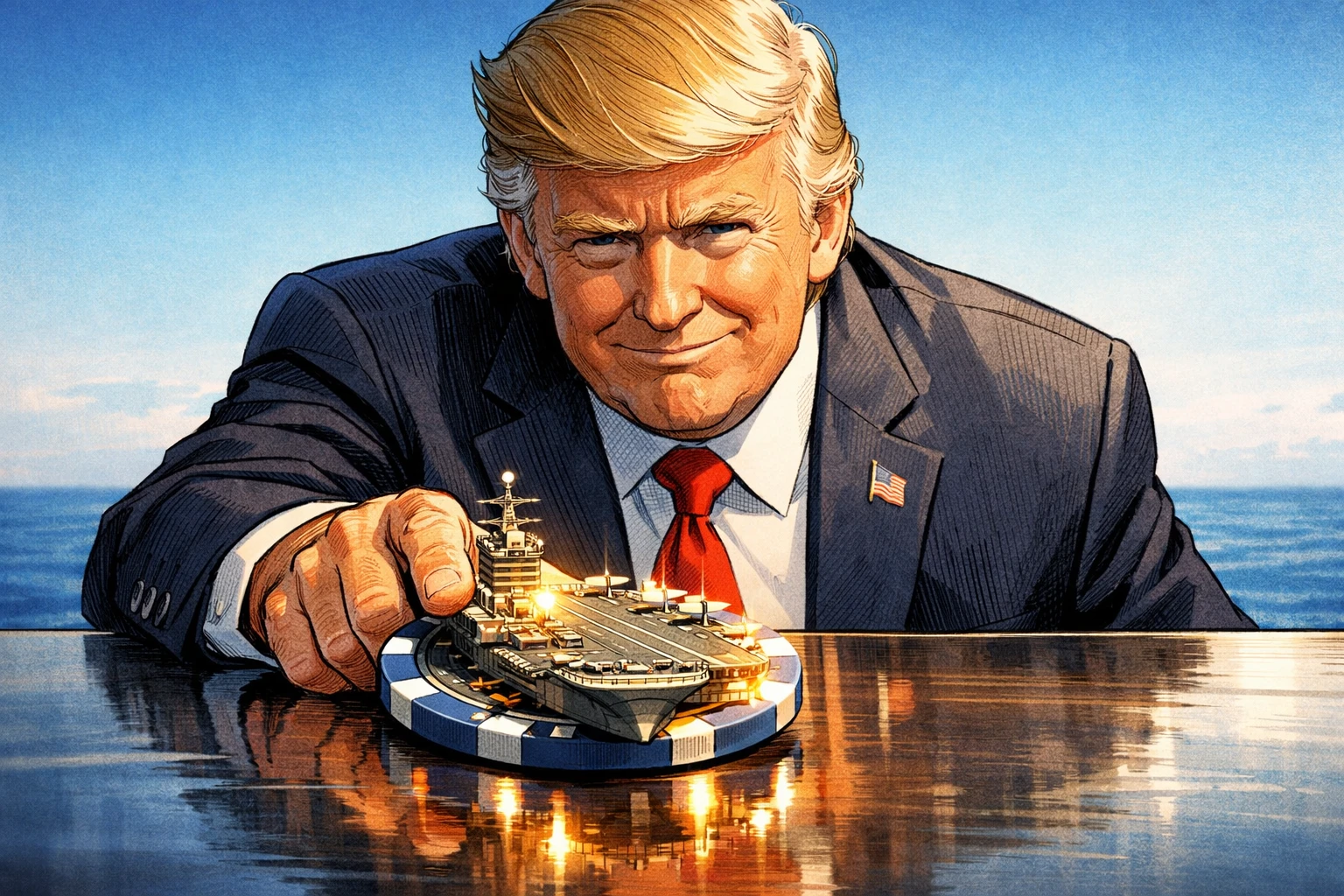
The US-Iran standoff nearly reached the brink of military confrontation — the USS Lincoln carrier strike group had already arrived in Middle Eastern waters, and F-15E Strike Eagles were deployed to Jordan. Many feared the first missile would fall in the Strait of Hormuz over the weekend. But at the last moment, Tehran signaled it wanted to talk.
Back from the Cliff
Ali Larijani, chairman of Iran's Supreme National Security Council, rarely confirmed on Saturday that the two sides are "making progress" in establishing a negotiation framework. Trump then confirmed the development in his trademark businessman tone during a US media interview: "Iran is talking to us. We'll see if we can do something — otherwise, just wait… the US has a large fleet heading to the Middle East."
For crypto markets, the news acts as a short-term painkiller. Tensions may stabilize temporarily, giving Wall Street a breather. Yet as long as the US fleet remains at the launch line and Iran clings to its missiles, this tightrope walk could plunge into chaos with a single gust of wind.
Wide Gap at the Table
Washington's opening terms essentially demand total disarmament: abandon the nuclear program, halt ballistic missile development, cut support for proxy forces like the Houthis, and — most painful for Tehran — recognize Israel. Iranian Foreign Minister Abbas Araghchi struck a hard line in Turkey: "We will discuss the nuclear issue, but no one can touch our missiles." In his view, those missiles are Iran's only insurance policy in a region surrounded by wolves.
This is like a buyer insisting the seller destroys all core patents before signing the deal. Such transactions rarely close unless one party is about to go bankrupt — and here, bankruptcy means regime collapse.
A Crowded Chessboard
The complexity goes far beyond a Washington-Tehran tango. The entire Middle East and Moscow are maneuvering for a piece of the action. Larijani met Putin in Moscow the day before his olive branch, while Turkey's foreign minister and Qatar shuttle between parties — each trying to secure a spot in the emerging power structure or avoid being the sacrificial pawn.
Crypto traders should keep a close watch on the Strait of Hormuz. Every breeze from that corridor can sway global risk appetite: tangible progress in talks could boost BTC and other risk assets; a breakdown or escalation would likely trigger a flight to stablecoins or gold in the short term, though crypto often recovers quickly after geopolitical shocks. In the coming weeks, any news about fleet movements, missile tests, or diplomatic statements could generate sharp volatility.