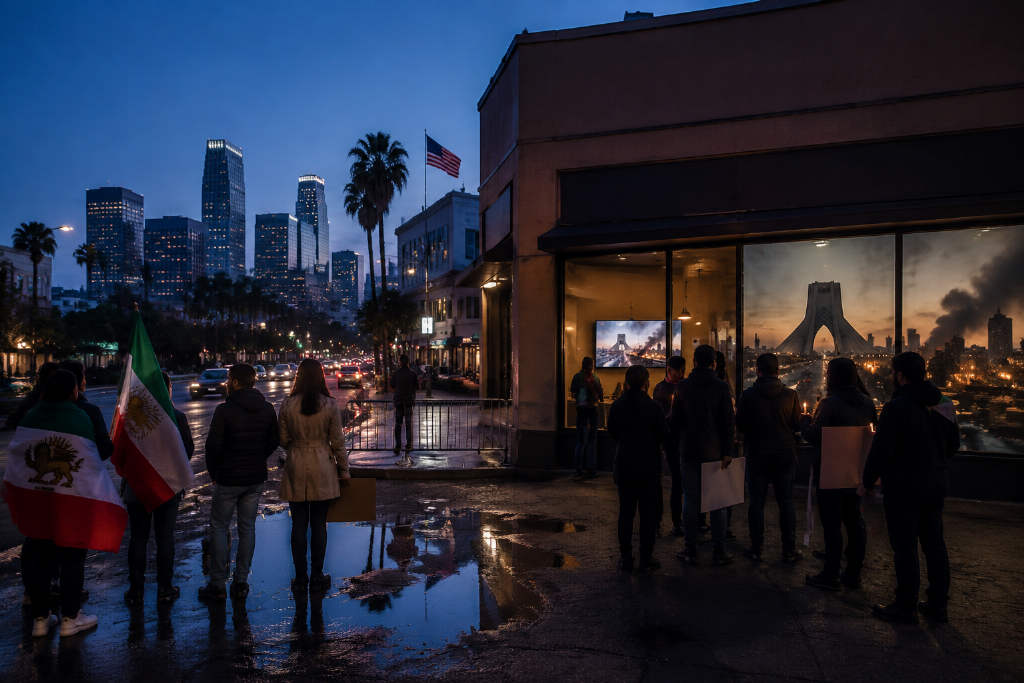
Six months after U.S. and Israeli forces launched their first round of strikes on Iran, the war's aftershocks are still being felt globally and within America's Iranian-American community. The community has split sharply: some opponents of Tehran's government welcomed the military action, hoping it would trigger regime change, while others condemned outside intervention over fears of civilian casualties and regional chaos. Arezo Rashidian, a longtime activist supporting former Iranian Crown Prince Reza Pahlavi, said many former backers of the strikes are now disappointed, noting that the hoped-for change in government has not materialized. She added that Iran is reimposing tighter internal security controls as fighting calms, making people more cautious about politics and protests. Anti-war critics counter that intervention supporters held unrealistic hopes and ignored lessons from Iraq, Afghanistan and Libya. The war, they say, has worsened distrust among diaspora Iranians across generations and political lines, rather than healing it. With Washington expanding economic pressure and Tehran warning of countermeasures, divisions over the war's next steps and Iran's future continue to widen.
Six months have passed since the United States and Israel carried out their first round of military strikes on Iran. The fallout continues to spread worldwide, and it has left America's large Iranian-American community deeply split.
Some opponents of the Iranian government welcomed the strikes and hoped they would push Tehran toward regime change. Others oppose any foreign military intervention, citing fears of civilian casualties and regional instability. Arezo Rashidian, an activist who has long backed former Iranian Crown Prince Reza Pahlavi, said many former supporters of the military action are now disappointed. The regime change they hoped for has not happened, she said. Rashidian added that as fighting has calmed, Iran is tightening its internal security controls again, making people more cautious about talking politics or joining protests.
Anti-war voices argue that some Iranian Americans who supported intervention held unrealistic expectations and downplayed the lessons of Iraq, Afghanistan and Libya. The war has not healed political divisions among the Iranian diaspora. Instead, it has deepened mistrust between generations and across political lines.
Washington continues to intensify economic pressure on Tehran, which has warned of possible countermeasures. Within the overseas Iranian community, disagreements over the war's next phase and Iran's future are still widening.
This article was originally published by Bit.Fan. For more cryptocurrency news and market insights, visit www.bit.fan. Disclaimer:
The market information, project data, and third-party content displayed on this platform are for industry information sharing only and do not constitute any form of investment advice or return commitment.
Cryptocurrency trading carries high risks. Users should fully assess their risk tolerance and make independent decisions. All profits, losses, and legal responsibilities are borne by the users themselves.