

The 2026 U.S. midterm election is in its final 36 hours, with results due on Nov. 3 local time in the U.S. and on the morning of Nov. 4 Beijing time. Democrats and Republicans are competing for all 435 seats in the House of Representatives and 35 of the 100 seats in the Senate.
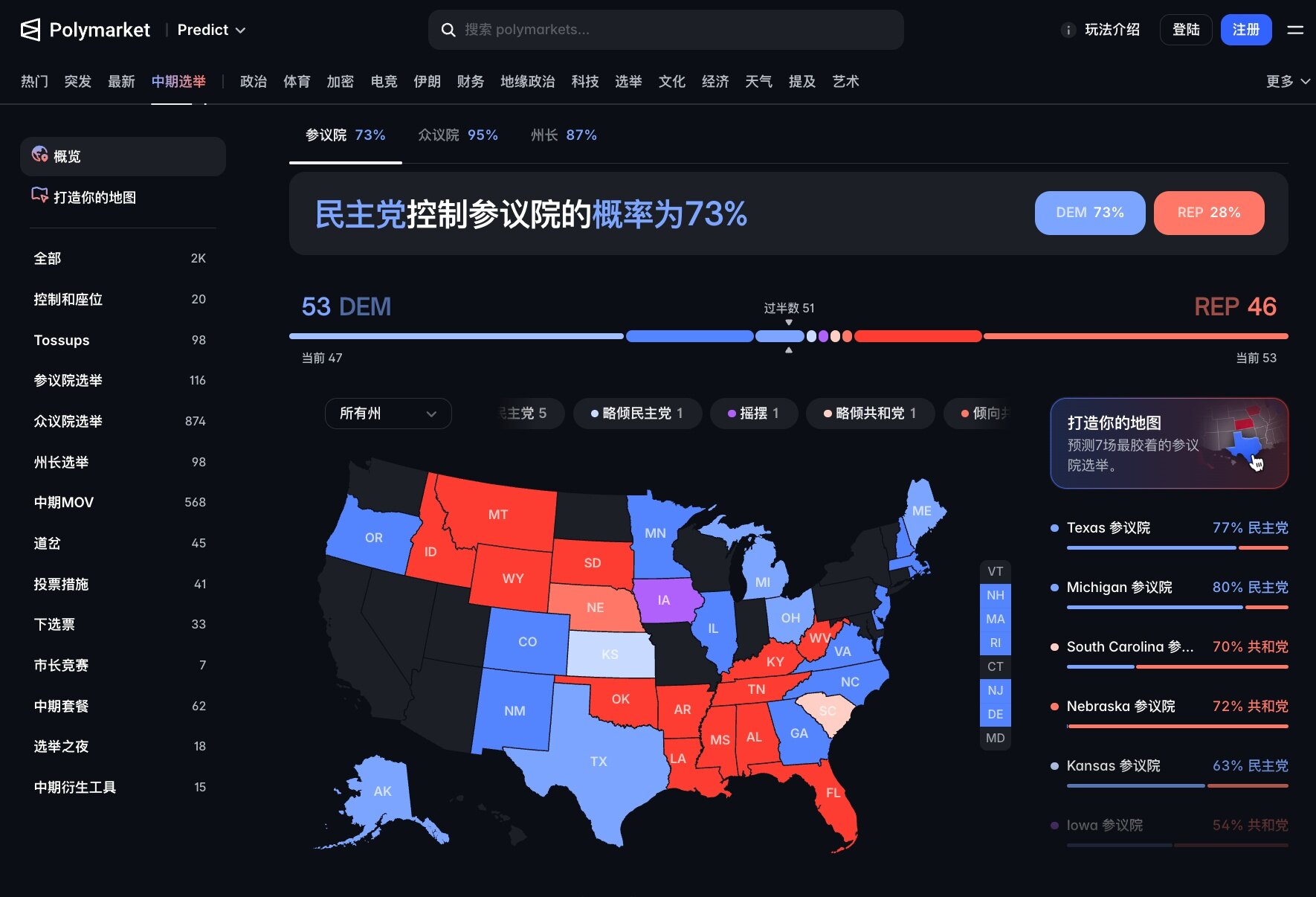
According to an Odaily report, polling and prediction-market data now put the probability of Democrats sweeping both chambers at 72%. The same figures show a 95% chance of Democrats controlling the House and a 73% chance of taking the Senate. The report says that outlook has already cooled the recovery momentum in U.S. equities.
Odaily wrote that a Democratic majority in both chambers could, in the short term, affect the progress of crypto-related bills and the pace of crypto-friendly regulatory moves at the U.S. Securities and Exchange Commission and the Commodity Futures Trading Commission. It also said that tax pressure on industries such as AI data centers could rise. On the other side of the ledger, the report argues that election-related concerns have already been priced in to some extent before the vote, which could leave room for a short-lived rebound in U.S. stocks once the election is over, regardless of the result. It added that crypto-linked equities would still depend heavily on supportive comments from Donald Trump and regulators.
Why control of Congress matters
The report says the midterms matter because if Democrats win control of either the House or the Senate, Trump will face greater difficulty getting future legislation through Congress. While he has previously found ways to exercise power without relying on unified Republican backing, the article says domestic policy obstacles would become hard to avoid.
If Democrats control one chamber, they could use congressional committees to investigate the Trump administration, according to the report. It lists corruption allegations, the White House’s new ballroom, and enforcement methods used by U.S. Immigration and Customs Enforcement, or ICE, as possible subjects of scrutiny. It also says Democrats are discussing whether Trump should be impeached, describing impeachment as Congress bringing charges against a president as the basis for a political trial rather than a criminal proceeding.
If Republicans keep control of Congress, the report says Trump would be able to continue advancing his policy agenda during the roughly two years remaining in his term.
How institutions are framing the post-election market
Several institutions cited in the article expect the market to focus quickly on a rebound once the election uncertainty clears.
Citic Securities: tech rebound possible after the vote
Citic Securities said in a research note that U.S. technology stocks have swung repeatedly in the second half of 2026 as the AI narrative shifted at a high frequency, while the transmission from bond CDS to equity prices also lifted short-term volatility. The decline in U.S. semiconductor hardware shares since early October, it said, has broadly matched the trading logic seen since mid-June, but pressure from macro liquidity conditions and midterm-election uncertainty has outweighed the effect of a temporary cooling in AI sentiment.
The firm said that with major macro and industry disruptions clearing over the past one to two weeks, and with a partial return of a more optimistic AI narrative, it sees room for a rebound in U.S. technology stocks after the midterms and favors semiconductor hardware as the primary direction.
Morgan Stanley: buy the dip regardless of the outcome
Morgan Stanley chief U.S. equity strategist Mike Wilson said U.S. stocks may still face several short-term correction risks, including the midterm election, investor concerns tied to AI spending, and liquidity constraints. Those factors could push the S&P 500 about 9% below its recent record high, to 7,100, he said.
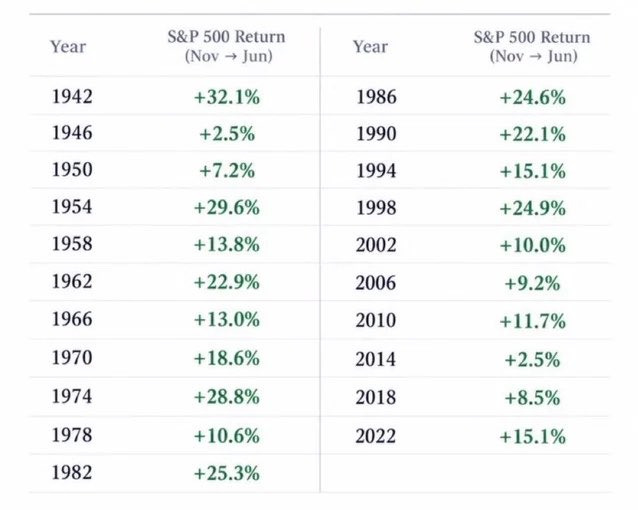
Even so, Wilson said such pullbacks would create buying opportunities. He expects the S&P 500 to rise further to 8,000 after those risks are absorbed, and noted that since 1950, U.S. stocks have risen in the six months and 12 months following every midterm election.
The Kobeissi Letter: weakness is concentrated in tech
The Kobeissi Letter said the Nasdaq 100 erased about $4 trillion in market value in 25 days, while AI stocks fell more than 13% in October. Excluding AI stocks, the S&P 500 rose 8% over the same period and hit a record high on Friday.
It also said the S&P 500 is only 3.5% below its all-time high, yet about 58% of its constituents are down at least 20% from their own peaks, and 75% of technology stocks have entered bear-market territory. In its view, selling pressure is concentrated in tech-related names, and because many investors are heavily exposed to those stocks, the pain they feel is much greater than the headline indexes suggest.
The Kobeissi Letter added that record capital spending by companies on the AI technology shift, together with a normal market correction, could lay the groundwork for the next leg higher. It also expects volatility to remain elevated in November.
What history shows after U.S. midterms
The article also cited market commentator Serenity, who wrote that from November of a U.S. midterm year through June of the following year, the S&P 500 posted positive returns in all 21 comparable cycles, with an average gain of 16.6%.
Still, Odaily said the 2026 election has a major variable that did not weigh as heavily in earlier cycles: continued tension between the U.S. and Iran. The report says a U.S. official had previously stated in public that if Republicans suffered a crushing defeat in the midterms, Trump might be more inclined to order a large-scale military operation. It also says the U.S. military had previously stated that it could launch a new large-scale strike on Iran within 96 hours of receiving an order.
Another variable is what the article calls the “Trump dividend.” It says Trump has repeatedly mentioned a plan under which, if Republicans win the midterms, his administration would send $5,000 to every adult U.S. citizen. Based on about 240 million adult Americans, the report estimates the cost at roughly $1.2 trillion.
Odaily says the combination of war risk and fiscal stimulus leaves the post-election market picture unusually mixed.
Stocks and Bitcoin in prior post-election windows
Looking back, the report says broad market performance has still tended to recover after midterms.
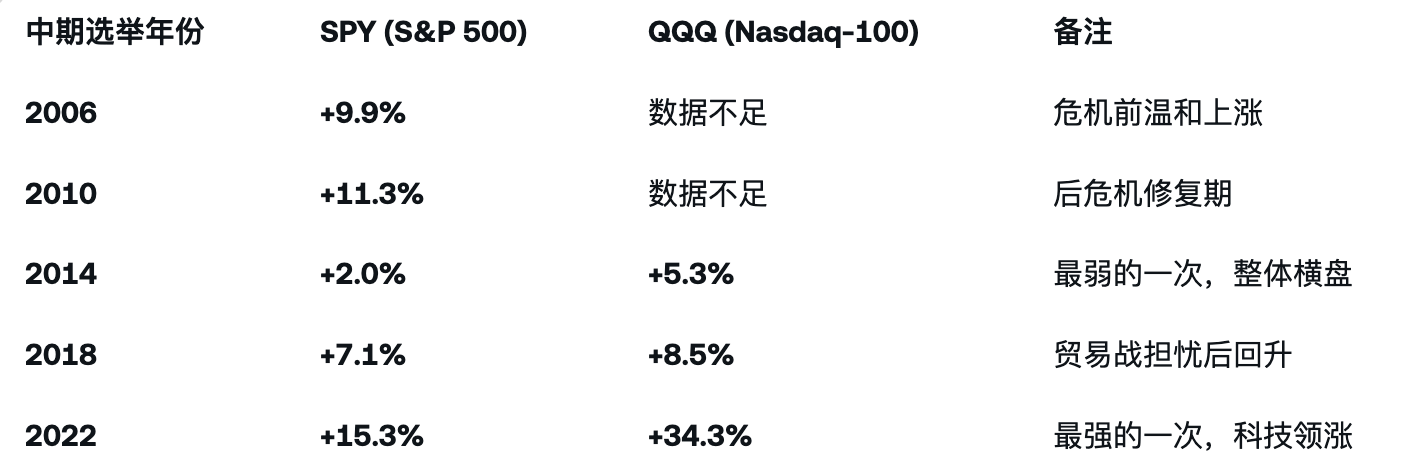
First, using the S&P 500 and Nasdaq 100 as examples, it says both indexes rose in each of the last five post-midterm windows from November to January, with the strongest gains in 2022 when technology shares led the move.
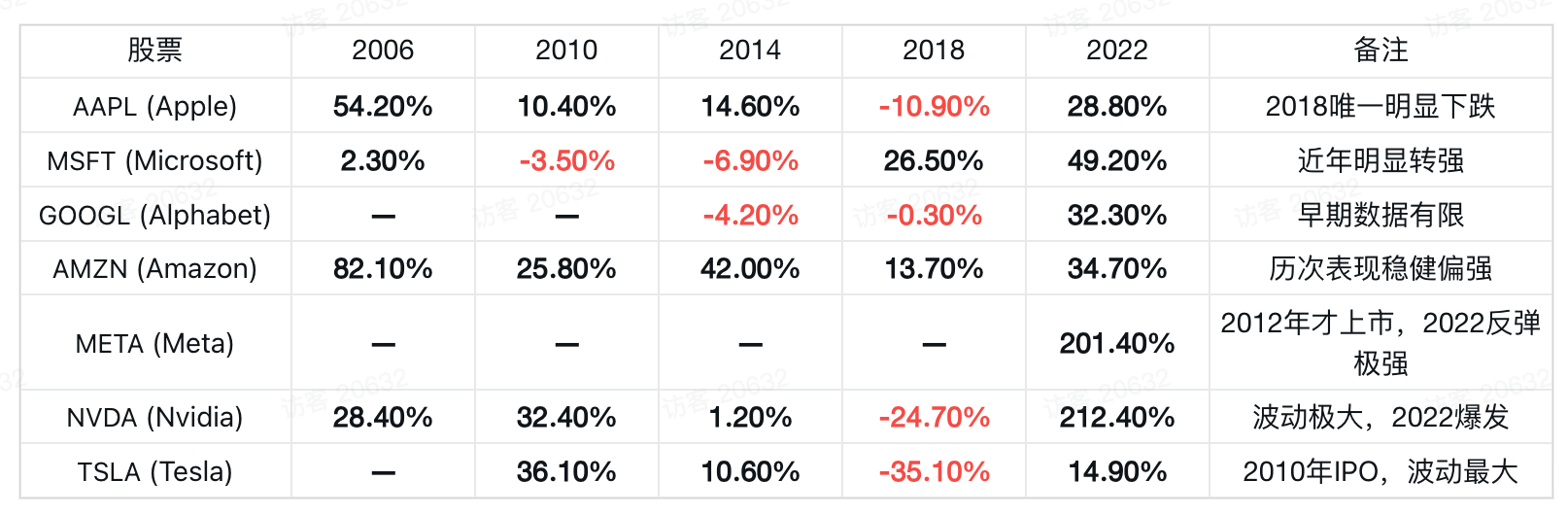
Second, among the so-called Magnificent Seven over the last five midterm cycles, most stocks also rose in the November-to-January period. The article says 2018 was the weakest case, with Apple, NVIDIA, and Tesla each falling by more than 10%.
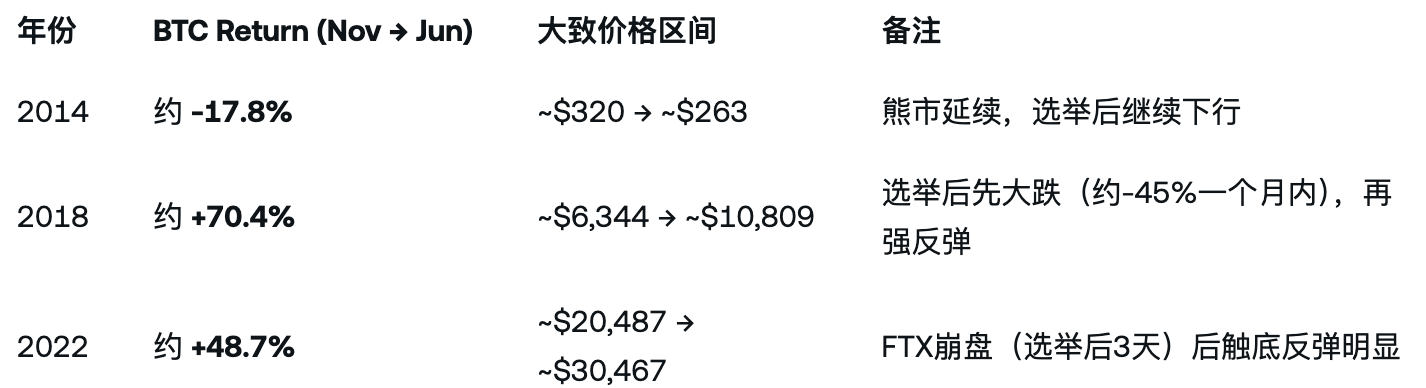
Third, in crypto, the bottoms of the last three Bitcoin cycles all came after U.S. midterm elections: 71 days after the election in 2014, 39 days after in 2018, and 13 days after in 2022. The report says some analysts believe that if the pattern repeats, late 2026 to early 2027 could become the time window for the next cycle bottom in Bitcoin.
Looking only at BTC price action, the article says Bitcoin gained 50% to 70% in the post-midterm period from November to January in both 2018 and 2022.
How crypto-linked stocks performed last time
The report says crypto-related equities outperformed the broader market in the most recent post-midterm window and rebounded in step with BTC, making them high-beta assets.
- Strategy (MSTR) rose from about $25 in early November of that year to about $34 by the end of June the following year, a gain of roughly 30%.
- Coinbase (COIN) climbed from about $63 in early November to about $71.5 by the end of June the next year. Although it fell at one point to the low-$30 range, it still finished with a gain of about 13%.
- Crypto miners including RIOT moved closely with BTC during the same period. The article says they rebounded sharply in the first half of 2023 as Bitcoin and risk appetite recovered, and their full-year gains expanded as the market improved.
Odaily concluded that even with the market still facing a complex mix of Federal Reserve rate hikes, U.S.-Iran tensions, and AI financing risks, asset performance after the midterm election remains worth watching, with investors choosing their own timing for bottom-fishing or rebound trades.



