
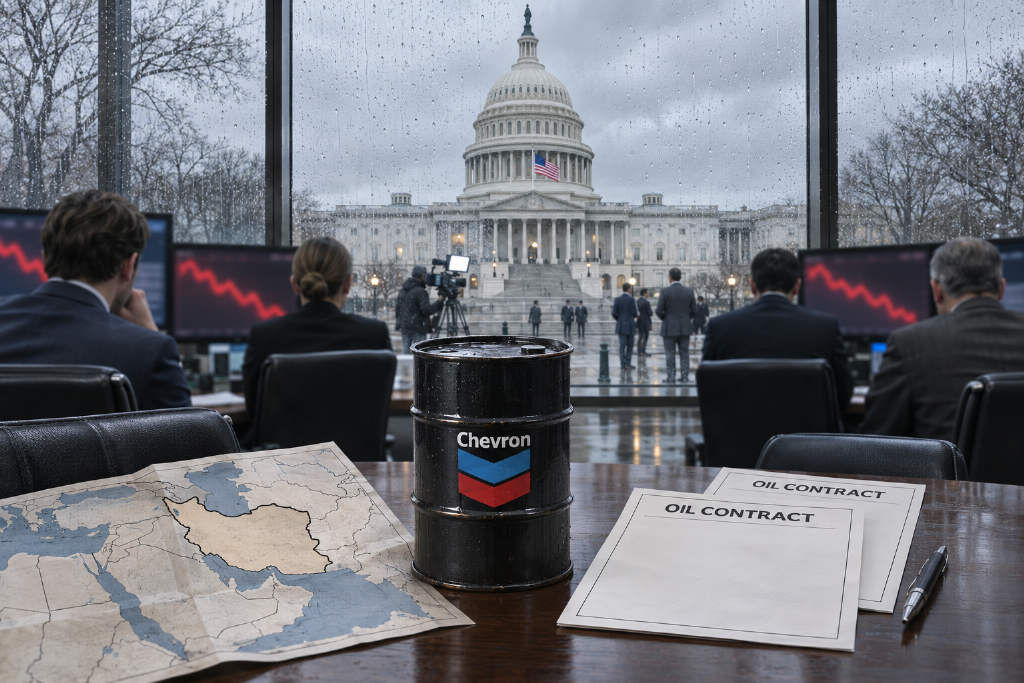
Oil prices got slammed after Democrats took both chambers in the U.S. midterm elections, with traders rushing to factor in one idea: a new balance of power in Washington might speed up an end to the Iran war.
WTI crude briefly sank to $87.13 a barrel, down more than 9.3% on the day. Brent slid to $93.22, off about 10% and marking its biggest one-day drop since May. WTI later found some footing near $88 a barrel, while Brent finished around $95. North Sea crude touched a fresh low. European natural gas prices fell hard too.
Political signals hit the energy market all at once
The sell-off came right after a burst of political comments. U.S. Vice President Vance publicly pinned the Republican loss on the Iran war, saying, “The reason we lost the election is this war.” He also said Trump himself admitted that on Tuesday night.
Then Senate Minority Leader Chuck Schumer, a Democrat, said he would push to end the war, which he said had already stretched on for nearly nine months, and added that some Republicans were part of that push. House Democratic leader Hakeem Jeffries said Democrats would also move legislation to block Trump’s tariff policy and end the Iran war.
That was enough to trigger a fast repricing of geopolitical risk in oil, as traders bet the conflict might cool sooner than they had expected.
Democratic control of Congress narrows Trump’s room, but does not remove it
Democrats captured both the Senate and the House in the midterms and cracked several long-standing Republican strongholds for the first time in decades. In the U.S., the outcome was widely seen as a major political blow to the Trump administration. And it raised expectations that Trump will have far less room to govern over the next two years.
On fiscal matters, Democratic control of Congress gives lawmakers more leverage over military spending. Dennis Kissler, senior vice president of trading operations at BOK Financial Securities Inc., said, “Democratic control of Congress may tighten U.S. military spending and push for an earlier end to the war.”
Kissler also said the main pressures on oil right now are a rebound in Middle East crude exports and Trump’s signal that he has no immediate plan to launch a new round of strikes on Iran.
Congress can constrain funding, but the White House still holds broad military authority
The report also cautions that the market may be getting ahead of itself on ceasefire odds. Congress can, in theory, limit funding for military action against Iran. But the president still keeps broad freedom on foreign policy and military decisions. Especially once operations are already in motion.
According to the report, Trump leaned heavily on executive orders throughout his term, though those moves also carry the risk of Supreme Court challenges. So a hostile political mood in Washington may not, by itself, be enough to force a shift in the president’s Iran policy.
The article says Trump now has three options: launch a new round of strikes, cut a deal quickly, or keep the status quo. None comes cheap.
Iran rejects the election-based ceasefire narrative
While markets were pricing in a better chance of de-escalation, Iran sent the opposite signal. According to China Central Television, Iran’s Supreme Leader Mojtaba said in a statement on local time Nov. 4 that anyone who believed the U.S. midterm result would change Washington’s hostility toward Iran was “gravely mistaken.”
Mojtaba said that even the slightest tendency to give ground to what he called a “hegemonic enemy” would only make that enemy more unrestrained. He also said Iran’s control of the Strait of Hormuz and its destruction of U.S. military bases in regional countries were a response to U.S. aggression and part of a struggle against arrogance.
For now, oil has moved faster than politics. Prices already reflect a market wager on easing tensions. But U.S. political infighting, the limits of congressional restraint, and Iran’s hard line all mean an actual end to the war is still far from certain.



