
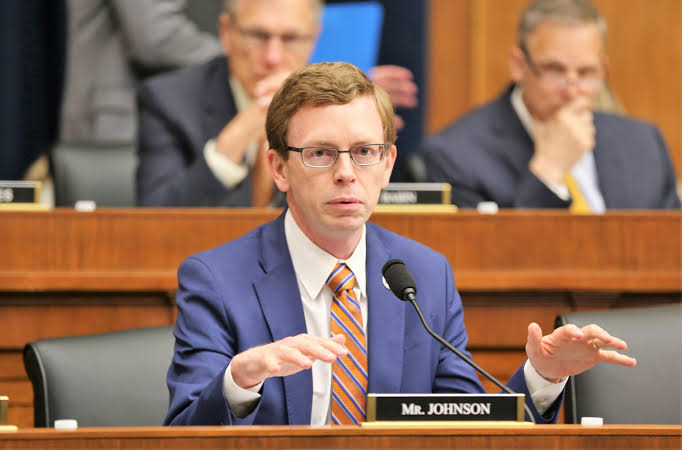
U.S. lawmakers reopened a key regulatory debate on July 21 as the House Agriculture Committee’s Subcommittee on Commodity Markets, Digital Assets, and Rural Development held a hearing on customer protection and market integrity in sports event prediction markets. With platforms such as Polymarket and Kalshi offering contracts tied to elections, sports contests and public events, Congress is again facing a central question: should these products fall under federal commodities oversight, or should they be handled by state gambling regulators?
Subcommittee Chair Dusty Johnson said prediction markets have existed for years, but technology has sharply increased their scale and visibility. In his view, changes over the past two years have moved faster than regulators expected, forcing current law to answer questions it was never built to address. Congress, he said, needs to determine whether the Commodity Futures Trading Commission, or CFTC, has enough tools to supervise a rapidly growing event-contract market.
Sports contracts are blurring the line between derivatives and betting
The main dispute at the hearing was how to classify sports-related prediction contracts under the law.
Those backing federal oversight argue that if event contracts trade under the CFTC’s framework, they should be treated as a type of financial derivative. On that view, platforms should meet standards tied to market integrity, risk management, disclosures and customer protection.
Opponents see the matter differently. They argue that contracts tied to game winners, home run totals or championship results are, in substance, very close to sports betting. If those products can bypass state gambling licenses, they say, that would weaken regulatory systems built up by states over many years.
Johnson said derivatives markets were originally designed to serve risk management and price discovery. Congress, he said, now has to decide whether sports event contracts still fit those financial purposes. If platforms are mainly attracting users through entertainment-style wagering, the debate reaches beyond commodity law and into gambling law, consumer protection, safeguards for minors and problem gambling. That conflict has become much sharper as prediction markets move from a niche financial tool toward a broader consumer market.
Federal and state regulators are pushing against each other
At the federal level, the CFTC currently oversees certain event contracts, while state governments have long controlled sports-betting licenses and enforcement. As trading volumes in sports prediction products rise, regulators in multiple states have started challenging whether these platforms are lawful, arguing that any product linked to the outcome of a sports event should follow local gambling rules.
Crypto and blockchain industry groups have raised a different concern. If individual states can reject event contracts that received federal approval, they argue, that would undermine the consistency of a national derivatives market.
Political pressure is also building. In June, Senators John Curtis and Adam Schiff asked the CFTC to investigate Polymarket after allegations that the platform used influencer marketing to reach U.S. users. The report notes that Polymarket has previously faced regulatory action related to restrictions on U.S. users, and that the latest dispute shows how difficult it remains to fully separate offshore platforms, blockchain-based trading and U.S. traffic.
Congress is now weighing whether the law needs to change
Prediction markets are still small compared with the broader derivatives market overseen by the CFTC, but their growth has become large enough to draw congressional attention. Some platforms are posting monthly trading volumes in the billions of dollars, and market themes have expanded from political elections and economic data into sports, entertainment events and breaking news.
That expansion means event contracts are no longer limited to professional investors using them for hedging. They are increasingly reaching a much wider base of retail users.
The hearing did not result in a new bill. It did, however, send a clear signal that Congress plans to examine whether current commodity law is equipped to handle newer risks created by prediction markets. The next phase of debate is expected to focus on whether the CFTC needs broader authority, whether states can restrict federally approved products, whether platforms should face tighter customer identity checks and risk disclosures, and whether sports event contracts should be subject to a separate set of rules.
As prediction markets and sports betting continue to overlap, the U.S. regulatory fight over these products is moving into a new stage.