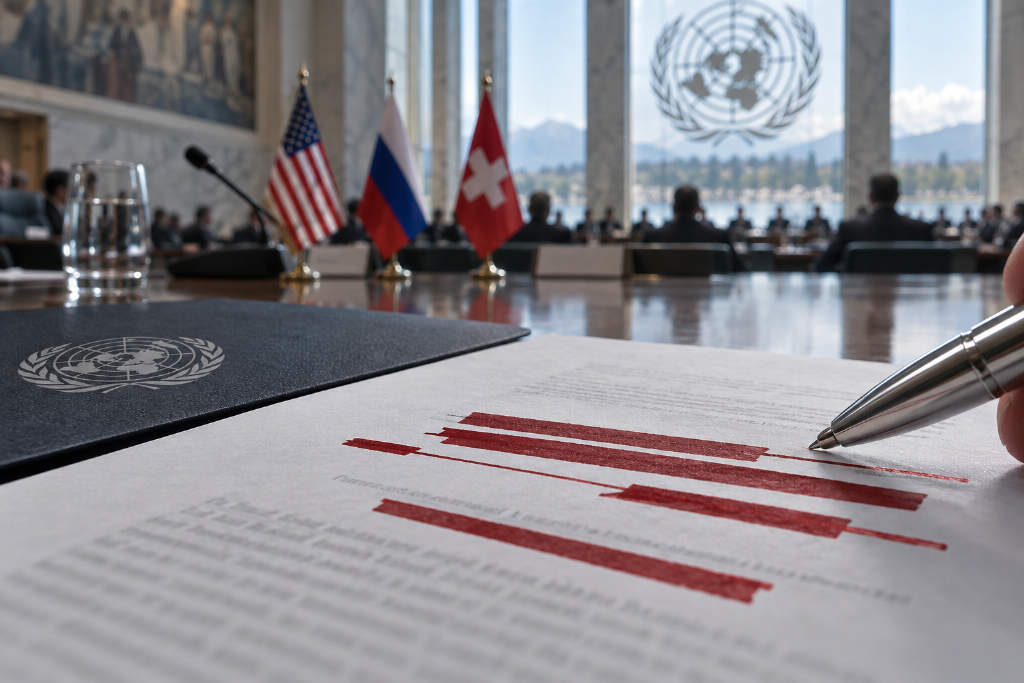
The Washington Post reported that diplomats from the United States and Russia rewrote parts of a draft agreement on lethal autonomous weapons during negotiations in Switzerland earlier this month, removing several safeguards tied to the use of AI in warfare. The talks had brought together hundreds of diplomats in a large United Nations conference room and were aimed at producing what could have become the first agreement governing the use of lethal AI weapons. According to three people familiar with the negotiations, the final day shifted into a tense confrontation. Over roughly 15 hours, U.S. and Russian diplomats made intensive edits to the text. Those changes allegedly removed language requiring such systems to operate in a "predictable" and "reliable" manner, deleted a provision calling for ethical considerations in the use of AI weapons, and struck a clause that would have required human review of AI-generated military targets before a strike. The report said the narrower text showed how Washington and Moscow worked to weaken global rules for lethal AI weapons, as the Pentagon accelerates the integration of the technology into battlefield strategy.
BlockBeats reported on Sept. 27, citing The Washington Post, that hundreds of diplomats gathered earlier this month in a large United Nations conference room in Switzerland to push for a stronger treaty governing the use of lethal autonomous weapons.
The report said the effort could have produced the first agreement setting rules for the use of lethal artificial intelligence weapons. On the final day of negotiations, however, the talks turned into a sharp confrontation.
Draft text was heavily revised in the closing hours
According to three people familiar with the negotiations, U.S. and Russian diplomats intensively revised the draft over roughly 15 hours, removing a series of provisions meant to ensure the safe use of AI weapons.
Those people said the two sides deleted language requiring the systems to operate in a "predictable" and "reliable" way. They also removed a provision that would have required ethical considerations in the use of AI weapons.
Human review requirement was also removed
The same sources said the U.S. and Russian teams also struck a clause that would have required a human to review AI-generated military targets before a strike was launched.
The Washington Post said the watered-down agreement showed how the United States and Russia worked to weaken global regulatory rules for lethal AI weapons. At the same time, the Pentagon is accelerating the integration of the emerging technology into its battlefield strategy.
This article was originally published by Bit.Fan. For more cryptocurrency news and market insights, visit www.bit.fan. Disclaimer:
The market information, project data, and third-party content displayed on this platform are for industry information sharing only and do not constitute any form of investment advice or return commitment.
Cryptocurrency trading carries high risks. Users should fully assess their risk tolerance and make independent decisions. All profits, losses, and legal responsibilities are borne by the users themselves.