
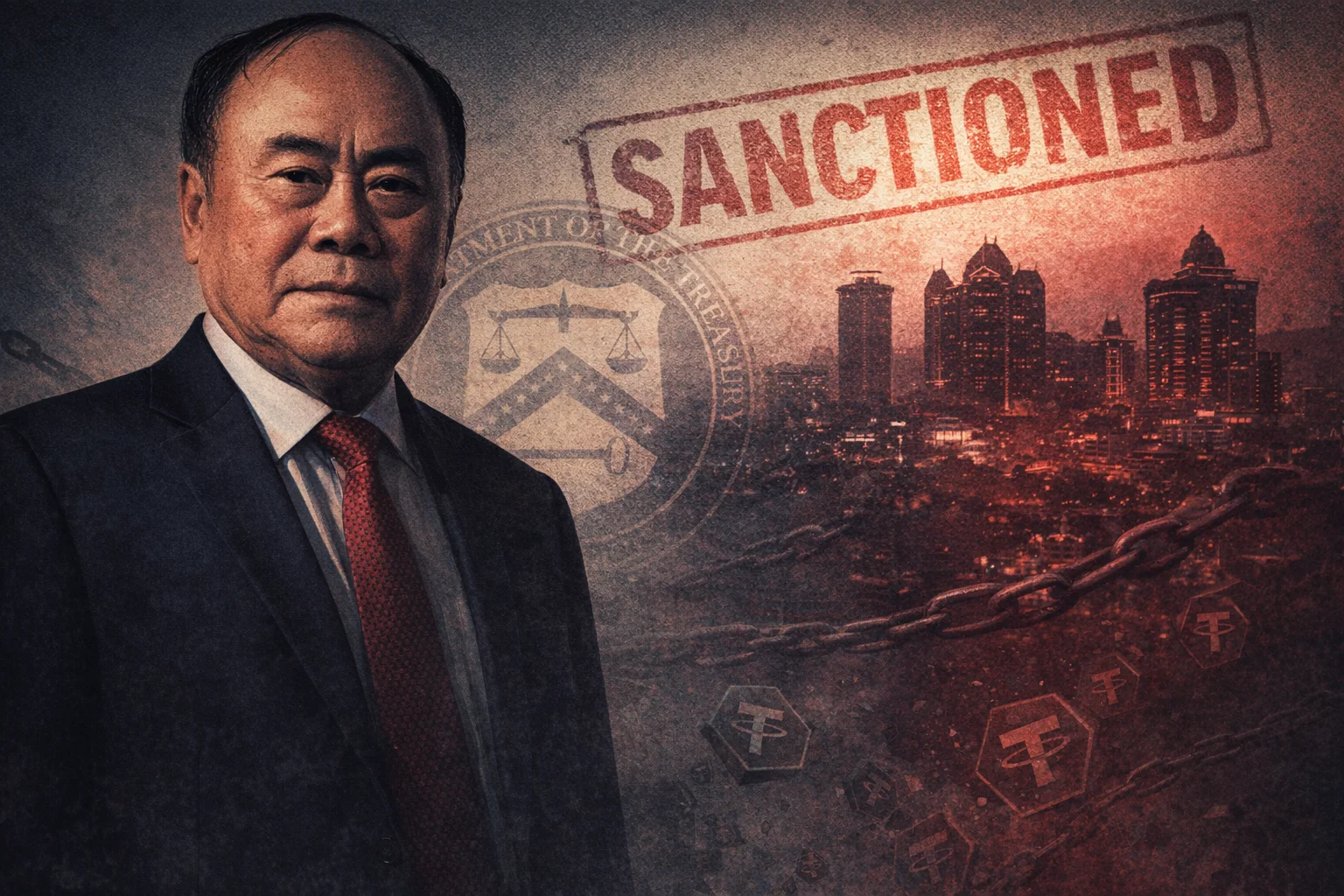
On April 23, the U.S. Treasury's Office of Foreign Assets Control (OFAC) sanctioned Cambodia Senator Kok An and 28 associated entities, accusing him of converting his resorts and casinos into crypto fraud factories run by human trafficking victims in pig butchering schemes. The same day, the DOJ's Scam Center Strike Force seized 503 scam domains, and Tether coordinated the freeze of $344 million USDT linked to illegal activities.
Kok An: From Political Mogul to Fraud Factory Operator
Kok An, one of Cambodia's wealthiest and best-connected figures, owns extensive resort and casino assets. OFAC alleges he leased these properties to criminal groups, transforming them into factories churning out romance scams targeting Americans. Victims were forced to pose as love interests, luring targets into fake crypto trading platforms. The casinos also laundered illicit proceeds. Treasury Secretary Scott Bessent stated the department will target fraudsters regardless of location or connections.
Multi-Agency Sweep: 503 domains and $344M USDT Frozen
The operation went beyond a single sanction. OFAC listed 28 entities including casinos, banks, and investment firms. The DOJ simultaneously seized 503 domains and one social media platform, filing charges against two individuals running scam centers in Myanmar and planning Cambodia expansion. Tether's freeze of $344M USDT marks a milestone in stablecoin compliance. Treasury estimates Americans lose at least $10 billion annually to Southeast Asian scam centers.
Pig Butchering: From Isolated Cases to Industrial Scale
Crypto scams have become a national-level criminal industry. Last fall, DOJ seized approximately $14 billion in Bitcoin from a Cambodia-linked case, the largest forfeiture in history. The Prince Group case saw 127,000 Bitcoin seized, sanctions on HuiWang Group, and involvement of nine Taiwanese firms. Crypto's speed, anonymity, and regulatory gap make it the preferred payment method for these scams.
Impact and Limits of Sanctions
The sanctions symbolically break the immunity pact for politically connected figures. Tether's freeze signals on-chain assets are not beyond the law. However, sanctions alone cannot dismantle physical facilities, repatriate trafficked workers, or break local political complicity. As long as scam compounds in Myanmar, Cambodia, and Laos operate, enforcement actions will only scrape the surface. The fight is far from over.