
U.S. stocks snapped a three-session losing streak on the first trading day after the Federal Reserve raised rates, with the market recovering quickly as oil prices retreated from this week’s highs, the 10-year Treasury yield moved back below 5%, and weekly initial jobless claims unexpectedly fell to 196,000. Those shifts helped cool the tension that had built up a day earlier. The Nasdaq led the rebound, semiconductor and AI hardware shares did most of the heavy lifting, and crypto-linked names got an extra push from a new regulatory exemption.

Even so, the hiking cycle has just restarted, and rate futures now show a 53.1% market-implied probability of another 25-basis-point increase in October. By that measure, Thursday’s move looked more like a repair rally after a concentrated shock than a full reset in sentiment.
Indexes rebound as volatility drops
The three major U.S. indexes all finished higher. The Dow Jones Industrial Average rose 0.62% to 51,779.85, the S&P 500 gained 1.14% to 7,637.74, and the Nasdaq climbed 1.69% to 26,418.300. The VIX fell 12.82% to 15.44.
The Philadelphia Semiconductor Index added 3.12% to 11,596.49. All seven megacap tech names closed in positive territory: Nvidia rose 2.54%, Amazon gained 2.13%, Microsoft added 1.52%, Apple climbed 1.38%, Meta rose 1.34%, Google gained 1.30%, and Tesla was up about 1.2%. The Nasdaq Golden Dragon China Index rose 0.65% to 5,771.27.
Treasuries recover and oil eases
The bond market improved noticeably. The 2-year Treasury yield fell to 4.671%, while the 10-year yield dropped to 4.939%. The U.S. dollar index edged down 0.03%.
In commodities, WTI crude settled at $101.91 a barrel and Brent crude closed at $104.82 a barrel. Spot gold rose to $4,342.63 an ounce. In crypto, Bitcoin traded near $76,500 and Ether was around $2,450.
After Wednesday’s Fed hike, long-dated Treasury yields briefly pushed above 5% and oil stayed elevated. By Thursday, both sources of pressure had eased. Saudi Arabia increased crude supply routed through Oman and moved ahead with repairs to damaged pipelines, reducing part of the market’s supply concerns. Oil stayed above $100 a barrel, and tensions in the Middle East had not fully settled, but at least on the day they did not add fresh fuel to inflation expectations.
Labor data helped as well. U.S. initial jobless claims fell to 196,000 last week, the lowest level since mid-July, showing that the labor market remains stable. Housing continued to feel the pressure from high rates: single-family housing starts rose 7.6% in August, but building permits fell 1.8%, and total housing starts declined 2.6%.
Markets, however, have not walked away from the prospect of more tightening. Rate futures now price a 53.1% chance of another 25-basis-point hike in October, up from 27.2% a week ago. That leaves the latest stock and bond rebound looking largely like a recovery from the previous day’s concentrated selloff.
Chip stocks lead as AI hardware regains momentum
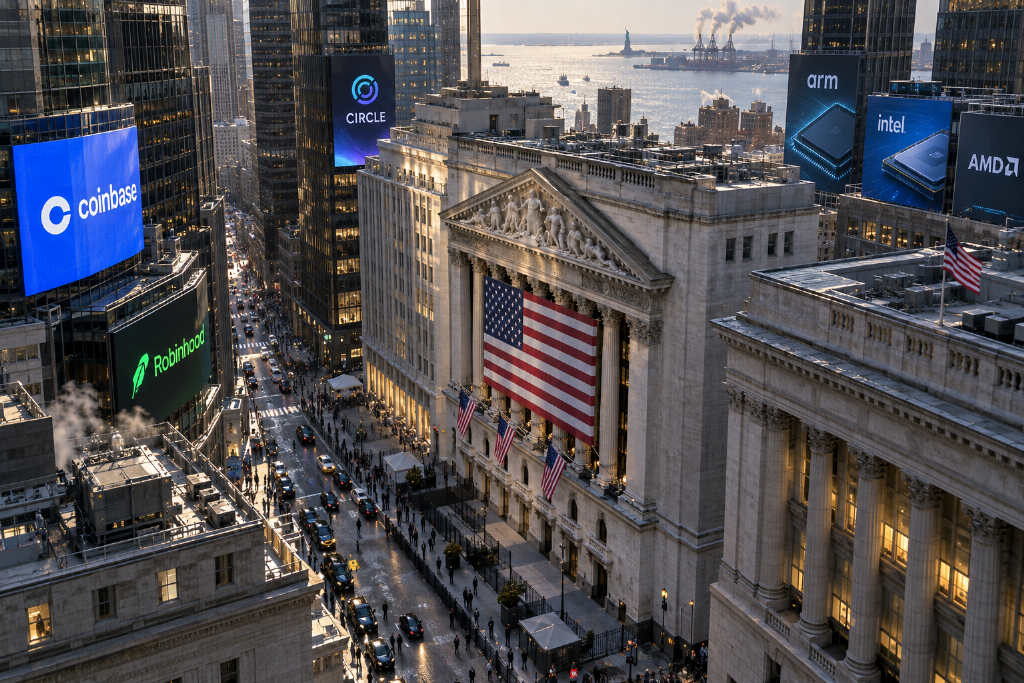
Semiconductors were one of the strongest groups in the market. Arm surged 8.6%, Intel rose 7.7%, AMD gained 6.5%, Sandisk advanced 6.2%, Micron added 5.5%, and Marvell climbed 4.8%. AI hardware shares had sold off sharply on Monday, but after several sessions they have already recovered a meaningful portion of those losses.
There was also a fresh industry signal on the demand side. GlobalFoundries and Marvell expanded their multi-year partnership to boost output of silicon-germanium chips used in high-speed optical links for AI data centers, covering pluggable optical modules, near-packaged optics, and co-packaged optics.

The importance of that deal lies in where AI data center expansion is heading. The buildout is no longer only about adding more GPUs. It is also moving toward upgrades in the interconnect layer. Taken together with recent strength in optical communications stocks, the development suggests that AI infrastructure spending is still spreading into connectivity. As GPU counts rise, moving data quickly between chips and servers has become another bottleneck in scaling data centers.
Not every AI-related stock joined the rebound. CoreWeave fell 4.2% after the company said it plans to issue $3 billion in convertible notes and launch an equity financing program. Demand for AI compute remains strong, but the market is still pricing financing costs separately for companies with heavy capital spending needs.
SEC exemption boosts crypto-linked shares
Outside semiconductors, crypto-related stocks also moved higher after a new rule from the U.S. Securities and Exchange Commission. The SEC introduced a five-year exemption for tokenized stock trading, allowing eligible platforms to operate outside certain existing exchange and broker-dealer rules.
Circle rose 5.8%, Coinbase gained 5.8%, and Robinhood added 5.2%.
The exemption covers tokenized securities that correspond to actual ownership of shares, meaning investors still retain shareholder rights such as dividends and voting. Synthetic tokens that only track stock prices are not included. For exchanges and broker-dealers, the exemption creates room to test issuance, trading, and settlement for tokenized equities inside a compliance framework, without waiting for Congress to pass a full crypto market structure law.
The U.S. Senate had previously failed to advance a crypto market structure bill, a setback that had weighed on the sector. This time, the SEC has opened a direct testing path, giving tokenized stocks in the U.S. a clearer route forward.
What markets are watching next
The next major event is the quarterly triple witching session, when stock index futures, index options, and single-stock options all expire at the same time. That could drive a visible jump in trading volume and end-of-day volatility.
In technology shares, the key question is whether money keeps flowing into semiconductors and AI hardware. The Philadelphia Semiconductor Index has already recovered part of its early-week decline. The next test is whether the rebound can spread from chips into optical communications, memory, and related segments.
Rates remain the other central variable. With markets now pricing a 53.1% chance of an October hike, the behavior of Treasury yields around 5% will directly shape the valuation backdrop for technology stocks next week.