
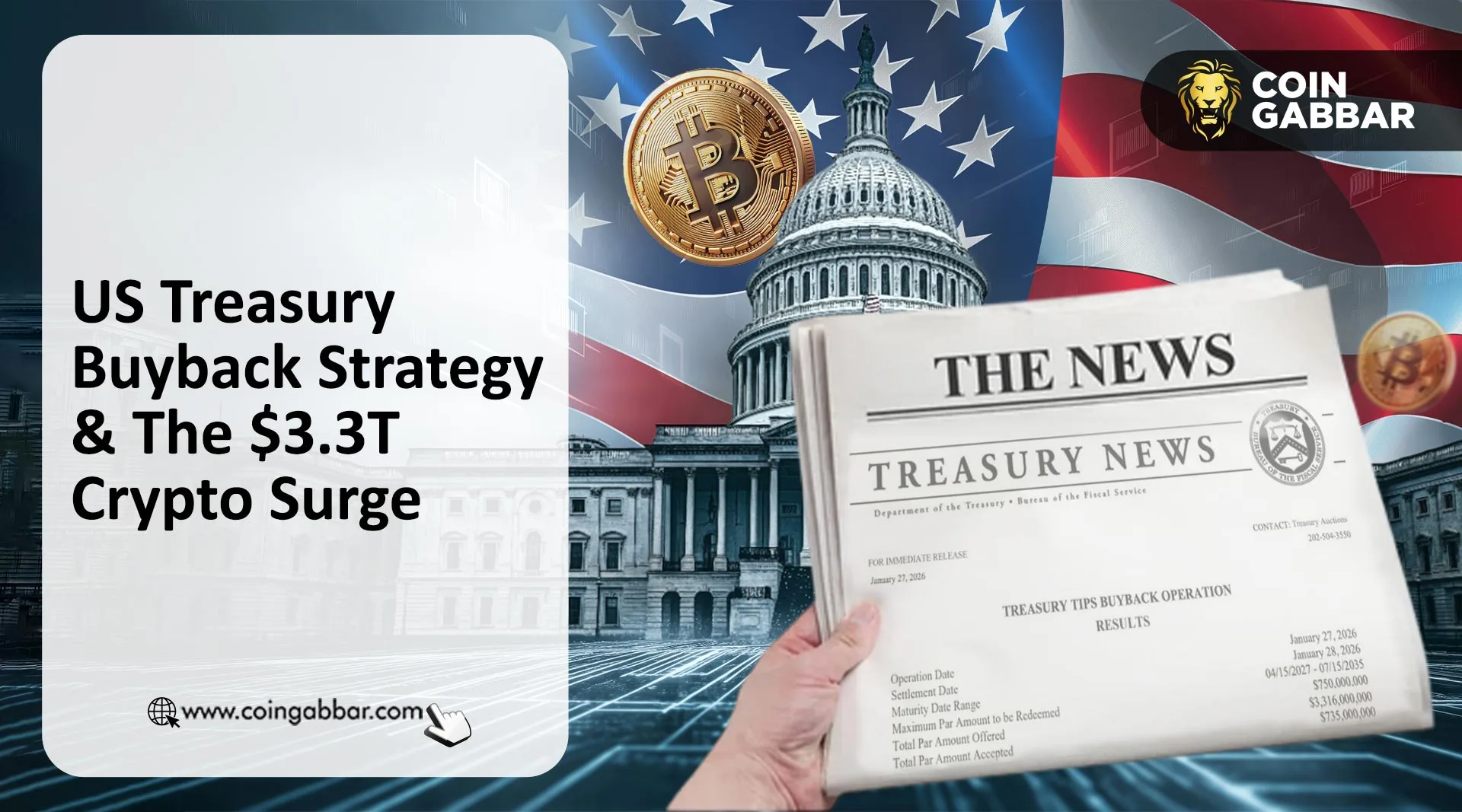
The US Treasury confirmed on January 27, 2026 that it bought back about $735 million of its own debt, targeting inflation-protected securities with maturities extending as far as 2035. In a market as large as US government debt, that amount is modest. The significance lies elsewhere: improving trading conditions in parts of the bond market that have become less liquid over time.
This is not a replay of quantitative easing. The Treasury is not creating new dollars to flood markets with cash; it is using existing funds to repurchase older, less actively traded securities, often called off-the-run bonds. The stated purpose is practical rather than dramatic: keep market functioning smooth, limit friction for major financial institutions, and avoid abrupt pressure on government borrowing costs. The source also points to rates sitting near 4.25%.
Bond-market maintenance, not monetary stimulus
The source frames the buyback program as tactical cleanup. By removing older bonds that are harder to trade, the Treasury can help preserve liquidity across the market while also managing the government’s cash position. A cleaner market structure makes it easier for banks, primary dealers, and large investors to move capital efficiently. Short point. That kind of stability often matters more than headline size.
For crypto, the main issue is liquidity transmission. When the Treasury buys bonds from primary dealers and banks, cash returns to those institutions. That does not equal fresh money creation, but it can keep financial plumbing clear. In practice, a smoother funding environment tends to favor risk assets more than a stressed or disorderly rates market would.
Why stablecoins and Bitcoin watch Treasuries closely
The article links this directly to the roughly $3.3 trillion crypto market. Major stablecoin issuers such as Tether and Circle reportedly hold more than $100 billion in Treasuries combined. A healthier Treasury market supports the quality and manageability of those reserve assets, which gives this bond-market shift relevance far beyond traditional finance desks.
The same backdrop can shape investor positioning in Bitcoin and Ethereum. If Treasury yields remain steady, sidelined capital may be more willing to rotate into higher-growth assets. The source argues that liquidity injections of this kind have historically acted as a medium-term cushion for risk markets, helping Bitcoin hold above important support zones instead of breaking down quickly during stress.
Treasury buybacks seen as a stabilizing force
The broader interpretation in the source is that the US financial system is moving into a phase of active maintenance. Through buybacks, the Treasury is acting as a stabilizer for traditional markets. For Bitcoin, that does not automatically mean explosive upside. It may, however, reduce the odds of panic-driven selling like the episode referenced in late 2025.
The article’s closing view is straightforward: if the Treasury keeps yields predictable, the sideways range seen in crypto could eventually give way. The foundation here is not aggressive money printing. It is steadier liquidity and a more orderly bond market.