

Short positions in U.S. Treasury futures have continued to pile up, raising the risk of a sharp short-covering move if economic data weaken or Federal Reserve officials turn dovish.
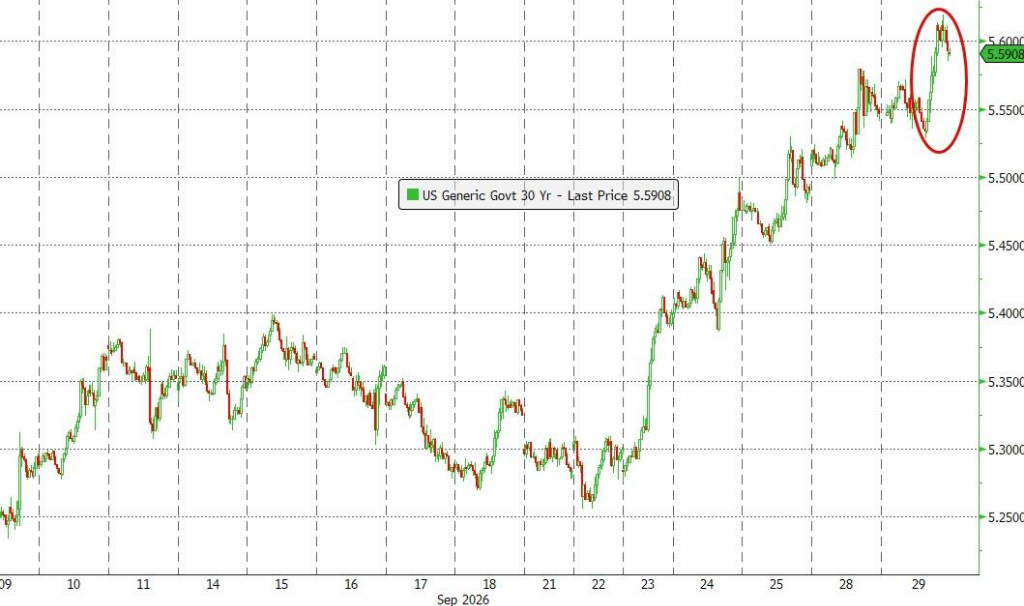
According to the original report from Wallstreetcn, U.S. Treasuries extended their months-long selloff on Tuesday as a surge in corporate bond supply weighed on the market, pushing the 30-year Treasury yield to its highest level since 2002. Elevated energy prices have also kept inflation pressure alive, reinforcing bearish sentiment toward government bonds.
That positioning now looks crowded. Any unexpected sign of economic cooling could force traders to unwind short bets quickly and send yields sharply lower in the near term.
Bond traders are watching two data points this week: the Fed’s preferred inflation gauge due Wednesday and the monthly employment report due later in the week. Economists surveyed by Bloomberg expect nonfarm payrolls to rise by about 90,000 in September, slowing from an unexpectedly strong 162,000 in August.
Short exposure has risen quickly
CME data show open interest in both 5-year and 10-year Treasury futures climbed sharply over roughly the past two weeks.
Data from the Commodity Futures Trading Commission showed asset managers added more than 100,000 new short positions in 10-year Treasury futures in the week ended Sept. 22, marking one of the largest weekly increases since 2023.
Open interest in 5-year contracts increased in 11 of the past 12 trading sessions. For 10-year contracts, it expanded in 13 of the past 14 sessions.
Since the start of last week, the combined increase in futures risk exposure across the two maturities amounted to about $32 million per basis point, roughly equivalent to a $75 billion position in the current 5-year cash Treasury market.

Bank of America strategists including Meghan Swiber wrote that futures positioning still points to further upside in yields, and that short positions in short- and medium-dated maturities remain profitable. The team also said asset managers keep adding Treasury shorts, especially in intermediate and longer tenors, while trend signals from commodity trading advisors, or CTAs, show they are still firmly short Treasuries.
The report added that the latest build in positioning may not be purely directional. It could also reflect basis trades against cash Treasuries or hedging activity by asset managers against bond holdings, adding complexity to the market structure.
Options market points to hedging demand
As bearish positions continue to accumulate, weaker-than-expected economic data or dovish comments from Fed officials could trigger aggressive short covering and drive yields down quickly, at least in the short run.
Moves in the options market already reflect that concern. Bloomberg data showed the skew in long-bond futures options shifted sharply over the past week, with put premiums rising to the highest level since August. That suggests traders are actively buying protection against another rise in yields, which has made puts more expensive relative to calls.
Some bearish hedges are also set to expire later this week, meaning those positions cover the event risk tied to Friday’s nonfarm payrolls report.
At the same time, JPMorgan’s Treasury client survey showed overall positioning was unchanged in the week ended Sept. 28, while long positions remained at the highest level since last November. That suggests some bullish exposure is still in place, providing a base for a potential short-covering move.