
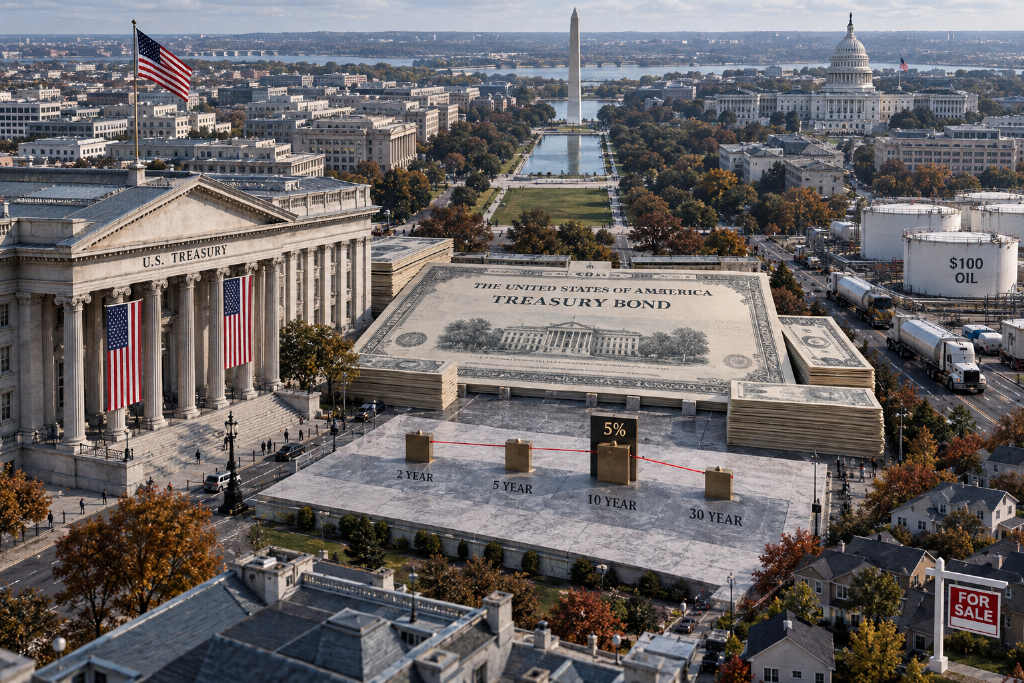
According to BlockBeats, the U.S. 10-year Treasury yield touched the key 5% level on Monday, reaching that mark again for the first time since 2023.
The report said selling in the Treasury market has intensified as pressure persists from the Iran conflict, elevated oil prices, and the U.S. fiscal deficit. Long-term financing costs have risen sharply, and the 30-year fixed mortgage rate has moved back above 7%. Higher rates are now feeding through to the broader U.S. economy.
Energy and housing costs are rising together
International oil prices have climbed back above $100 a barrel, while the average U.S. diesel price has moved past $6 a gallon. With energy and housing costs rising at the same time, household discretionary spending could face more pressure. Personal consumption accounts for about 70% of the U.S. economy, so weaker household spending could also affect growth later on.
Markets are watching the yield curve more closely than the headline level
BlockBeats said the market is paying closer attention to the rapid flattening of the yield curve than to the 10-year yield’s absolute move to 5%. Last week, the spread between 2-year and 10-year Treasuries narrowed to 31 basis points, and the gap between 2-year and 30-year Treasuries tightened to 71 basis points.
That shift suggests short-end rates are still being pushed by expectations for additional rate hikes, while long-end yields may have less room to move higher. In other words, the market may be pricing in both "higher rates" and the risk of slower economic growth ahead.
Valuation room for risk assets is getting tighter
At the same time, the report said tariff, energy, defense, and fiscal policies under the Trump administration continue to push up inflation and deficit expectations. The investment boom tied to AI infrastructure is also adding to capital demand across the economy.
Although the S&P 500 remains up more than 10% this year, a 5% risk-free rate is narrowing the margin for valuation error in equities and other risk assets. Whether the bond market and the broader economy can absorb higher financing costs is shaping up as the next key question for markets.