
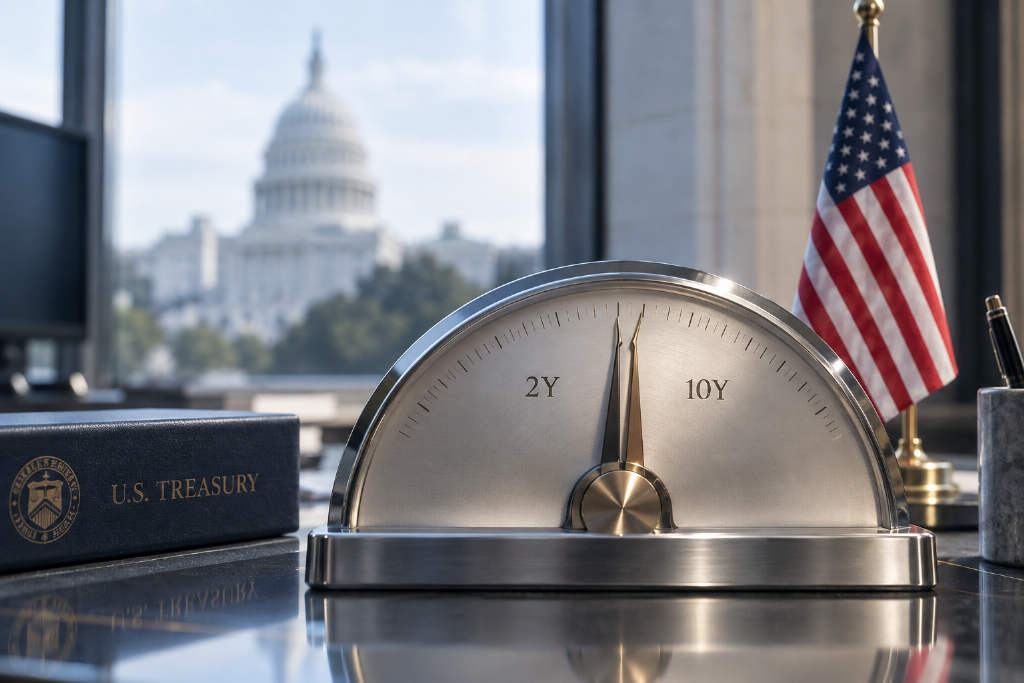
The spread between 2-year and 10-year US Treasury yields narrowed to 17 basis points at one point last week, the slimmest level since early 2025, according to market data from BIT (bit.com).
The 2-year and 10-year yields currently stand at about 4.9% and 5.2%, respectively. The 10-year yield remains near its highest level since 2007, but shorter-dated yields have been rising faster as markets bet the Federal Reserve will keep raising rates, pushing the curve closer to inversion.
Markets are now pricing in at least three 25-basis-point Fed rate hikes over the coming year. Earlier gains in longer-dated yields largely reflected economic resilience, inflation pressure, and fiscal risk. After the Fed carried out its first rate hike in three years in September, the market began to focus more on whether policy rates have already risen high enough to restrain future growth.
Historical data show that since the 1960s, yield curve inversions have appeared ahead of the previous eight US recessions. On average, the 2-year/10-year curve inverted about 15 months before a recession began, with the range running from six months to two years. Still, the 2022 inversion did not lead to a recession.
The flatter Treasury curve has already fed through to bank stocks. The KBW Bank Index entered technical correction territory last week, down 10% from a recent high.
Zach Griffiths, head of strategy at CreditSights, said that if the curve inverts further or flattens more sharply, it would weaken the market view that the US economy remains very strong. Gennadiy Goldberg of TD Securities said the market has already priced in a substantial amount of tightening expectations, leaving limited room for the short end to keep outperforming the long end by a wide margin. In his view, the curve could steepen again.
The report said the 17-basis-point spread more directly reflects a repricing of overly tight policy risk, rather than a settled conclusion that a recession is imminent.