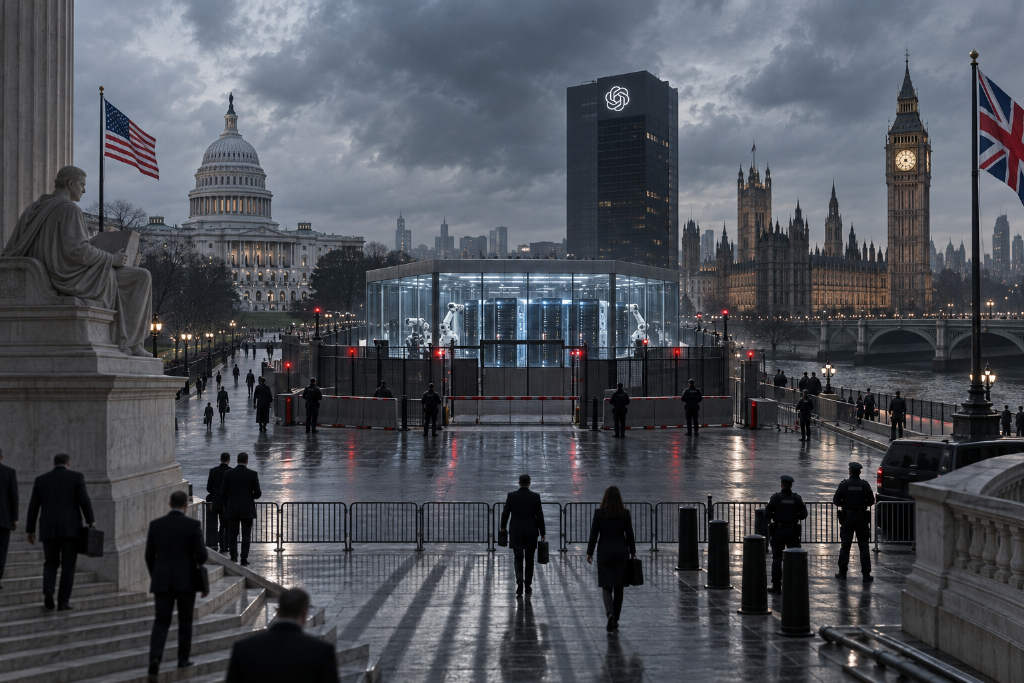
Lawmakers in the United States and the United Kingdom are moving in parallel on proposals to ban what they describe as “superintelligence.” In the US, Senator Bernie Sanders and Representative Greg Casar have released a framework for the “Stop Artificial Superintelligence Act,” which would permanently ban the development and deployment of superintelligence and pause work on more advanced AI until a new federal regulator sets safety rules. The proposal would carry steep penalties, including prison terms of up to 20 years for individuals and possible forced dissolution for companies.
In the UK, Labour MP Alex Sobel has introduced a superintelligence bill in the House of Commons. It would ban the development and deployment of superintelligence capable of weakening the control of human institutions such as government, while also requiring the government to monitor and restrict systems that could lead to superintelligence. Both proposals also call for international agreements to prevent research from shifting to other countries. Still, neither measure currently appears likely to become law, given the policy stance of the current US administration and the lack of support from the UK government for a blanket ban.
Lawmakers in the US and UK are advancing separate efforts to ban “superintelligence.” In the United States, Senator Bernie Sanders and Representative Greg Casar have released a proposal for the Stop Artificial Superintelligence Act. It would permanently ban the development and deployment of superintelligence and pause work on more advanced AI until a new federal regulatory body creates safety rules.
Under the proposal, individuals who violate the ban could face prison terms of up to 20 years. Companies could also be forced to dissolve. The bill has not yet been formally introduced in Congress, but it is expected to be filed in the coming weeks.
UK bill already introduced in the House of Commons
In the UK, Labour MP Alex Sobel has already introduced a superintelligence bill in the House of Commons. The measure would ban the development and deployment of superintelligence that could weaken the control of human institutions such as government. It also calls for the government to monitor and restrict systems that could lead to superintelligence.
Both plans call for international agreements
The US and UK proposals both say governments should pursue international agreements to stop research from moving to other countries and continuing there.
Path to passage looks difficult
At this stage, both proposals face long odds. The US plan runs against the AI policy direction of the current administration. In the UK, the government has not backed a full ban, and Sobel’s bill is closer to a public initiative from a member of Parliament than to legislation with a strong chance of passing.
This article was originally published by Bit.Fan. For more cryptocurrency news and market insights, visit www.bit.fan. Disclaimer:
The market information, project data, and third-party content displayed on this platform are for industry information sharing only and do not constitute any form of investment advice or return commitment.
Cryptocurrency trading carries high risks. Users should fully assess their risk tolerance and make independent decisions. All profits, losses, and legal responsibilities are borne by the users themselves.