
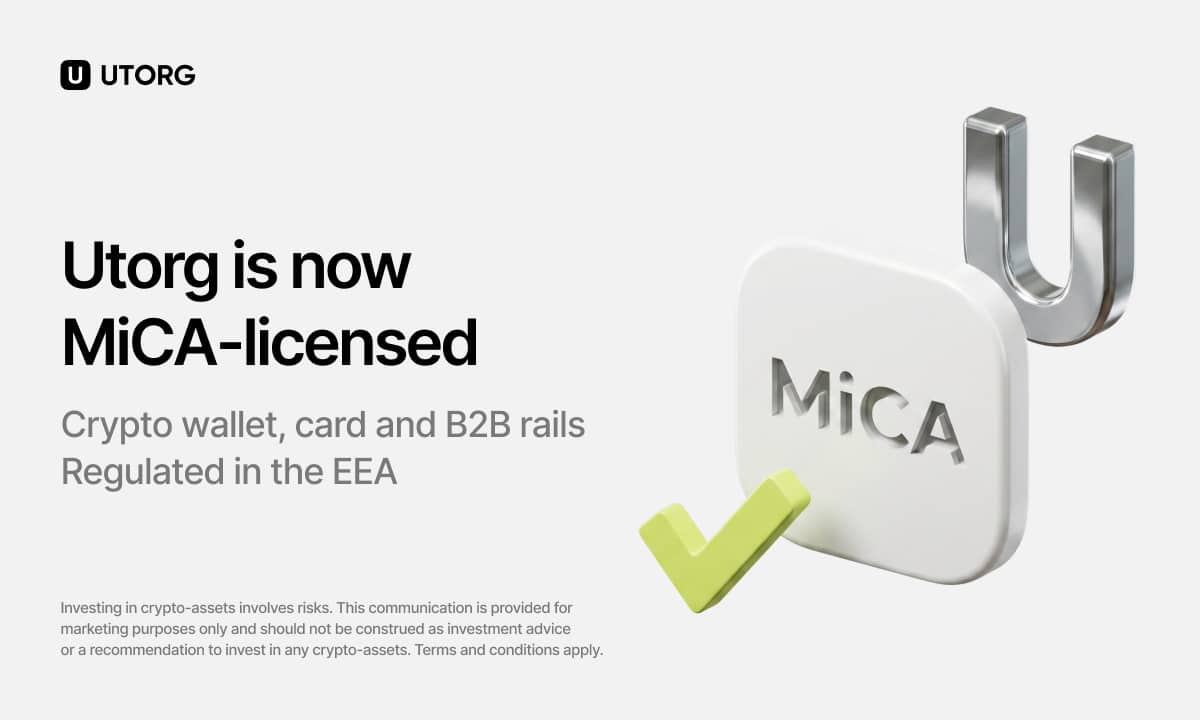
Utorg said it has received full authorization under the EU’s Markets in Crypto-Assets regulation, with the approval taking effect on July 1, 2026. That date is also the end of MiCA’s transition period, after which crypto-asset service providers without full authorization can no longer legally serve users in the European Economic Area.
With the license in place, Utorg is cleared to operate across all 29 EEA member states, a market of more than 450 million people. The company described itself as one of a limited number of platforms to complete the full authorization process and remain active from the first day of the new regime.
MiCA introduces binding protections for EEA crypto users
MiCA is the EU’s first unified framework for crypto-assets, setting enforceable standards on consumer protection, transparency, and financial integrity across member states. Under the rules described in the source material, user funds must be kept separate from company assets, fees must be disclosed in advance, and users gain a formal right to file complaints with a national regulator.
The same material states that if a MiCA-authorized platform fails, user assets are protected under EU law rather than being left to the discretion of an offshore jurisdiction. For platforms, the license also brings continuing obligations. Utorg said it is now subject to regular reporting and supervisory review under EU financial law.
Industry exits and restrictions picked up before the deadline
July 1, 2026 marks a clear regulatory cutoff. In the months before that date, a significant share of the market withdrew from Europe or limited operations there, according to the source. Utorg said it spent the past two years building its products, operations, and compliance systems to meet MiCA requirements instead of waiting for the rules to be delayed or softened.
“Most of the industry spent the last two years hoping MiCA would get delayed or softened. We spent it building toward it. For European users, July 1 means fewer options, stricter standards, and a much shorter list of platforms they can actually trust. We intend to be at the top of that list, not just because we’re authorized, but because we built a product that is safe by design. The license confirms what was already true.”
Wallet and crypto card services remain available through the app
From July 1, EEA users can continue to access Utorg’s full product suite through the Utorg App. The company said the app supports buying, sending, receiving, storing, and swapping across more than 170 cryptocurrencies and 14 blockchains, including BTC, ETH, and SOL. It also said the wallet is non-custodial, meaning the platform does not have access to user funds at any point.
Utorg’s crypto card can be used at more than 80 million merchants worldwide and supports Google Pay and Apple Pay. The company added that there are no issuance, maintenance, or top-up fees. The card operates under AML and KYC requirements mandated by MiCA.
Utorg also disclosed PCI DSS Level 2 certification for card payments
For card payments, Utorg said it holds PCI DSS Level 2 certification under the Payment Card Industry Data Security Standard. This framework is widely used across traditional payments and governs how card numbers, transaction records, and personal details are stored, processed, and transmitted. Compliance is checked through regular audits by an independent assessor.
Founded in 2019, Utorg operates in more than 130 countries and provides regulated on- and off-ramp rails, wallet infrastructure, and stablecoin solutions to fintechs, exchanges, digital asset platforms, and other businesses. Its consumer app is used by more than 2 million users and includes a self-custodial multi-chain wallet and a free Visa crypto card on iOS and Android.