
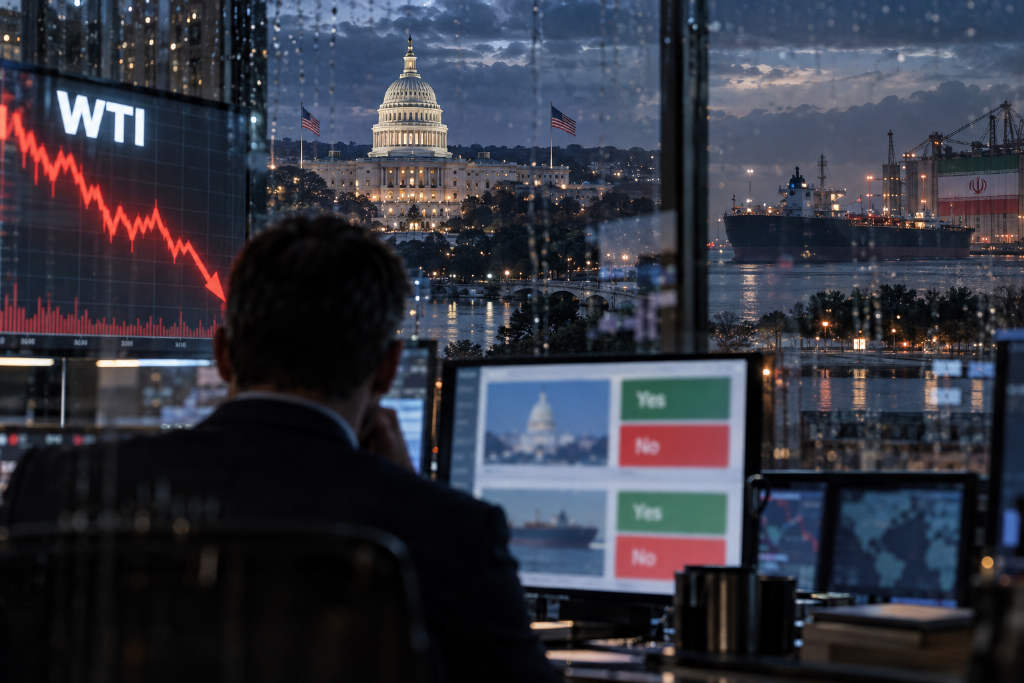
BlockBeats reported on Sept. 9, citing TradingBeats monitoring, that smart-money trader Valen9 kept positions linked to Democrats winning Congress while adding a new WTI crude short worth about $123,500 yesterday. Between 00:06 and 01:57 early today, the trader also spent about $2,719 to buy 19,400 "Yes" shares on the contract "The U.S. announces an end to the Iran blockade before the end of September."
Valen9's disclosed positions
As of publication, the positions mentioned in the source include the following:
- WTI crude short: 3,723.468 units, notional size of about $347,600, average entry price of $91.082, and an unrealized loss of about $8,490.
- End-Iran-blockade-by-late-September Yes: 88,100 shares held, with an average cost implying a 30.44% probability. The current probability had fallen to 13.5%, leaving the position valued at about $11,900 and showing an unrealized loss of about $14,900.
- Democrats control both chambers Yes: 32,100 shares held, with an average cost implying a 47.73% probability. The current reading was 51.5%, putting the position value at about $16,500 and the unrealized gain at about $1,207.
- Republicans control both chambers No: 2,986 shares, valued at about $2,643.
- In addition, Valen9 held a combined roughly $112,800 in "Democrats control the House" Yes and "Republicans control the House" No.
Political logic described in the source text
The input says the conflict has pushed up energy and living costs, which may keep hurting Republican electoral prospects. It also says that the greater the election pressure, the stronger the White House's political incentive may be to cool tensions and push down energy prices before November.
Poll and Reuters report cited in the item
A Reuters/Ipsos poll released on Aug. 25 showed that on cost-of-living issues, voters favored Democrats over Republicans by 36% to 28%. On handling a U.S.-Iran war scenario, Democrats also held an advantage, according to the source text.
Reuters reported on Sept. 2 that some senior aides to Donald Trump were pushing to avoid further escalation with Iran before the midterms in an effort to reduce the impact on Republican election prospects, though that strategy was being tested by continued exchanges of fire.