

Variant partner Alana Levin says the market’s central question has changed as crypto appears to have completed a key bottoming phase in the summer of 2026. The focus, she argues, is no longer on when the market would bottom, but on what will drive the next leg of the bull cycle.
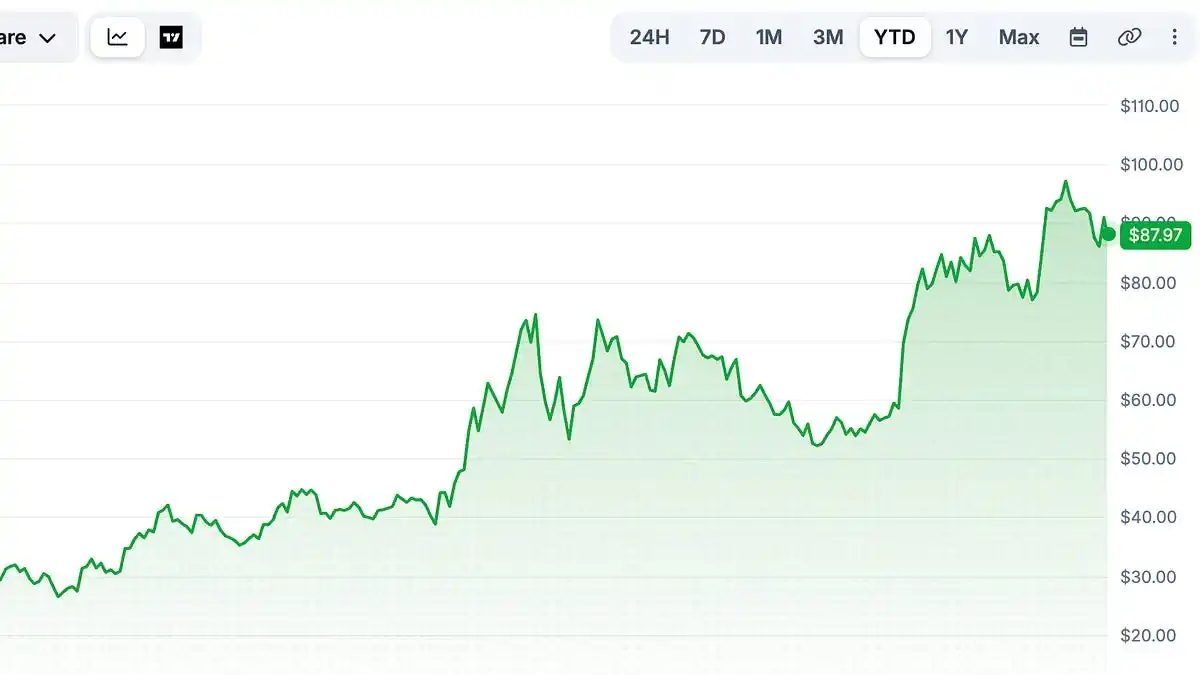
Levin wrote that she had argued in early July that the bottom was close, when Bitcoin was at $59,000, Ether was at $1,600 and Zcash was at $420. Now, she says, the answer looks clearer: the bottom was most likely set at some point in July this year.
The market’s main question has moved past the bottom
From here, Levin frames the next stage around two issues: whether the current move is the start of a broad bull market or a deceptive pump fake, and, if the market is in the early phase of a new upcycle, which kinds of projects are best positioned to capture outsized gains.
She notes that the first question opens the door to others, including how long the bull market can last, what is supporting it underneath, and which black swan risks could puncture the rally. In this piece, though, she starts from a working assumption that crypto is in the early stage of a new bull market and examines where liquidity may concentrate.
Two main destinations for marginal dollars
Levin says a broad market consensus is forming around two categories that are most likely to attract each new marginal dollar.
- Assets that are money themselves, or protocols that function as money, with Bitcoin as the clearest example of a digital store of value.
- Protocols that make money, meaning projects with real business cash flow and fee revenue.
In her view, these two groups are becoming the market’s main reservoirs for incoming capital. The next layer of analysis is what happens when a large share of participants comes to see them as the core assets that must be owned.
Bitcoin remains the benchmark for store-of-value assets
For the first category, Levin says Bitcoin is still the undisputed leader in digital store of value, or SOV. Any asset trying to compete for digital reserve status, she argues, will end up being valued against Bitcoin.
Her preferred framework is straightforward: what percentage of Bitcoin’s market capitalization does the competing asset represent, and how does that ratio change over time? She argues that pure store-of-value assets have very large theoretical upside because their addressable market is tied to the total stock of human money. That makes relative market cap versus Bitcoin a durable valuation anchor.
Revenue quality will matter more for profit-making protocols
For protocols that generate revenue, Levin expects public-market style scrutiny to intensify. Investors, she says, will not stop at top-line growth.
She highlights several questions that are likely to matter most:
- Is revenue driven mainly by highly speculative crypto-native activity, such as Pump, or does it benefit from broader tailwinds in financial activity, as in the case of high-frequency financial infrastructure such as Hyperliquid?
- Can the business model retain users and revenue once the broader crypto bull market cools?
- What do the unit economics and actual margin profiles look like?
In her telling, the way crypto investors are now questioning these businesses is starting to resemble how equity investors assess listed companies in U.S. public markets.
Valuation premiums may split sharply by business quality
Levin says the answers to those questions will directly shape valuation multiples. She expects richer revenue and earnings multiples to accrue to projects that combine three traits: meaningful exposure to the continued expansion of real-world assets, or RWA, and stablecoins rather than dependence on purely crypto-native speculation; a clear path to institutional users and compliance; and leadership from founder-CEOs who already navigated the last bear market.
Levin is wary of AI-themed on-chain narrative trades
She also identifies a third category that does not fit neatly into the two main buckets: projects that map traditional non-crypto business models onto blockchains. Levin says these assets are more likely to trade as narratives than to work as long-term value investments.
The appeal is easy to understand. Investors can point to a mature non-crypto sector and ask how large the upside could be if an on-chain version reached similar scale. She says the clearest examples today are projects trying to mirror different layers of the AI stack, including routing protocols, decentralized inference, GPU compute networks, data collection and user-facing front ends.
Still, Levin says she is highly skeptical that most of these businesses actually need a blockchain. Her sharper warning is about the split between token value and equity value. In many cases, she argues, the core commercial value sits legally inside the equity of the operating company, while only a small portion of revenue is used to buy back tokens in the secondary market. A project generating revenue does not automatically mean the token captures that value.
She adds that such assets may still work as trading instruments during euphoric periods. But if they begin to surge across the board and materially outperform the broader market, she would read that as a sign that market discipline is breaking down and top risk is rising fast.
Drawdowns may start to look more like mature markets
Levin says crypto has long been deeply cyclical, with the industry broadly following a four-year bull-bear rhythm over the past decade. This cycle, however, she sees a structural shift: some core assets with stronger fundamentals never truly entered a deep bear market and instead kept compounding on the back of improving underlying data.
She expects institutional capital to cluster more decisively around assets with real earning power. Those assets will still go through cyclical corrections, she says, but the drawdowns may begin to resemble the 10% to 30% pullbacks more common in mature financial markets, rather than the 90% collapses that defined earlier crypto cycles.
For Levin, that change points to a more mature phase for crypto finance.



