
“VCs only invest in consensus now.” That was one of the lines MarsBit said it kept hearing from founders. On the investor side, the answer was often different: “There are too few good projects.”
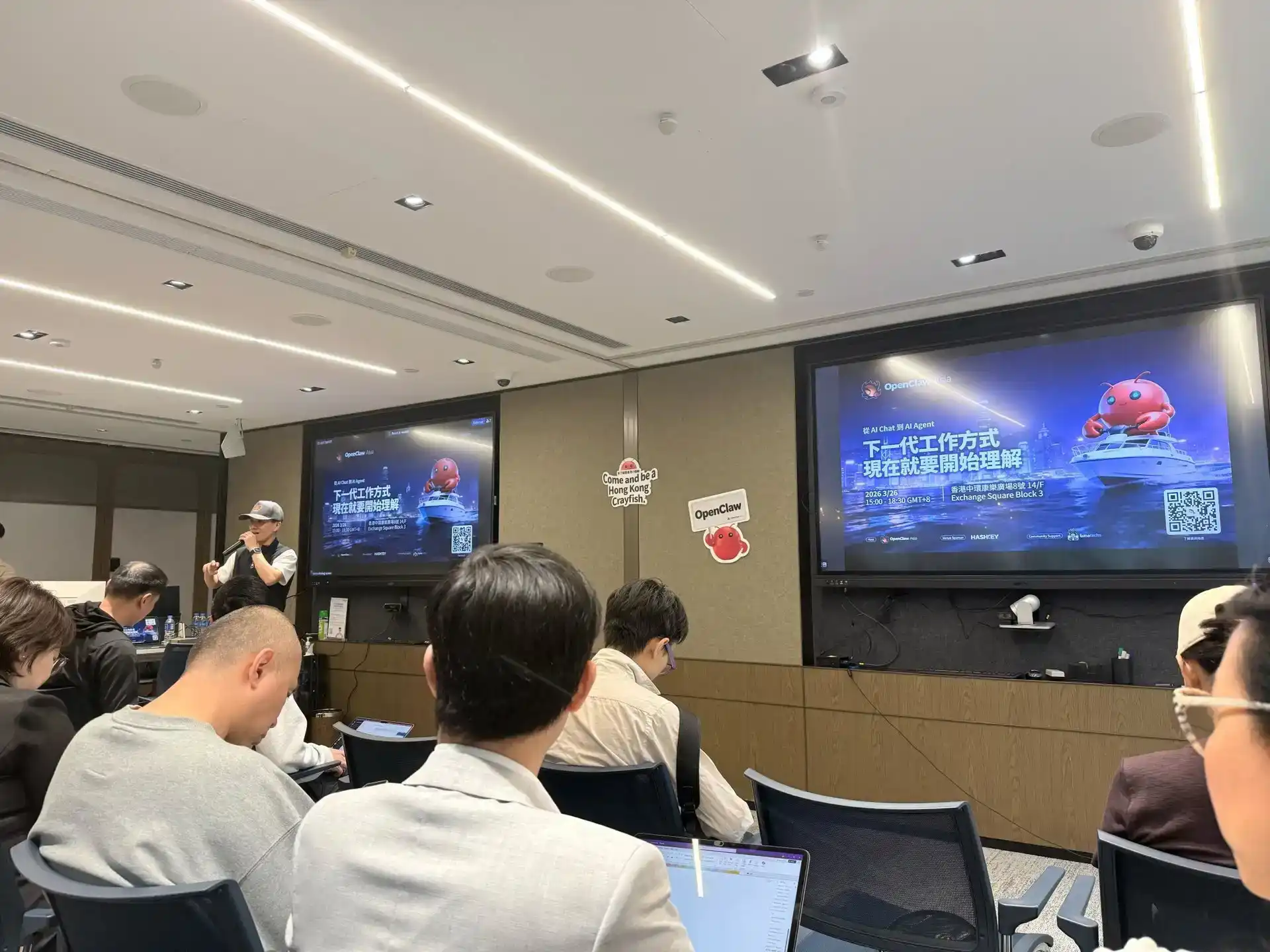
The report, built from anonymous conversations with founders and frontline investors, argues that the standoff is not new. Every cycle has had a direction everyone wanted to fund and a group of founders complaining they were outside the wind tunnel. What looks different this time is the amount of money involved and the speed of rotation.
According to the report, domestic AI financing reached RMB 307.682 billion in the first half of 2026, already above the full-year total for 2025, with about 80% of that money flowing into large models and embodied intelligence. At the same time, many founders building AI applications said they still could not tell what level of product maturity would be enough to raise the next round.
MarsBit said it anonymized all names, firms, projects and identifying details so people would speak more openly, and that quotes were edited for clarity without changing the original meaning.
What people said when the room was off the record
At a late-October offline meetup, investors shared a set of blunt views that framed the rest of the story.
- “The whole capital market is basically one giant game of passing the parcel.”
- “A lot of senior executives from big tech are pushed into starting companies. For them, the most important thing is preserving their status.”
- “Has anyone here actually seen carry? The primary market is not a place where young people get rich.”
- “If you miss the next super platform, you won’t get into a first-tier institution in the next era.”
- “The biggest feeling I’ve had in my whole career is that at every moment I think the other side is lying to me.”
- “Talent density doesn’t suddenly change. Capital attention just picks a group of people at a certain moment and turns them into the chosen ones. It’s basically a lottery.”
- “Fundraising is a fake metric. For a company, what matters is whether it can survive and how much value it can create.”
- “The level of FOMO among fund partners is more extreme than I expected.”
- “Sometimes you still have to eat a chocolate that tastes like shit.”
- “The number of funds that really made big money from this large-model wave may be fewer than 10.”
Why younger investors keep pushing deals that are easiest to approve
The report says many junior investors at venture firms do not really make money from carry. A founder building AI applications described a system in which promotion and year-end compensation depend heavily on how many projects an investor gets into the investment committee and how many receive term sheets.
In that setup, the easiest projects to push are the ones that face the least internal resistance. Those are usually the projects everyone already agrees on. Many firms also run top-down sector research, and the report says that kind of work often centers on one practical question: whether someone else will take the next round.
MarsBit cited Carta data showing that as of the end of the first quarter of 2025, the median DPI for U.S. VC funds launched in 2017 was only 0.27x. Among funds launched in 2019 and 2020, only 37% and 30%, respectively, had distributed any money to LPs. It also cited Preqin data on U.S. dollar VC funds focused on China and launched between 2015 and 2020, saying that among the top 10 by DPI, only four had returned more than principal to LPs.
The industry itself has been shrinking. Data from the Asset Management Association of China showed that by the end of April 2026, there were 11,248 active private equity and venture fund managers, down by more than 800 from the start of 2025. The report also said some firms cut bonuses first because projects could not exit, while others reduced pay by 20% for junior staff and 30% for mid-level staff.
At the meetup, one investor asked whether anyone in the room had ever seen carry. After a pause, someone said maybe. That investor’s conclusion was blunt: the primary market is no longer a place where young people get rich. Asked what keeps them doing the job now, the answer was four Chinese characters that MarsBit rendered as “working for love.”
Investors did not deny the pressure to deploy. Few firms explicitly score people by deal count, the report says, but the anxiety that comes when peers are investing aggressively is real. One investor said using deals to pad a résumé is “normal.” There is always a bar, but the bar moves with sector heat. If the sector matters enough and the team barely clears the line, the shot still gets taken. That is how firms end up backing projects they do not fully like.
The pressure is not limited to younger staff. One investor said the FOMO among founding partners in this cycle was stronger than expected. Veteran investors, in that account, were even more eager to bet. One reason was fear of missing the super platform of the AI era. Another was distance from the front line: by the time changes seen on the ground reach partners, there is always some lag.

Founders see a different split. One founder said they had spoken with roughly 30% to 50% of first-tier U.S. dollar funds and found that veterans with more than a decade in the business were often strong, able to see the underlying logic and give honest feedback. The people chasing hot themes, in that founder’s view, were more often investment managers with only a few years in the industry, people who “understand transactions, but not business or product.”
How AI consensus forms and why it can harden in a month
The report says AI consensus usually comes from four sources: influential figures speaking up, data seen by top firms, technical narratives, and each VC’s own research.
One founder recalled that in February this year, a batch of OpenClaw-like agent products suddenly became popular after Wang Huiwen said on Jike that he wanted to see projects like that. Another source was data, though interviewees warned that “the data may be watered.” Last year, some U.S. dollar firms noticed that a category of AI interactive content products had cheap user acquisition and decent next-day retention. Soon after, companies were comparing themselves in investment materials to the previous generation of short-video platforms. On the technical side, the report says the world model boom was tied in large part to Fei-Fei Li and a group of researchers already recognized by the market.
Once those forces stack together, the time from forming a consensus to writing checks can be very short. One founder said it may take only a month.
OpenClaw was presented as a clear example. According to one founder, within a month nearly every VC had swept through teams in the area. If the people looked solid and the direction fit, money could follow.
After the window closes, the situation changes completely. The report describes a founder’s friend who started building interactive content at almost the same time as several “star projects” but was not based in Beijing, Shanghai or Shenzhen and missed that financing round. Once the better-known companies became the consensus picks, the question from investors changed to: how do you beat them?
MarsBit compared the pattern with earlier Chinese boom cycles. Group buying sites topped 5,000 around 2010. In 2016, roughly 80 bike-sharing apps could be found in Android app stores. In 2021, new consumer brands logged 842 financing events and more than RMB 90 billion in funding, while a pastry brand in Changsha saw its valuation rise about 500 times in 10 months before cutting 40% of brand staff the next year. AI, the report says, has opened faster and shut faster than those cycles.
For AI applications, investors at the meetup put the closing point around the end of April this year. A founder said this had been the weakest year for application-layer investment enthusiasm. The reasons given by both sides were almost the same: there was no new story, model capabilities had become strong enough to absorb many application functions, historical returns from software applications did not look great, and rapid progress in AI coding compressed the upside narrative for app-layer companies.
When the window tightens, even signed term sheets can disappear. The report says that before the Lunar New Year, one fund was preparing to invest in a video-generation company. In mid-February, after a major tech company released a new generation video model, a fund tore up the term sheet on the grounds that the startup “definitely couldn’t beat it.” In a rotating market, a project that looked investable one month can be dropped the next. The most common external explanation is that the fund’s money has not arrived yet. One investor put it this way: “Before the money is settled, you can do whatever you want. Founders can’t afford that kind of delay.”
The pace is the reverse of what it was a year earlier. At the hottest point, some firms wired money the day after meeting a founder. In some cases, the company had not even been registered and several million U.S. dollars had already been sent to a personal account. Now, even a fast agreement can take one to two months, and the transfer may take longer.
What investors call leading consensus is often just buying it before it gets expensive
One founder told MarsBit that U.S. dollar funds only move after consensus forms. At the meetup, a U.S. dollar fund investor replied: “Overall, I think that’s true.”

The explanation was the decision structure. Partners make the final call, and partners across firms tend to receive similar information, come from similar industry backgrounds and see similar projects. Similar conclusions are not surprising.
That investor still rejected the idea that the firm was merely following consensus. “We’re not trying to find something non-consensus,” the person said. “What we want is to lead consensus. If I can understand it today, a few people can understand it today, and in two months everyone can understand it and wants to invest, that’s the best state.” If two months pass and the market still does not get it, the project has a problem.
The report describes that state as “consensus that is still cheap.” It contrasts that with Benchmark co-founder Andy Rachleff’s line that big money comes from being non-consensus and right, and with Howard Marks’ argument that excess returns come when consensus is wrong and you are right. “Cheap consensus” is different from both. MarsBit says it is closer to John Maynard Keynes’ 1936 beauty contest analogy, where the goal is not to pick the face you think is prettiest but the one others will think is prettiest.
The reason is practical. To become large, an AI company often needs several rounds of financing. Whether someone will fund the next round can matter more than whether the current round is objectively right. One founder said that in May this year, a senior investor known for not chasing hot themes liked their team but still gave a cold assessment: fewer than 10 investors this year could back AI-to-consumer applications. Even if the current round happened and the company performed decently, the business could still die if the next round never came.
That leaves founders with two paths. They can stick to their direction and leave fundraising to luck, hoping one of dozens of VCs happens to line up with them. Or they can move closer to the mainstream theme and reduce the odds of getting blocked in financing. The report says most choose the second path.
MarsBit used consumer investing to show what non-consensus can look like in practice. Pop Mart’s earliest money came from angel investor Mai Gang and the first fund of Qifu Capital, which had a size of around RMB 100 million. Sequoia did not enter until the pre-IPO stage. Chagee’s two rounds in 2021, worth more than RMB 300 million combined, were backed by XVC, Fosun and Congbi Qiushi. Those investors were not top-tier names in the VC circle at the time and could not win mainstream projects, so they looked outside consensus and later captured outsized returns.
Investors at the meetup agreed that small funds and solo GPs are more likely to hit non-consensus bets because consensus deals are simply too expensive for them. One founder was dismissive of firms that market themselves as lovers of non-consensus. “They’re not investing in non-consensus,” the founder said. “They invest in consensus and package it as non-consensus.”
The “chosen ones” change every year, but talent may not
One founder said the AI industry has a favored profile every year. This year it is PhDs from strong labs. Last year it was people from smart hardware. Talent density does not change from one year to the next, the founder argued. What changes is where capital is looking. The people who happen to be in that beam become the “chosen ones.” In the founder’s words, it is closer to drawing lots.
World models were used as the clearest example. According to media statistics cited in the report, by July this year there were more than 30 domestic startups built around the “world model” concept, with cumulative financing above RMB 26 billion. Seven had become unicorns, and at least four founders were born after 2000. In early October, Tian Keyu’s company was reported to have raised nearly $30 million at a post-money valuation of $200 million, also in world models.
One founder divided entrepreneurs in the eyes of VCs into three groups. The first is people who reached high rank at major tech companies by age 25; they get funded almost no matter what they do. The second is people who are good but not that strong; for them, the “thing” matters a lot more. The third is people who are simply not good enough, where even a strong idea does not help. Most founders, the report says, fall into the second group, and whether they get funded depends heavily on whether their direction overlaps with what mainstream investors are watching.
Investors admitted the process can feel like a lottery, though they also said the market rotates. In good markets, founders with academic backgrounds are more attractive. In colder markets, they stop being the lead characters. One investor said some scholars may not be starting companies to build something enduring at all, but because they saw peers succeed and wanted the same kind of valuation. Someone else at the table added: “When people see that even Tang Jie made it, they start thinking, why not me?” MarsBit noted that Zhipu, co-founded by Tsinghua professor Tang Jie, listed in Hong Kong on Jan. 8 this year at HK$116.2 and later rose as high as HK$2,980 in June.

Fallback options matter too. If a professor’s startup fails, that person can go back to the university. Many other founders have no such safety net. Investors said they generally trust people with no way back more, and some even treat a lack of resolve as a veto item. One founder put it sharply: “A real entrepreneur is always in entrepreneurship. The people who wait for the right timing to come out are often the ones with strong backgrounds and a fallback.”
A big-tech background is still often seen as a plus. Investors said some people from major platforms are better at managing upward and can explain what they want to build in a way partners understand. They also argued that this AI cycle still has not broken away from the mobile internet era: distribution remains in the hands of a few large platforms, and product methodology has not fundamentally changed.
But that advantage is fading. One U.S. dollar fund investor said some major companies have produced many founders without producing many standout outcomes. Some teams sell themselves by saying they have several high-level executives, but the investor asked how much of what those people achieved came from the platform rather than from themselves. In other companies, the environment is so comfortable that senior executives rarely leave voluntarily to start something new.
A founder added another angle: many big-tech executives are pushed into entrepreneurship because they cannot stay where they are or are facing layoffs. For them, preserving status is the first priority, so moving toward the mainstream trend is a natural choice. High-ranking operators with a track record face lower fundraising friction. Younger founders, by contrast, struggle most with proving traction.
Founders think story matters less than investors do
Some founders told MarsBit that jargon and narrative are overrated. Investors are smart, they said. The people who really need to engineer a story are those who do not want to build a product properly and only want to raise money fast. In that framing, trend-chasers are mostly “pseudo-founders” whose task is to get famous first and financed second.
Investors sounded much more guarded. One investor said the strongest feeling in the job is the need to constantly guard against being lied to. Trust is hard to build because both sides know exactly what they want, and once a founder is caught lying even once, that person goes straight onto a blacklist. Another investor put it more mildly: there is no perfect project, and when the time comes to decide, there is always a fear that one flaw could grow larger and larger. If a project leaves no concern at all, then either you have met a genius or it is too good to be true.
There is still no standard answer for how to judge a person. Some investors ask founders about the hardest moment they have lived through to see whether they have reflected on it. Some ask what kind of person they want to become in 10 years. But often the decisive factor is simply whether the conversation clicks and whether both sides are willing to keep talking for hours. Top funds may have formal investment memos and frameworks, but each person adds their own interpretation in practice. One investor said that may be the only reason venture investing is still hard for AI to replace.
Technical judgment is even harder. In frontier AI areas such as world models, embodied intelligence and lower-layer infrastructure, fewer and fewer people in an investment committee can truly evaluate the technical route. One investor shared an earlier hard-tech case involving a nuclear fusion project that failed to pass the committee twice. The issue was not whether people understood the technology. “The partners didn’t understand it either,” the investor said. “No one in the room had a level beyond undergraduate.” A PE firm had read a large amount of research and done extensive work, but still could not produce a convincing call on route selection. In the end, the decision fell back to the team.
When investors cannot judge the technology, the report says they are left with only two anchors: the people involved and who else is investing. The second anchor is exactly where consensus comes from.
Exit paths shape what VCs are willing to fund
Exit was one of the heaviest topics in the interviews.
One founder said the fundamental difference between Chinese and U.S. venture capital lies in exits. In the United States, there are many acquisitions. A young founder can build a product, sell the company and make money, and people who make money are then willing to become risk investors themselves. In China, the founder said, exits are still basically dependent on listing.
MarsBit cited PitchBook and NVCA data showing that among U.S. VC-backed exits in 2025, there were 62 IPOs and 995 M&A deals. Through the third quarter, 75% of acquired companies had raised no more than a Series A. AI companies in the U.S. also had another route through acqui-hire style transactions. Google paid about $2.7 billion in licensing fees in 2024 to bring Character.AI’s founding team back in-house, then spent $2.4 billion in 2025 to acquire Windsurf’s core team and technology license. Microsoft took most of Inflection’s team in 2024 for $650 million. Meta bought a 49% stake in Scale AI in 2025 for $14.3 billion. At the end of September this year, AMD announced an acquisition of World Labs for about $8.2 billion.
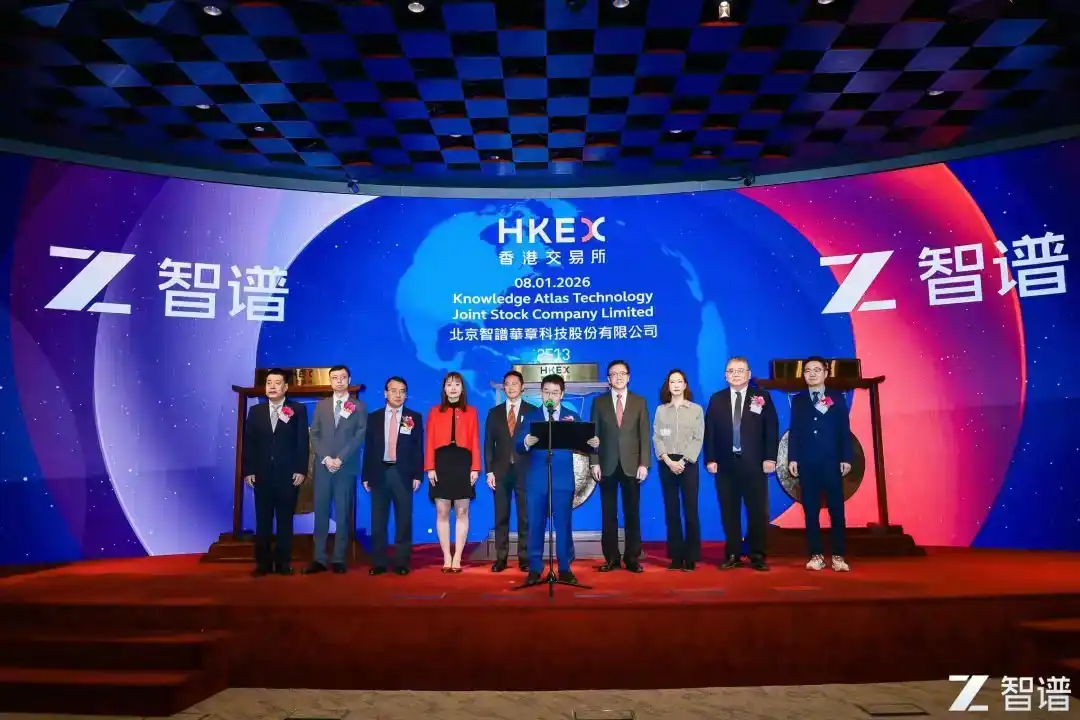
China’s numbers look very different. Qingke data cited in the report showed that in the first half of 2026, there were 2,503 exit cases in the equity investment market, including 1,732 IPO exits and only 368 M&A exits.
The IPO window itself has been unstable. In 2023, 313 companies listed on the A-share market and raised RMB 356.4 billion. On Aug. 27 that year, the China Securities Regulatory Commission proposed a “phased tightening” of IPO pace. New capital-market rules followed in April 2024. As a result, the number of new A-share listings in 2024 fell to around 100, with fundraising of about RMB 67.3 billion, the lowest in a decade, while 425 planned IPO candidates terminated their listing process.
Hong Kong absorbed part of that demand. Chapter 18C of the Hong Kong listing rules took effect in March 2023, allowing pre-revenue specialist technology companies to list. In 2025, Hong Kong fundraising reached HK$285.693 billion, returning the market to the global top spot. This January, Zhipu and MiniMax both listed in Hong Kong.
But secondary-market pricing feeds back into primary-market behavior. When MarsBit asked investors whether weak share-price performance would affect their willingness to keep backing large-model companies, the answer was direct: “Of course it will.”
Policy has tried to open the M&A route. The CSRC released six M&A measures in September 2024. In the first half of this year, M&A exits rose 94.7% year over year, but 368 deals were still only about one-fifth of IPO exits. Cross-border M&A, the report added, has been blocked again this year.
This exit structure directly shapes what investors can fund. At the meetup, one investor said the threshold is a company that can plausibly deliver returns of several dozen times and reach a valuation above RMB 10 billion. The logic is simple: VC invests in 100 projects and relies on one to return 100x. Companies that have obvious buyers from the start and are likely to top out at only several billion yuan in valuation, such as open-source software optimization or framework-tool businesses, may still generate a few times return but often cannot get through committee.
“A return of only a few times is not enough.”
If listing is the only real exit path, and listing requires a company to reach a scale of tens of billions, and that scale requires several large financing rounds, then every round needs someone to take the baton. What founders call passing the parcel becomes, for investors, an exit path with almost no alternative.
Dollar funds are changing too
Before the meetup, MarsBit received an anonymous comment saying U.S. dollar funds were becoming more “localized,” with a lower willingness and ability to take risk than in the past. Investors in the room broadly agreed. More dollar funds are raising RMB vehicles, and in rules, pace and risk appetite they are looking more like local-currency funds.
Under a “5+2” fund life, the batch of dollar funds raised in 2021 and 2022 is now approaching the point where managers need to raise again. This time, many LPs are looking at actual distributions. The gap inside the industry is wide. Someone at the table said they had heard of a fund with 1,000x DPI. Someone else joked that they could hardly go out and tell people their own DPI was 0.1. One investor estimated that the number of funds that really made big money in the large-model cycle may be fewer than 10.
The structure of dollar funds has changed as well. Sequoia announced a regional split in June 2023 and completed it in March 2024. GGV Capital also completed a split in 2024, with its Americas and Asia businesses renamed Notable Capital and Granite Asia. Washington’s outbound investment restrictions took effect on Jan. 2, 2025, limiting U.S. capital flows into Chinese semiconductor, quantum and some AI companies. The COINS Act, signed on Dec. 18, 2025, wrote that mechanism into law.
For funds that still need U.S. dollar LPs, AI should have been the easiest story to tell. It has also become one of the most sensitive areas from a compliance standpoint.
Fundraising data points in the same direction. Qingke statistics cited by MarsBit showed that RMB funds accounted for 97.8% of newly raised fund volume in 2025. Only 33 foreign-currency funds completed fundraising, totaling RMB 35.808 billion, down 36% year over year. According to Qingke founder Ni Zhengdong, foreign capital represented only about 2% of LP money as of late last year. In the first half of this year, foreign-currency fundraising reached about RMB 45.260 billion, up 122.5% year over year, but only 19 funds closed, and average fund size rose 145.9%, meaning money was concentrating in a small number of managers.
One investor said they could not understand why global LPs were still unwilling to place more money in China. Another gave a simple answer: the core issue is still China-U.S. relations, and LPs need confidence that they can pull money out when tensions rise.
As money gets tighter, financial advisers are doing better business. Investors said 2024 and 2025 were the two best years for FAs. Official fees on the table are usually 3% to 5%, or 2% for close relationships. When the conversation turned to rebates under the table, the room went quiet. Asked what name those payments are booked under, one answer was: “All kinds of names. Friends, relatives, or relationships you can’t really explain.”
World models drew the rarest thing in the room: agreement
The one judgment founders and investors fully shared in the report was on world models.
One founder called world models the sector “most saturated with narrative” and described the way a bubble breaks: people realize the thing cannot really be done, then one strong piece of evidence appears, and the bubble pops.
At the meetup, when investors were asked which sector was most overvalued and which direction they would refuse to back, several gave the same answer: world models. Their complaint was not just valuation but naming. Many companies doing 3D generation or real-time generation were calling themselves world-model companies and asking for valuations in the hundreds of millions of dollars.
Someone in the room asked whether a real-time video model should count as a world model, and whether investors would consider backing it if the company stopped using that label. One investor replied: “If you don’t call yourself a world model, then don’t ask for that kind of valuation.”
After news of Tian Keyu’s financing spread, one investor said some people had still been hoping world models would “have another run.” Now, that person said, the market had basically slammed on the brakes.
Even so, investors said they still believe there will be another killer application. Without applications, models, compute and infrastructure all lose value. “If you don’t believe that,” one said, “then AI can’t be invested in at all.”
In a business with ten-year feedback loops, consensus becomes the fastest signal
At one point in the meetup, someone asked a question that sounded unrelated to consensus: does the long feedback cycle in the primary market make the job hard to bear?

For an early-stage investment, seven or eight years from check to exit is common, and 10 years is not unusual. A relatively new investor said that did not bother them because the business is long-term by nature. The questioner pushed back: if feedback takes that long, then learning from failure must also be painfully slow. The answer was more surprising. You do not really learn much from failure anyway, the investor said, because there are too many reasons a company can fail, and the more you review it, the messier it gets.
If right and wrong in an industry are only visible after a decade, and failure teaches little, then what tells people whether they are doing the right thing today? The nearest and fastest signals are other people’s reactions: whether the next round gets funded, whether the valuation gets marked up, whether peers are moving in the same direction.
In a business where it takes 10 years to know whether you were right, consensus is one of the few forms of fast feedback. It is reassuring. It is also one of the easiest ways to get things wrong.
MarsBit closes by citing Paul Graham’s 2012 essay “Black Swan Farming,” which argued that the best startup ideas often look like bad ideas at first. If an idea obviously looked good, someone would already be doing it. By that logic, the few investments that truly determine a fund’s outcome are usually the ones nobody likes at the moment the check is written.
Bessemer Venture Partners in Silicon Valley keeps an Anti-Portfolio on its website listing companies it missed, including Google, Facebook, Apple and eBay, along with the reasons it passed at the time.
Founders face the same problem from the opposite direction. One founder said that when they first started a company, they treated VC feedback as the only exam paper, taking notes after every meeting and adjusting direction accordingly. Nine months later, the exam changed. It became user experience and operating data.
“If we do well and the feedback is good, maybe I can create consensus.”
There is ambition in that line, but also a condition. Someone has to create consensus first, and the people who do usually have to survive a period when nobody believes in them. To make it through, as the founder put it, “you have to make sure you’re still at the table before the cycle turns.”
Later, the young investor who said failure teaches little was asked about the investment they were proudest of so far.
They said they did not have one yet.
“I do investing because I believe investing can make some things happen. If I didn’t believe that, I wouldn’t do it.”


