
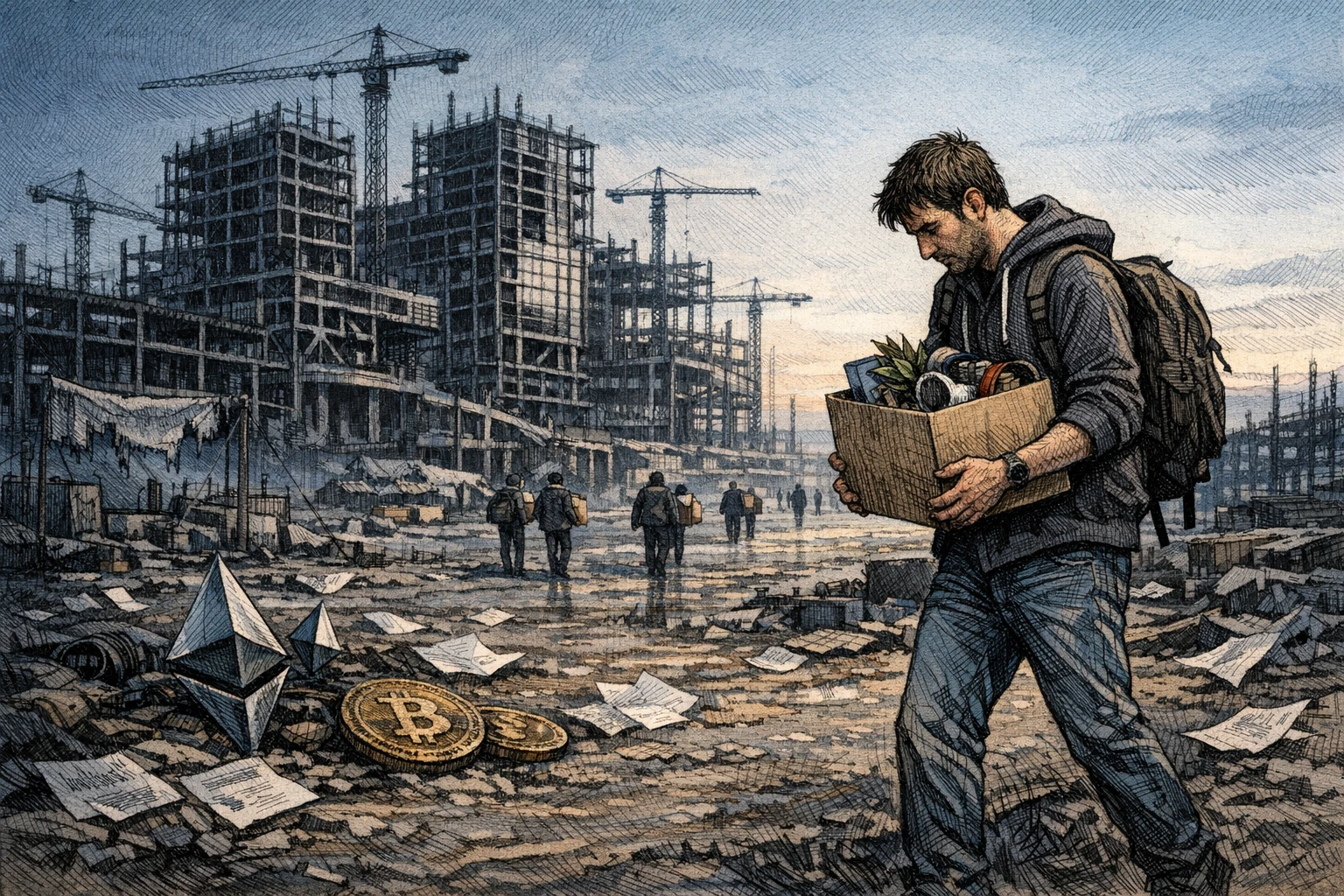
Layer-1 networks have poured hundreds of millions of dollars, and possibly more than $1 billion, into ecosystem grant programs over the past four years. Dara_VC, managing partner at Hashgraph Ventures, argues that this model is no longer merely inefficient. In his view, it has broken down at the structural, ideological, and incentive levels.
In a thread posted on X, he said the evidence is visible across the market: TVL keeps leaking, developers move to the next incentive pool, and the numbers shown in quarterly updates often look uncomfortable six months later. The question, he wrote, is simple: after all that capital was deployed, what actually remained.
Major chains committed large sums to ecosystem funding
Dara_VC pointed to several examples. NEAR announced an $800 million ecosystem fund, with $250 million set aside for ecosystem grants over four years. Before that, NEAR had already distributed more than $45 million to over 800 projects. Avalanche also committed more than $250 million to support ecosystem growth.
Aptos runs milestone-based grants ranging from $5,000 to $50,000, with payment-focused grants reaching as high as $150,000. BNB Chain offers up to $200,000 per project. By his count, there were already more than 50 active Web3 grant programs globally by 2024, spanning public goods, DeFi, tooling, AI, and infrastructure.
What started as ignition capital became long-term life support
He does not dismiss the original purpose of grants. In 2020 and 2021, many L1 ecosystems were still trying to bootstrap from scratch. Developers had to arrive before users, protocols had to exist before liquidity, and grants could help teams build MVPs without immediate monetization pressure.
His criticism is aimed at what came next. A mechanism meant to spark early activity turned into a recurring support system. Teams began optimizing for proposals, milestones, and committee-approved KPIs instead of user demand or revenue. Projects stayed alive on paper, but never learned to sustain themselves.
The “grant machine” rewards repetition, not durability
According to Dara_VC, teams learned how to target mid-tier L1s with active foundations, available capital, and lower competition. They built products that matched whichever categories were favored at the time: DeFi tools, DEXs, NFT marketplaces, or applications labeled with some form of AI integration. Once approved, they collected funds in milestone tranches and produced activity metrics that could be inserted into foundation reports.
Over time, a small circle of experienced teams kept winning the same funding, attention, and opportunities. Even in systems such as quadratic funding, he argued, the same groups often dominated while newer entrants struggled to break in. When an ecosystem hit its ceiling and real liquidity remained on Solana or Ethereum, those teams made a rational move: port the code, rewrite the proposal, and leave for the next chain with fresh incentives. Grant dashboards might show volume and project counts. TVL, developer retention, and quiet community channels tell a different story.
Foundations and grantees both get trapped
One of the sharper points in the thread is what he described as a hostage dynamic. Foundations become captive to their own reporting needs. They have capital commitments and growth expectations, so the easiest way to show activity is to approve more grants, list more projects, and publish better-looking numbers.
Grantee teams are trapped in another way. Once they enter the grant cycle, their roadmaps start turning into proposals and their KPIs become whatever committees want to see. Dara_VC noted that the Ethereum Foundation had already funded 105 projects before deciding it needed to pause open applications. Even the most established ecosystem, he argued, had to stop and ask whether it was creating value or only manufacturing visible activity.
Why he favors direct equity-and-token investing
His alternative is not vague. He wants L1 venture arms to write real checks into a smaller number of companies they genuinely believe in, using equity plus tokens. He cited Solana Ventures as an example of a strategy group that does more than send capital. It works with teams on infrastructure, integrations, and go-to-market execution, tying company growth more closely to the chain itself.
That changes the relationship. If a chain takes equity and token exposure, both sides now benefit from product-market fit, real financing rounds, and durable scale. Dara_VC also referenced a16z Crypto’s $50 million investment in Jito, saying this kind of capital commitment creates long-term alignment in a way that a $50,000 grant with a 90-day milestone report never can.
One breakout company matters more than 200 grant-funded projects
He framed the choice in stark terms. One path deploys $10 million in grants across 200 projects, generating DAU charts, GitHub screenshots, and Discord activity for board decks. Two years later, many of those projects are either dead or have moved elsewhere, while TVL and retention remain weak.
The other path uses the same $10 million to back 10 promising companies through direct equity-and-token deals, while making chain integration part of a real strategic roadmap. Three years later, if one of those companies reaches a $1 billion valuation and two others reach $200 million, the effect on ecosystem reputation is far larger. In his view, a single breakout company can reshape how builders, exchanges, LPs, and venture funds look at a chain. Two hundred grant-dependent “zombie” projects cannot do that.
Public goods can be funded, businesses should be invested in
Dara_VC did not call for the end of every grant program. He drew a line between open-source public goods, core infrastructure, and security research on one side, and commercial applications on the other. The first category can still justify grants because the benefits spread across the ecosystem and may not fit a direct business model. A DeFi protocol or a game, he said, is a company and should be treated like one.
His closing recommendation is to stop reporting the number of grants issued and start tracking portfolio company valuations, portfolio TVL, and developer retention tied to organic growth rather than incentives. He argues that the 2026 L1 market is no longer about abstract narratives. Competition is now tied to actual usage in stablecoin payments, gaming, perpetual DEXs, creator tools, and app-specific chains. Chains that still rely on grants as their main growth engine, he wrote, are likely to discover that they have been paying for activity rather than creating value.