
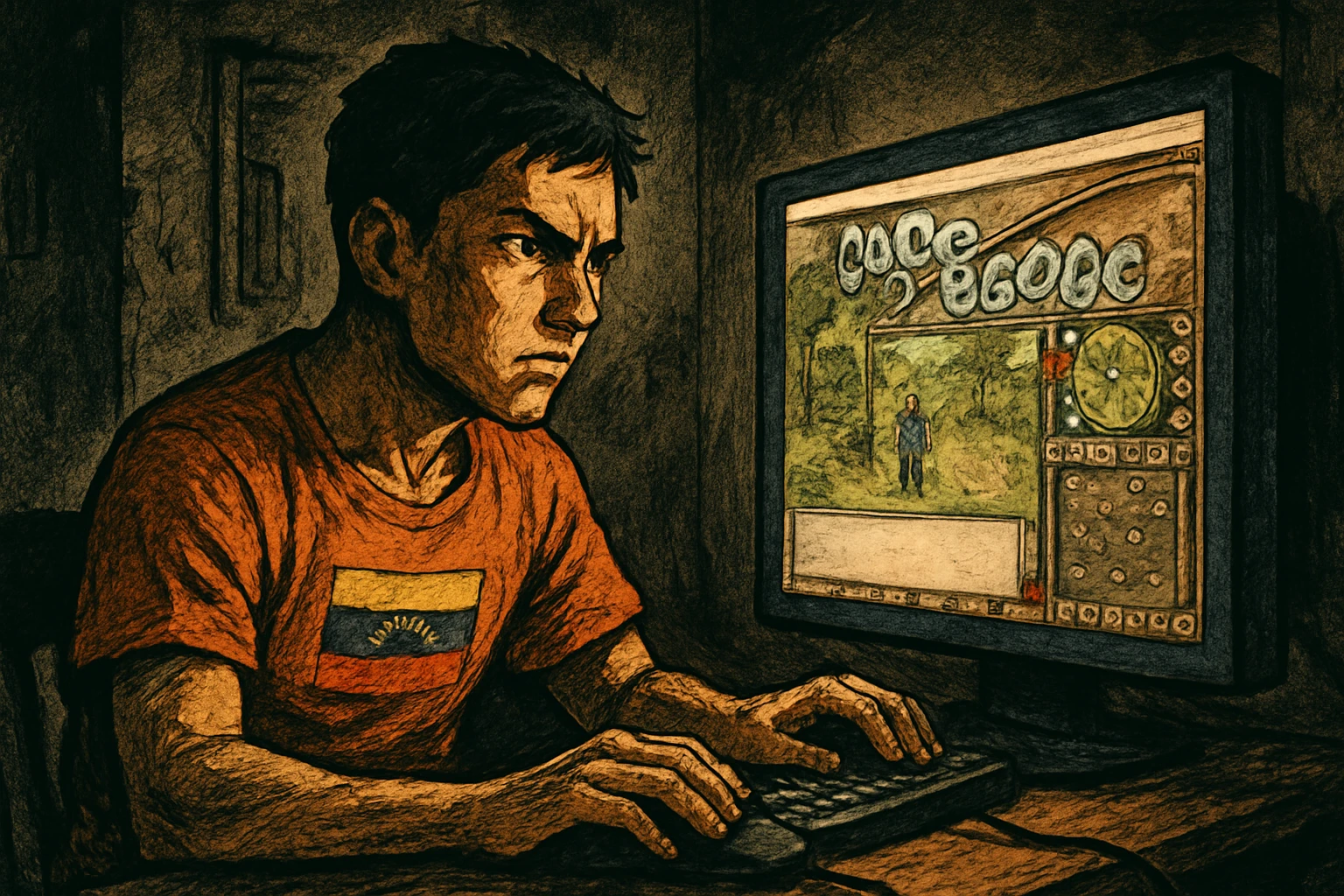
RuneScape logged more than 258,000 concurrent players, the highest figure in the game’s 25-year history. Behind that milestone sits a much older story: for many Venezuelans, Old School RuneScape was not just an MMORPG but a source of income, with in-game gold sold for Bitcoin and other cryptocurrencies as the country’s economy collapsed.
The source material links the surge in attention to the ninth day after the U.S. operation in Venezuela and the arrest of President Nicolás Maduro. In the RuneScape community, discussion was not limited to player counts. Traders and players were also watching gold prices, item markets, and whether Venezuelan gold farmers were returning or disappearing from the game.
When Venezuela’s currency broke down, OSRS gold held more value
Venezuela’s economic decline began in 2013 and deepened over the following years. According to the source, the country’s GDP fell by roughly 75% to 80% from 2013 to 2021. By 2021, 95% of Venezuelans were living below the income poverty line, and 77% were in extreme poverty. Before the 2018 currency redenomination, annual inflation had climbed above 48,000%, while the black-market exchange rate for the bolívar slid from 1 million to 1 U.S. dollar to about 7 million to 1 in just four months.
At around the same time, 1 million to 1.25 million OSRS gold was worth about $1. That made in-game currency look relatively stable compared with the bolívar. OSRS also ran on modest hardware and could be played through a browser, which mattered in a country where many students had access to low-spec Canaima laptops distributed by the government.
Grinding monsters, selling gold, converting proceeds into crypto
By 2017, and likely earlier, Venezuelan players were already using OSRS to earn a living. A common method was farming green dragons in the game’s eastern dragon area, selling dragon bones and hides on the in-game market, then offloading the gold for Bitcoin or other cryptocurrencies. The source cites a 2017 post estimating that farming green dragons could produce 500,000 OSRS gold per hour, or roughly $0.50.
More advanced players targeted the boss referred to in the source as Zurlah, raising hourly earnings to about $2 to $3. Several English-language media reports from previous years, also referenced in the source, described Venezuelan players making $100 or more per month from OSRS while their parents earned only about $10 per month. In that setting, the game became a labor market as much as a game world.
It was still a fragile system. Jagex has long cracked down on real-money trading, so many Venezuelan players relied on multiple burner accounts to reduce the risk of bans. During Venezuela’s nationwide blackout in March 2019, the supply of dragon bones dropped sharply and prices rose inside the game, a direct example of real-world disruption feeding into a virtual economy.
Players began leaving OSRS as margins fell
The source says Venezuelan players started moving away from OSRS in 2023. The economics had changed. Venezuela’s domestic crisis had not ended, but OSRS gold prices had weakened as bots expanded production and flooded the market. By the period described in the source, 1 million OSRS gold was worth only about $0.16 to $0.20. Manual gold farming no longer paid enough, pushing players toward other titles such as Tibia, Albion Online, and World of Warcraft.
For some, OSRS had already served a different purpose: financing an exit. The source cites early-2026 data showing that about 7.9 million Venezuelans had left the country, one of the largest refugee crises in Latin American and global history. Individual cases mentioned in the report include a gold middleman earning $800 to $1,200 per month and investing profits in cryptocurrency, and another player who farmed for 14 hours a day with his sister, eventually saving $500 and moving to Peru in 2018.
Those outcomes varied. Some former gold farmers later found higher-paying work and returned to OSRS only as ordinary players. Others discovered that the same gaming income that covered basic needs inside Venezuela could not sustain life after migration. The source notes that public services in Venezuela were often poor but carried little direct cost, which helped make low cash income stretch farther at home than abroad.
A crypto payment rail inside a game economy
This story places RuneScape, Venezuela’s collapse, and cryptocurrency in the same frame. Bitcoin and other crypto assets were not treated as investment products in this context. They were the settlement layer that let game earnings cross borders and payment barriers and become spendable money.
The record RuneScape player count is the headline event. The larger point is older and harder: a group of Venezuelan players once used a virtual world to cover household expenses, preserve value outside the bolívar, and in some cases save enough to leave the country. As gold prices fell and bots took over more of the market, that chapter began to close, and many of those players moved on—to other games, other jobs, or other countries.