
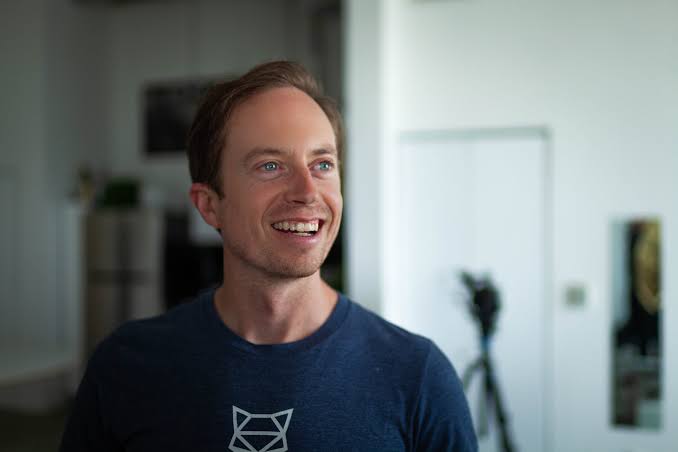
Privacy-focused AI startup Venice AI has announced the closing of a $65 million Series A funding round. The round was led by Dragonfly, with participation from North Island Ventures, Coinbase Ventures, Archetype, Liquid2 Ventures, Morgan Creek, and others.
Founder and CEO Erik Voorhees revealed this is Venice AI's first external funding since its founding in 2024, at a valuation of $1 billion. Proceeds will primarily be used to purchase GPUs and build its own data centers, moving away from GPU leasing to improve gross margins. Additional funds will go toward customer acquisition, entering new markets, acquiring incremental businesses, and hiring top talent.
Privacy-First, Over $70M Annualized Revenue
Unlike many AI firms that rely on intensive data collection and operate at a loss, Venice AI positions itself as a private, uncensored alternative to ChatGPT. It hosts "uncensored" open-source models in its own data centers and routes queries through closed-source models from OpenAI or Anthropic. All user input is encrypted client-side, routed through external proxies, processed, and returned; Venice's own systems store no data. Some models offer end-to-end encryption, available via paid subscription.
The project emphasizes user autonomy: users can freely choose AI models for text, image, audio, and video generation. Currently, Venice AI offers over 200 models. Since launch, it has attracted over 850,000 unique website visitors, more than 3 million active users, and handles an average of 1.7 million API calls daily. Erik Voorhees stated the company became profitable in Q1, with annualized revenue exceeding $70 million.
Voorhees, an early Bitcoin advocate, previously founded Satoshi Dice and ShapeShift, and has long championed user privacy.
8% of Users Pay with Crypto; Equity-Token Structure Draws Fire
Venice AI has issued two tokens: “DIEM” and “VVV.” Users buy VVV and stake it to mint DIEM, which generates $1 in AI credits daily. However, only about 8% of users pay with cryptocurrency.
Data shows VVV is up over 700% year-to-date. Venice AI holds over 30 million VVV, representing more than 37.5% of the 80 million total supply, making it the largest holder. Voorhees noted that the company chose to sell equity rather than VVV directly in this round.
In return for the $65 million investment, Series A investors received 8.98% equity plus a package of VVV-related rights: a grant of 1.5 million VVV tokens with a vesting schedule, and warrants to purchase an additional 5 million VVV over eight years. If investors exercise those warrants, they would pay Venice AI roughly $66.5 million, potentially bringing the total round to $131.5 million. Both token grants and warrants have a one-year lockup, then vest linearly over three years.
From a supply perspective, if investors exercise the warrants, roughly 6,000 VVV per day would hit the market after about a year, representing about 0.2% of current daily trading volume. Voorhees reiterated that the token strategy remains unchanged: continuing to use a portion of revenue to buy back and burn VVV, while gradually reducing token emissions. This year, the annual VVV emission rate has been cut from 8 million to 3 million, with the goal of achieving net deflation where burn exceeds issuance.
However, the “equity + token” financing model has sparked community concern. Critics argue that equity holders enjoy legal protections and dividend priority, while token holders rely solely on the company's promise to buy back and burn tokens. Moonrock Capital's founder called the equity structure disappointing, stating it inevitably creates conflicts of interest. Former Ethereum Foundation researcher Dankrad Feist called the token-equity allocation “terrible,” noting a company has a legal duty to maximize equity value, making it hard to justify using revenue for token buybacks instead of dividends. Crypto KOL XY argued that if revenue grows from $70M to $500M, most gains accrue to equity, and modest buybacks cannot fix the imbalance.
Not all voices are negative. Some in the community believe a real company with real revenue, product, and leadership raising funds for scale is perfectly normal. Erik Voorhees responded that the token's ultimate value will depend on: how fast Venice grows revenue and how quickly it can buy back and burn VVV; new user acquisition and infrastructure building; and the alignment of interests between equity and token holders.