
ViaBTC attended the ninth Crypto Summit at Moscow’s MTS Live Hall on Oct. 28-29 as a strategic partner, where it met with miners and industry participants to discuss mining operations, payout settlement and asset management. The company said it used the event to share its long-term mining pool service experience and explain how stable mining services and one-stop earnings management can support miners at different stages of operation.

Roundtable focused on mining profitability and operating conditions in 2026
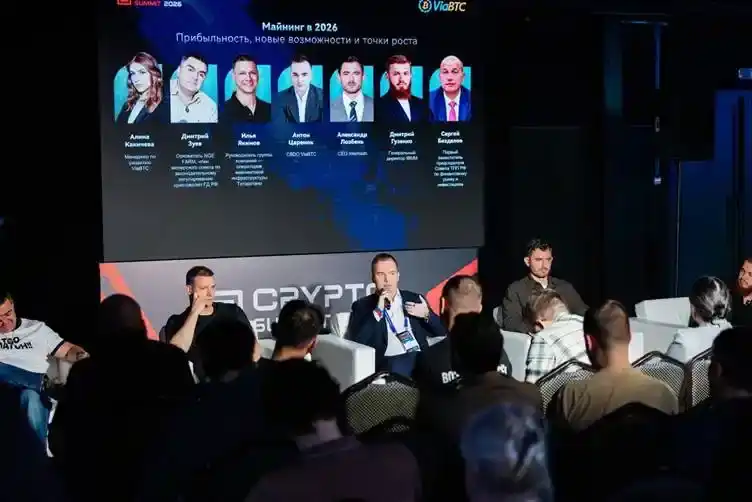
On the first day of the summit, ViaBTC hosted a roundtable titled 「2026 Mining: Profitability, New Opportunities and Growth Areas」, moderated by ViaBTC Business Manager Alina Kakicheva. Guests from mining farm operations, infrastructure and industry institutions discussed how operating costs, power security and professional services affect mining businesses.
During the session, ViaBTC Business Director Anton Tsarenok shared the company’s service experience since it began operating its mining pool in 2016. He said miners usually make multi-year commitments in hardware, electricity and site resources, and mining pools also need to provide long-term support through ongoing infrastructure maintenance and user service.
Tsarenok said reliability is reflected in everyday use: whether hashrate connections remain stable, whether earnings records are clear, and whether users can get timely responses when issues arise. In his view, miners build trust in a pool through these day-to-day experiences, and that trust becomes the basis for long-term cooperation.
Presentation examined connection quality, settlement methods and operating losses
On the second day, Kakicheva gave a presentation titled 「What Miners Need to Know About Pool Mining in 2026」. Using the question 「Increase hashrate, or reduce losses」 as the starting point, she discussed how equipment investment translates into actual operating results. She said the same hardware and electricity price can still produce different returns, and that connection quality, settlement methods and losses in daily operations all deserve attention.
Speaking about connection quality, she described the coordination between hardware, networks and the mining pool. Even when machines are running normally, connection interruptions or delayed share submissions can still affect the amount of valid work counted, which in turn can affect mining income. Continuous monitoring can help identify abnormalities in time, while verified backup connections can reduce the impact of interruptions.
On payout settlement, Kakicheva used ViaBTC’s PPS+ and PPLNS models as examples to explain how different methods fit different operating needs. She said miners can choose based on their own operating cycles and their tolerance for short-term earnings fluctuations. Understanding how earnings are calculated, and what affects daily credited income, can also help miners judge whether actual performance matches expectations.
She also said estimated earnings, actual credited income and profit after costs should be viewed separately in order to assess operating results more accurately.
Auto-conversion and post-payout asset arrangements
The presentation also covered what happens after mining proceeds are credited. Kakicheva said the coin a miner produces is not always the same asset the miner wants to accumulate over the long term or use for later operations, and repeated manual conversions can add to daily management work. She introduced auto-conversion as a way for miners to process mining proceeds continuously according to their own asset management plans.
ViaBTC said its auto-conversion feature can automatically convert balances of supported coins into BTC or USDT based on preset directions. Miners can manage conversion settings and review records within their pool accounts, reducing repeated manual actions.
On-site discussions also covered Europe access arrangements and one-stop management tools
Across the two-day event, mining stability and earnings management remained key topics in ViaBTC’s conversations with visiting miners. In response to local miners’ concerns about network stability, the team introduced its globally distributed node layout and access arrangements for Europe, explaining how regional access points and backup connections can support continuous and stable pool connectivity.
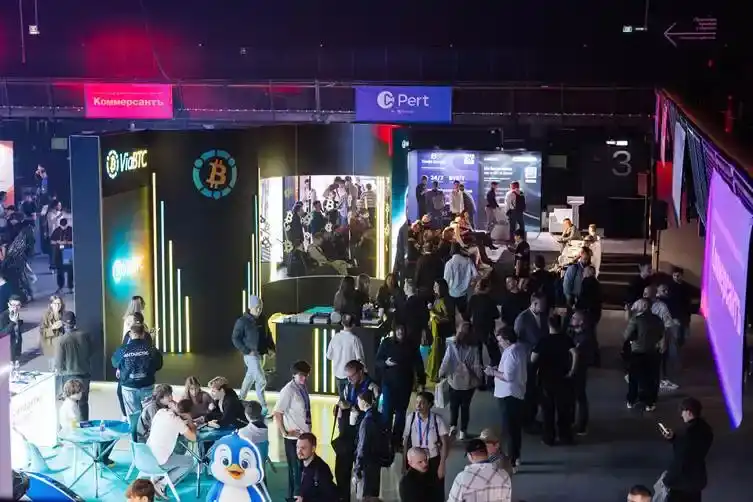
On earnings management, the team presented ViaBTC’s one-stop service covering earnings review, asset management, auto-conversion and withdrawal arrangements. For miners handling multiple streams of mining income and looking to reduce repeated operations, these tools are designed to make post-payout processing easier and allow more flexible planning around asset holding goals and day-to-day operating expenses.
The company said the team also collected feedback from attendees on connection experience and earnings management services.
About ViaBTC
According to the article, ViaBTC is a comprehensive cryptocurrency mining pool serving miners globally and officially launched in 2016. The company focuses on secure, stable and efficient PoW mining services and supports major PoW cryptocurrencies including BTC, LTC/DOGE, BCH, ZEC and KAS.
The article said ViaBTC now serves more than 2 million users across more than 150 countries and regions. Its BTC, LTC/DOGE merged mining, BCH and ZEC pools are described as ranking among the global leaders.
ViaBTC said its appearance at IX Crypto Summit gave it a chance to present service practices spanning mining and earnings management, while also learning more about miners’ needs in different markets through face-to-face exchanges. The article was attributed to ViaBTC. The original text also stated that it was a contributed piece and did not represent the views of BlockBeats.