
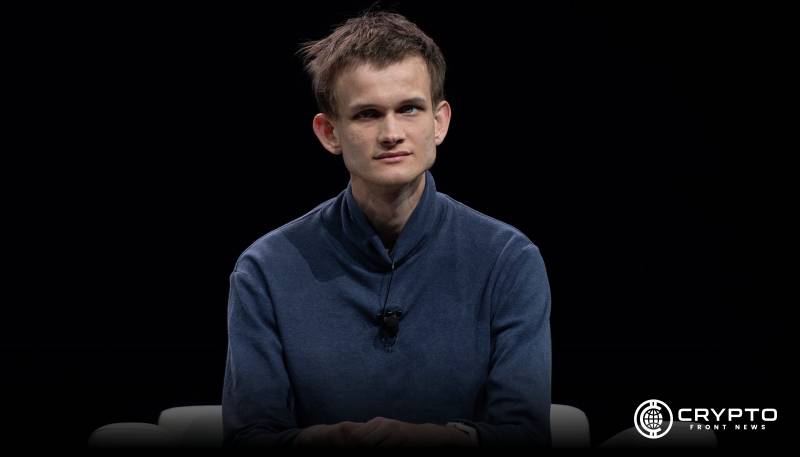
Responding to a community member on X last Friday, Ethereum co-founder Vitalik Buterin firmly rejected the idea of abandoning the existing chain to build a new one from scratch. Instead, he proposed a “cypherpunk-principled” system that would be tightly bolted onto the current Ethereum network, rather than replacing it.
Turning Down RISC-V, Keeping Compatibility
The community member had urged Buterin to rebuild Ethereum entirely using RISC-V architecture. Buterin dismissed that approach, arguing that Ethereum has already survived major upgrades like The Merge without downtime. He described the effort as creating a “cypherpunk principled non-ugly Ethereum” that prioritizes interoperability over fragmentation. Developers would not need to abandon existing infrastructure, he stressed.
Technical Components: State Tree, Consensus, VM, ZK-EVM, Censorship Resistance
According to Buterin, the upgrade touches several core components: state tree simplification, consensus design changes, virtual machine restructuring, and ZK-EVM verification. Censorship resistance is treated as a system-wide requirement, covering validator behavior and transaction inclusion. Governance discussions are already exploring forced inclusion lists for validators. Wallet standards also remain under review, with proposals including multi-signature defaults and quantum-resistant options to bolster protocol-level resilience.
Gradual Evolution, Not Abandonment
Buterin framed the bolt-on model as a way to unify progress amid concerns over network fragmentation caused by Layer-2 rollups and app-specific chains. He estimated the transition could take five years, though AI-assisted coding tools might speed up safe protocol changes. Eventually, Ethereum could reimplement itself using the new system’s language, but only if conditions allow. Until then, both systems would remain interoperable. The strategy prioritizes gradual change, preserving Ethereum’s existing user base and keeping the network operational throughout the process.