
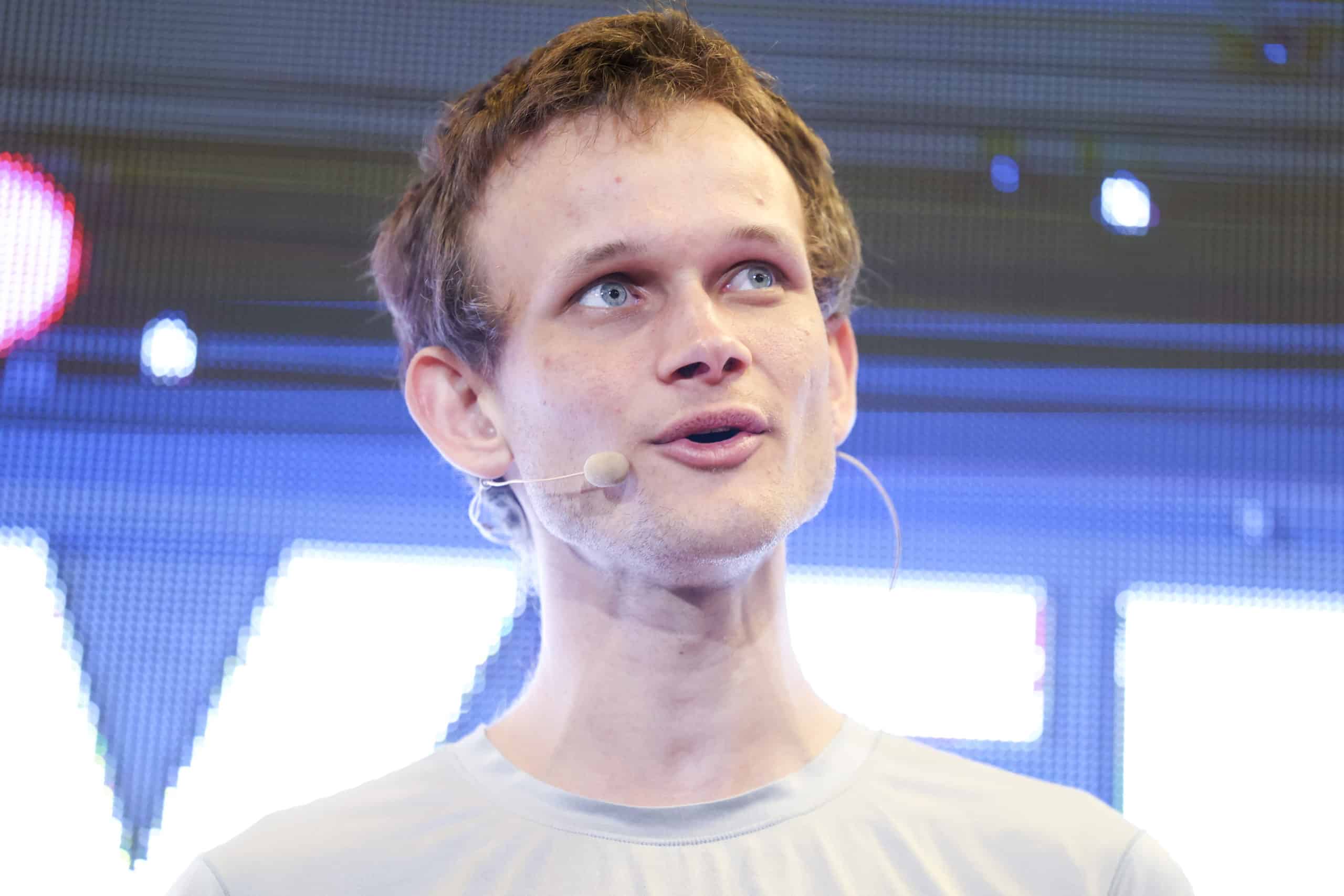
Ethereum co-founder Vitalik Buterin said the blockchain trilemma has effectively been solved, arguing that recent upgrades have reshaped Ethereum into a stronger decentralized network that can balance security, decentralization, and scalability at the same time.
In a post on X, Buterin said Ethereum now has PeerDAS introduced in 2025 and will move to partial adoption of ZK-EVMs in 2026. With those pieces in place, he said, the network can deliver decentralization, consensus, and high bandwidth together.
PeerDAS moves to the center of Ethereum’s scaling plan
The blockchain trilemma refers to the long-standing tradeoff between decentralization, security, and scalability. In many blockchain designs, improving transaction throughput often comes at the expense of decentralization, while highly decentralized systems can struggle with performance limits or high operating costs.
Buterin compared Ethereum’s progress with earlier distributed networks. Some systems could achieve strong decentralization and large bandwidth but lacked a consensus mechanism. Others preserved decentralization and security, yet their throughput remained constrained because computation was repeatedly executed across the network instead of being distributed more efficiently.
Ethereum’s roadmap addresses that bottleneck by separating data availability, execution, and verification into different layers. A major part of that design is PeerDAS, short for Peer Data Availability Sampling, which was one of the main features highlighted in last month’s Fusaka upgrade.
Lower node requirements, with a 12,000 TPS target for 2026
PeerDAS allows nodes to sample only a small portion of data to verify that transaction data exists, rather than downloading an entire block. That cuts validator requirements and makes it easier for more participants to run nodes. The effect is practical as much as technical.
According to the article, Ethereum is targeting 12,000 transactions per second by 2026. Buterin also outlined the next steps in the roadmap: a much higher gas limit for activity that does not rely on ZK-EVM, and the first opening for running ZK-EVM nodes on the network.
Other planned changes include gas repricing, updates to Ethereum’s state structure, and moving execution load into blobs so security can be preserved even under a higher gas ceiling. As ZK-EVM becomes the main standard for block verification, Ethereum’s gas limit is expected to rise sharply.
Upgrades advance, but ETH still trades with the broader market
Technical progress has not insulated Ether from wider market moves. After the Fusaka upgrade, ETH continued to fluctuate with the broader crypto market. At the time of writing, Ether was trading at $3,237, up 2.6% on the day, but still about 34.5% below its all-time high of $4,946.05 set in August last year.