
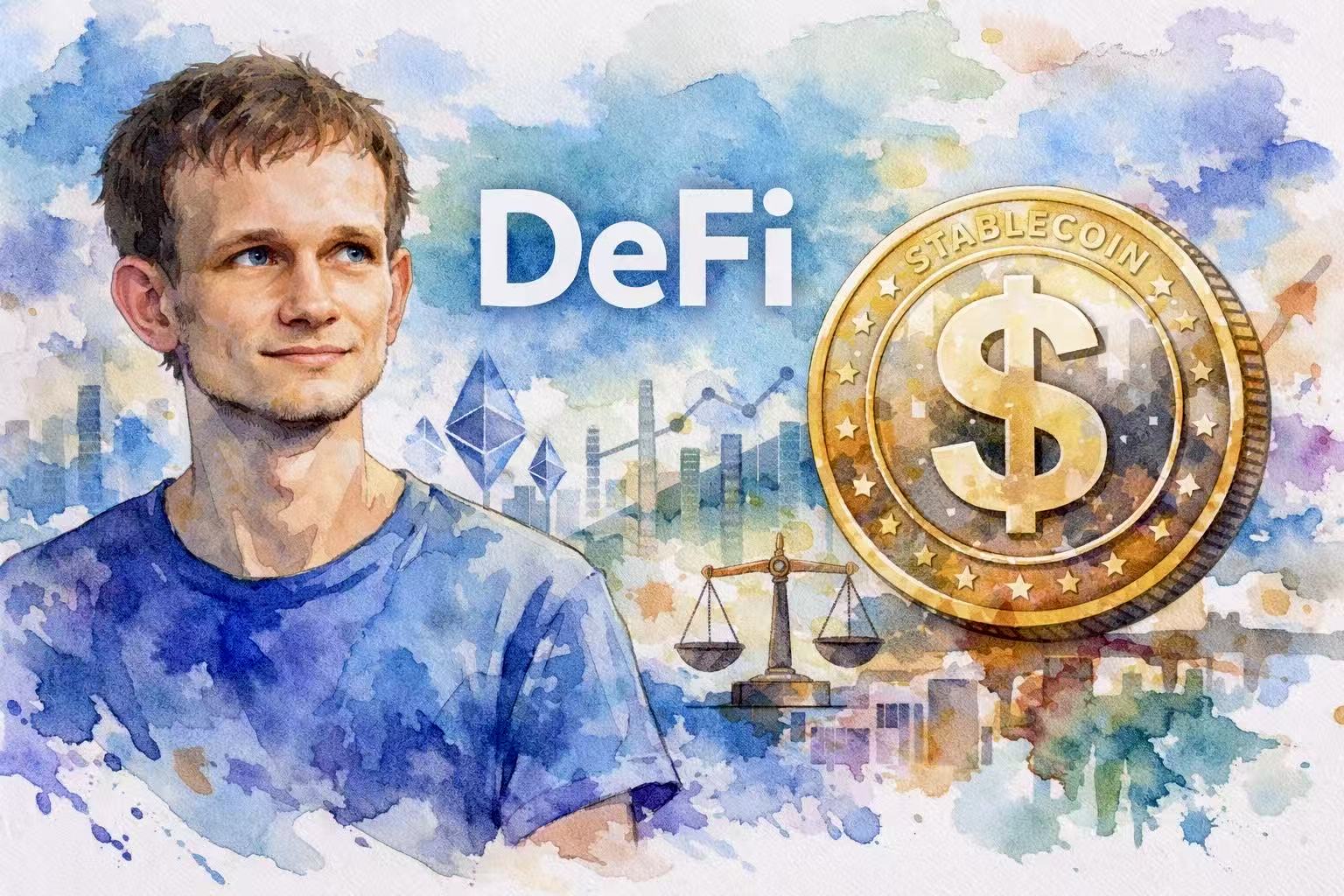
Ethereum co-founder Vitalik Buterin said in an X discussion that a large share of what is currently labeled DeFi has drifted away from the sector’s original purpose. In his view, putting USDC into a lending protocol such as Aave to earn yield is not real DeFi. He placed far more value on algorithmic stablecoins that can redistribute and transfer risk on-chain.
The exchange began with a critique of “USDC yield”
The discussion followed a post from X user @colludingnode, who argued that DeFi only makes sense for users who are long crypto and want financial services under self-custody. The same post dismissed “USDC yield” outright as something that should not be considered DeFi. Buterin picked up that line directly and used it as the starting point for a broader argument over what DeFi is supposed to do.
Buterin outlined two ways to think about algorithmic stablecoins
Buterin said algorithmic stablecoins do count as real DeFi. In his “easy mode” example, he described a strong algorithmic stablecoin backed by ETH. Even if 99% of liquidity comes from CDP holders, users can still shift dollar counterparty risk onto market makers. That transfer of risk, by itself, is a meaningful DeFi function.
He then moved to a tougher case. Even if an algorithmic stablecoin is backed by real-world assets, he said the design can still improve risk characteristics if the system is overcollateralized and sufficiently diversified, with no single asset exceeding the overcollateralization ratio. Under that structure, the failure of one RWA component would not necessarily break the collateral base for the whole system.
ETH-backed designs come first in his ranking
Between the two models, Buterin said the industry should favor pure algorithmic stablecoins backed by ETH before turning to diversified RWA-backed versions. His point was narrow and clear. Yield on-chain is not enough. What matters is whether the system actually reduces concentrated exposure to centralized counterparties. By that standard, he said, the familiar model of putting USDC into Aave does not satisfy either test.
He also wants DeFi to move beyond dollar-only pricing
Buterin added that DeFi should, over time, stop relying on the US dollar as its only unit of account and move toward broader, more diverse indexes. That view extends the debate past stablecoin design and into the structure of the ecosystem itself. For him, DeFi is not limited to self-custodied financial access; it should also use mechanism design to spread risk, transfer risk, and reduce dependence on a single fiat reference point.