
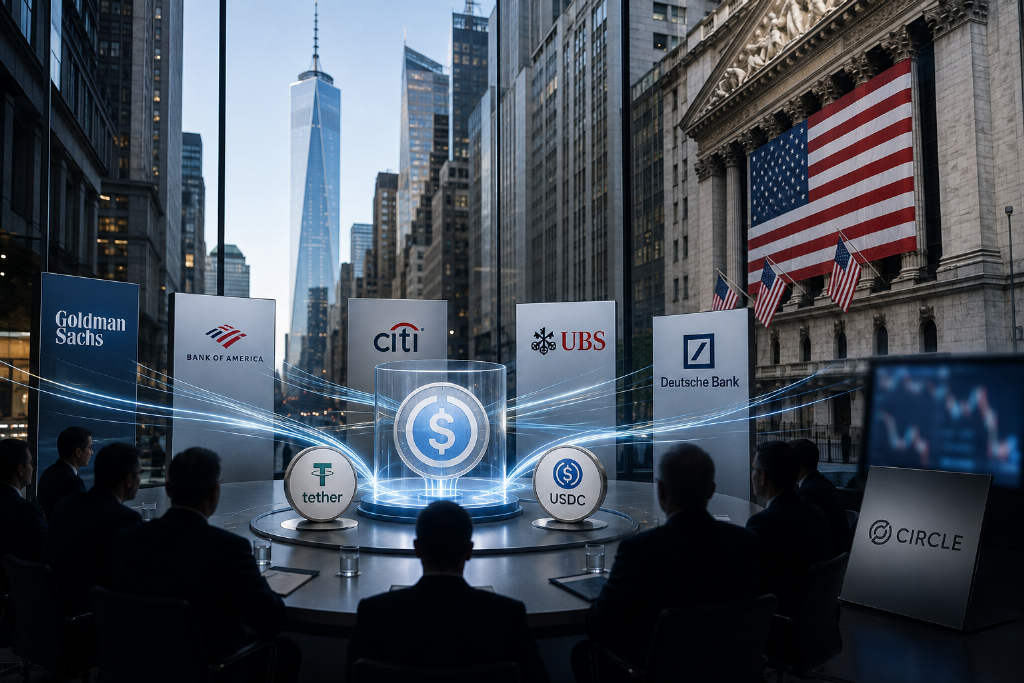
On Sept. 1, a group of 21 traditional financial institutions, including Goldman Sachs, Bank of America and Citi, announced plans to work together on a stablecoin venture. The consortium aims to set up a dedicated joint venture in the second half of 2026, with its first product — a U.S. dollar stablecoin — scheduled for the first half of 2027. After the news broke, Circle shares fell 6.35%.
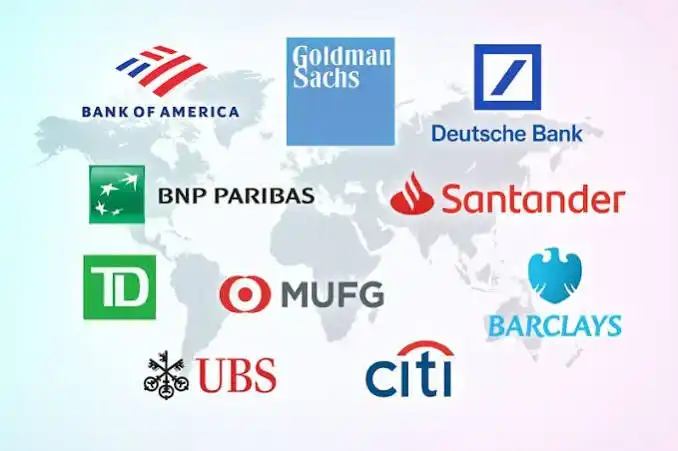
Joint venture targets dollar stablecoin first
According to a joint statement released by Brunswick Group, the alliance plans to start with a dollar-pegged stablecoin and later expand into euro and other G7-currency products. The stated focus is cross-border payments and digital asset settlement.
The lineup includes Goldman Sachs, Citi, UBS and Deutsche Bank, spanning five regions. One name was missing from the list: JPMorgan. The article says JPM Coin has already been running on the bank’s internal settlement network, which helps explain why JPMorgan is not part of the new coalition.
Why big banks are moving in now
The report links the banks’ interest to the economics behind the current stablecoin model used by Tether and Circle. Under that structure, issuers take in users’ fiat funds as reserves, place them into high-yield U.S. Treasurys, and generally do not pay interest to stablecoin holders.
In the current high-rate environment, the article describes that setup as a highly profitable business. It argues that stablecoin issuers have been able to generate net profit with relatively lean staffing, prompting the 21 institutions to move in and compete for that revenue pool.
Societe Generale’s USDCV is cited as an early test case
Still, the article questions whether a Wall Street-backed stablecoin can easily win liquidity in the crypto market. It points to Societe Generale’s USDCV as an example. Despite the backing of a major European bank, the token’s circulation was only $12.6 million nearly a year after launch.
That result, the article says, shows how hard it is to dislodge crypto-native incumbents. Tether’s USDT and Circle’s USDC already hold deep liquidity advantages. On top of that, DeFi protocol integration habits and exchange trading-pair dominance raise the cost of entry for new issuers. If a Wall Street stablecoin offers little beyond stronger compliance credentials, it may end up serving mainly as an internal settlement tool for traditional institutions.
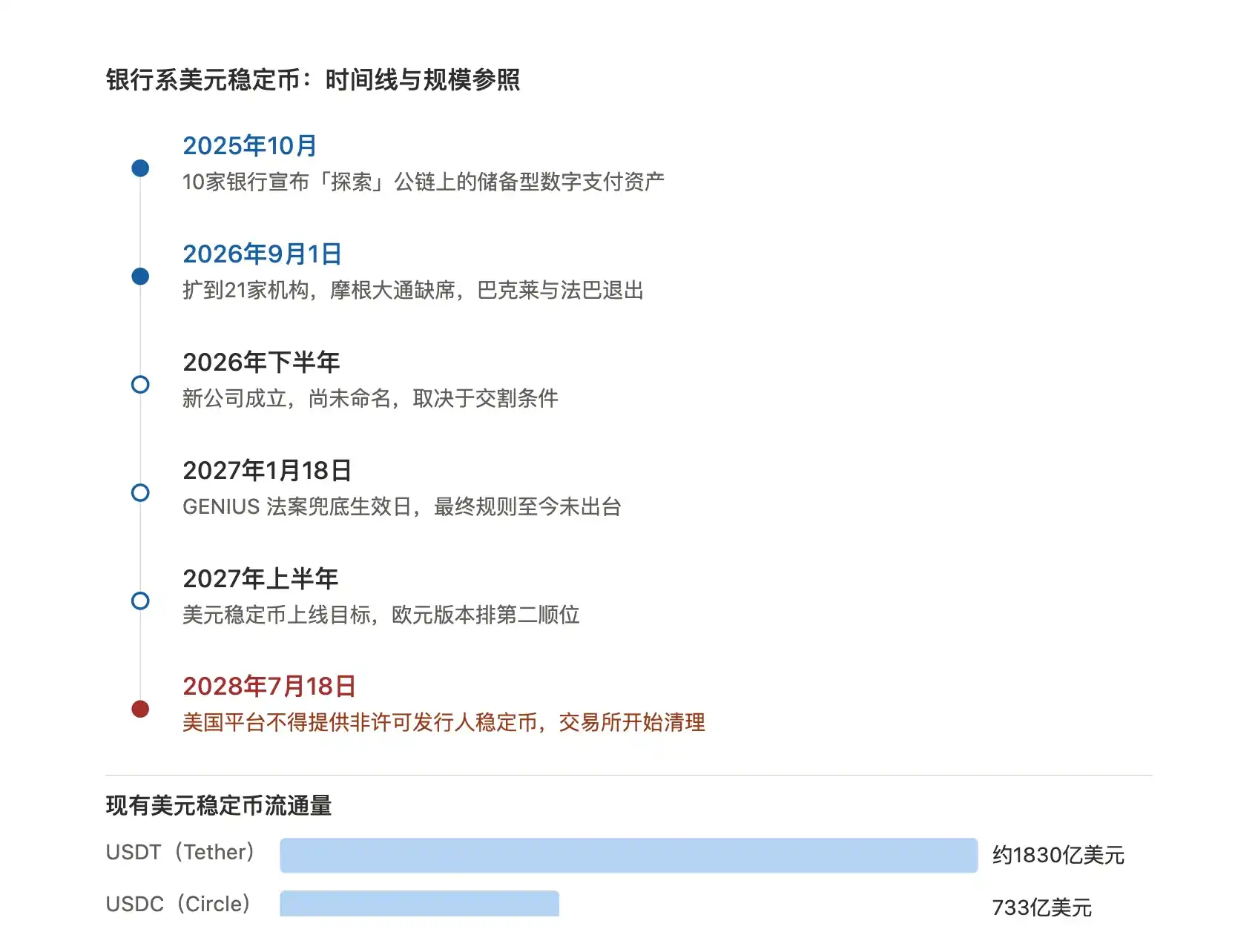
July 18, 2028 stands out in the regulatory timeline
The piece also says the alliance is working within a limited window. Under the current regulatory countdown cited in the report, July 18, 2028 is expected to become a key date when U.S. platforms clear out a batch of non-compliant stablecoins.
Between USDCV’s $12.6 million circulation and a stablecoin market worth more than $100 billion, the gap is large. The article frames the challenge not only as a compliance test, but also as a direct contest with crypto-native capital in a market where liquidity is already concentrated. By the time the consortium launches its product in 2027, it will be entering a field where incumbent stablecoins already dominate.