

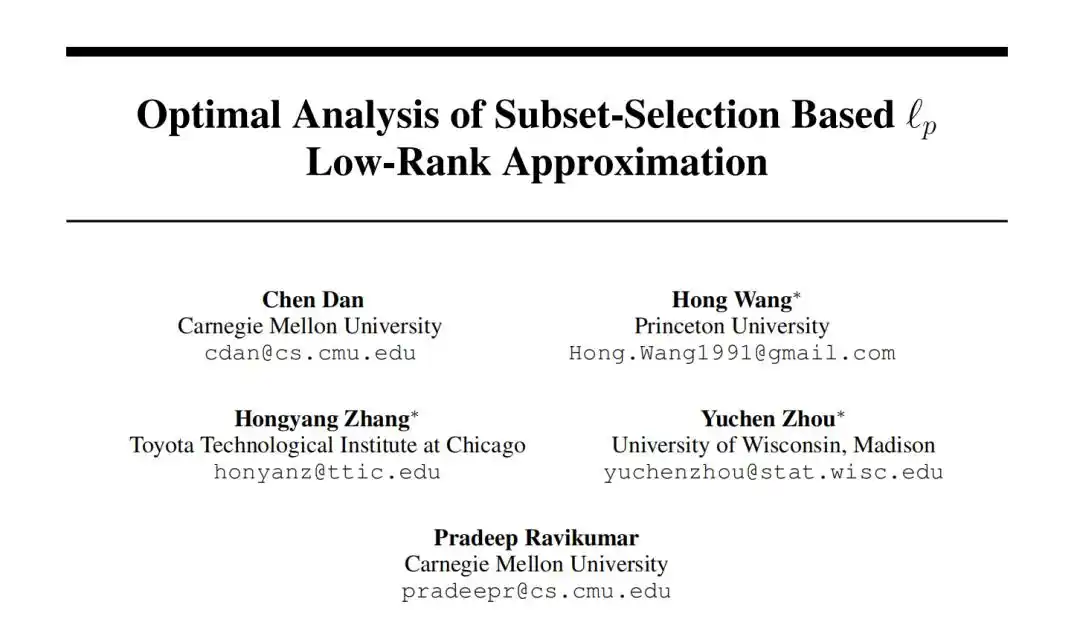
Newly recognized Fields Medalist Wang Hong once co-first-authored a NeurIPS 2019 paper, according to a MarsBit report that cited a WeChat article published by QbitAI.
The piece said the paper was not a nominal authorship entry. Wang was listed as a genuine co-first author on work that examined a basic task in machine learning and data analysis: low-rank matrix approximation.
A theory paper on Column Subset Selection
The article explained the problem in practical terms. Real-world data can often be organized as matrices, but those matrices are frequently large enough that storage and computation become expensive. Low-rank approximation tries to replace the original matrix with a structurally simpler one of lower rank while preserving as much accuracy as possible.
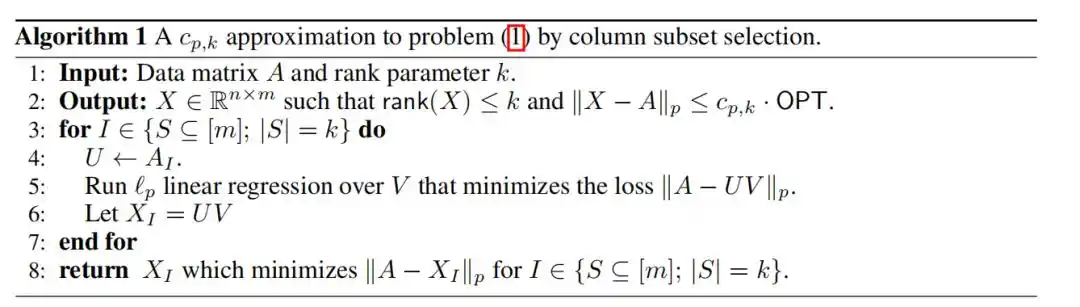
One widely used approach is Column Subset Selection, or CSS. Instead of directly finding an entirely new low-rank matrix, CSS picks representative columns from the original data matrix and uses the space spanned by those columns to approximate the full matrix.
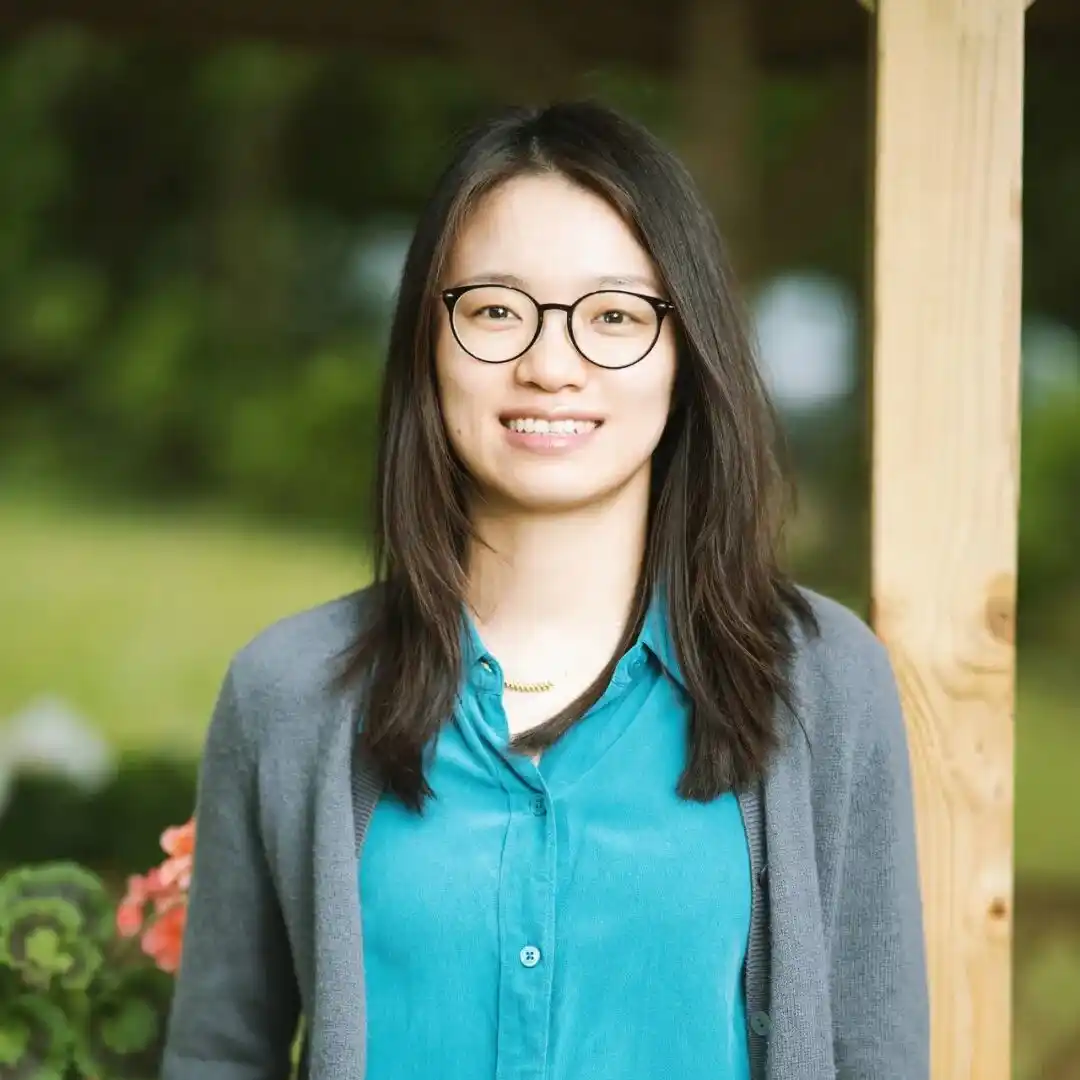
Because the selected columns come from the original data, the resulting approximation can be easier to interpret than abstract vectors produced by standard matrix factorization methods. The article also said CSS can lower storage and computational costs, which makes it suitable for large-scale data.
Earlier research had shown that for general low-rank approximation, the approximation upper bound for CSS was about O(k+1), with k denoting the target matrix rank. As k grows, the theoretical worst-case error bound also becomes larger.
Wang and co-authors improved that bound, the report said:
- for 1≤p≤2, the approximation ratio becomes (k+1)^(1/p);
- for p≥2, it becomes (k+1)^(1−1/p).
The article described this as a materially tighter result than the earlier unified O(k+1) bound. It added that for p≥2, the paper also constructed a corresponding lower bound and showed the result was tight up to constant 1.
The key tool came from harmonic analysis
QbitAI’s write-up argued that the most revealing sign of Wang’s mathematical background was the paper’s use of the Riesz–Thorin interpolation theorem, a classic result from harmonic analysis.
In the article’s account, proving an algorithm across all values of p would usually require separate, and often complicated, analysis for different parts of the range. Some endpoint cases, such as p=1, p=2 and p=∞, are relatively easier to handle. Once those endpoint results are established, the Riesz–Thorin theorem can interpolate from them to the full interval of intermediate p values.
That is what the paper did. It first proved the special cases p=1, 2 and ∞, then used interpolation theory to derive approximation bounds across the entire range. The article noted that while this toolkit is standard in harmonic analysis and operator theory, it was not among the techniques most commonly used by theoretical computer science researchers at the time.
NeurIPS reviewers noticed the move as well, according to the report. It said reviewers ultimately identified the introduction of the Riesz–Thorin theorem into computer science as the paper’s main technical innovation, while the Meta Review described the work as strongly argued.
The article presented the paper as a clear example of cross-disciplinary research, with a machine learning problem being advanced through tools from pure mathematics.
Why the paper is being discussed again now
The timing, the report said, is linked to the upcoming NeurIPS 2026 review cycle. As scores approach release, online users revisited Wang’s earlier publication record and found the 2019 paper.
At the same time, NeurIPS 2026 is adjusting its review process. Authors are now asked to identify which of five contribution types best matches their submission: General, Theory, Use-Inspired, Concept & Feasibility, and Negative Results.
The article said Wang’s 2019 paper would plainly fall into the Theory category. Under the latest NeurIPS 2026 reviewer guidelines, theory papers are judged first on mathematical rigor and correctness. Proofs, lemmas and the overall logic must hold, and a theory paper should not be discounted simply because it does not include experiments.
The guidelines also state that a theoretical contribution can stand on its own. A new algorithm does not need to beat the latest application model or top a largest-scale benchmark dataset to qualify as meaningful work. On originality, the article noted that NeurIPS 2026 explicitly allows credit for importing new proof techniques from other disciplines or combining existing tools in a novel way.
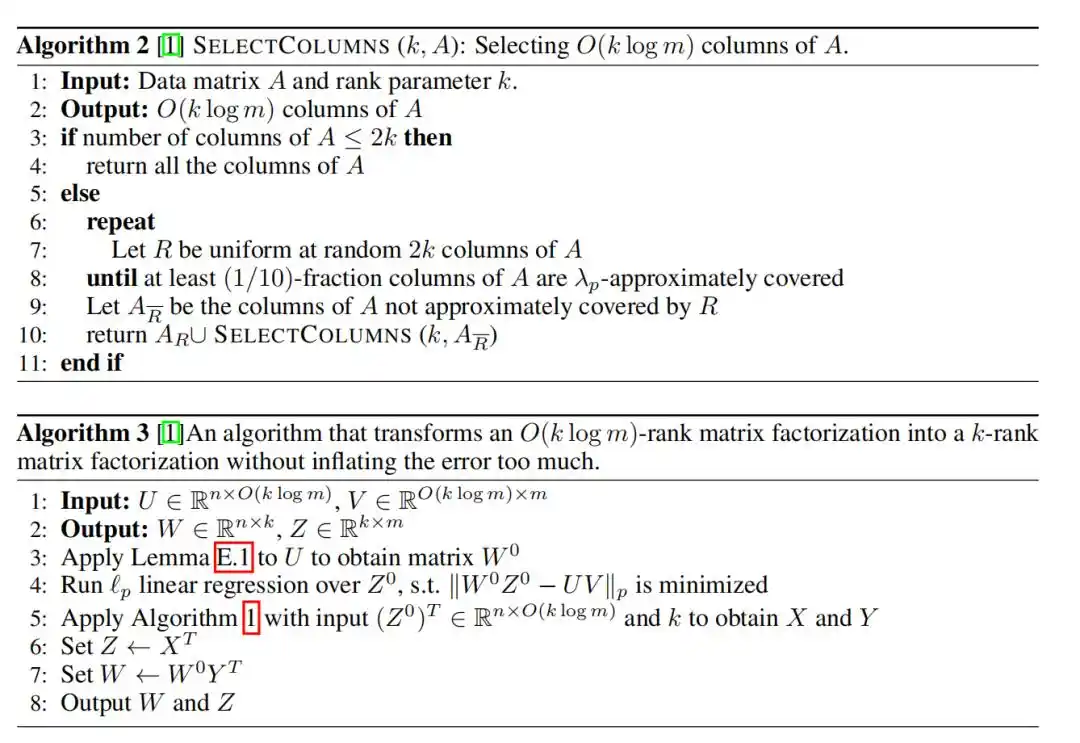
That description closely matches Wang’s paper as summarized in the report. The authors did not propose what would now be seen as a new neural network architecture, nor did they train a model with a massive parameter count. Instead, they brought an interpolation theorem from harmonic analysis into low-rank approximation and sharpened the theoretical limits of the algorithm.
Placed inside the 2026 review framework, the article argued, it still reads as a standard NeurIPS theory paper. The point is not limited to one author. The report said NeurIPS should not be reduced to a venue for releasing neural network models. Work that offers a new understanding of existing methods, uncovers new properties, or proves tighter theoretical bounds also counts as original contribution.
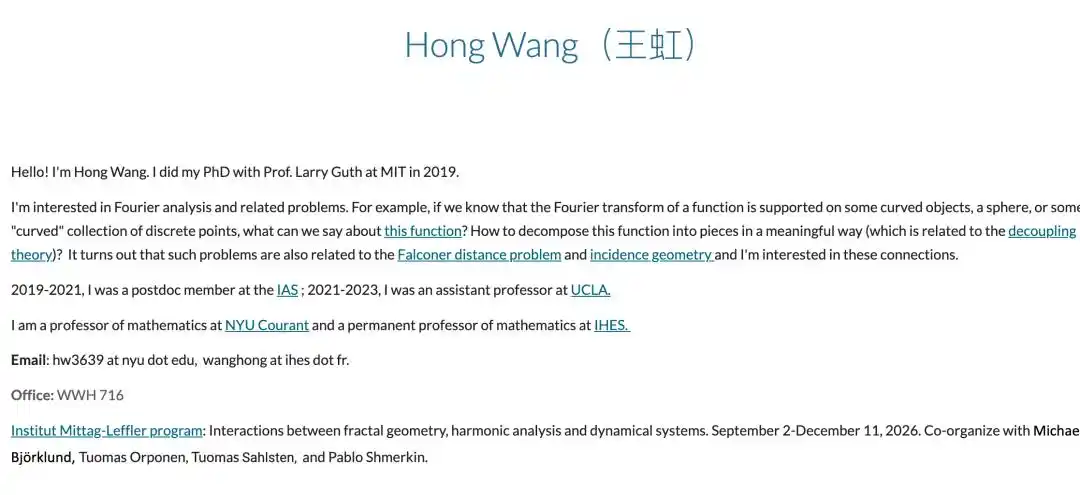
An odd detail on Wang’s homepage
The article also pointed to one detail on Wang’s personal homepage. Among nearly 40 listed papers and preprints, almost every entry includes a full link. This NeurIPS paper, it said, is the exception.

The report closed on a broader observation: the boundary between mathematics and AI has never been as clean as many assume. In this case, a Fields Medalist published at NeurIPS, and mathematical language supplied part of the answer to an AI problem.
The cited references in the source article included the NeurIPS 2019 paper, the NeurIPS 2026 reviewer guidelines, Wang Hong’s homepage, and one additional external link listed by the original author.
The original Chinese article was published by QbitAI and credited to writer Luyu. MarsBit republished the piece.