
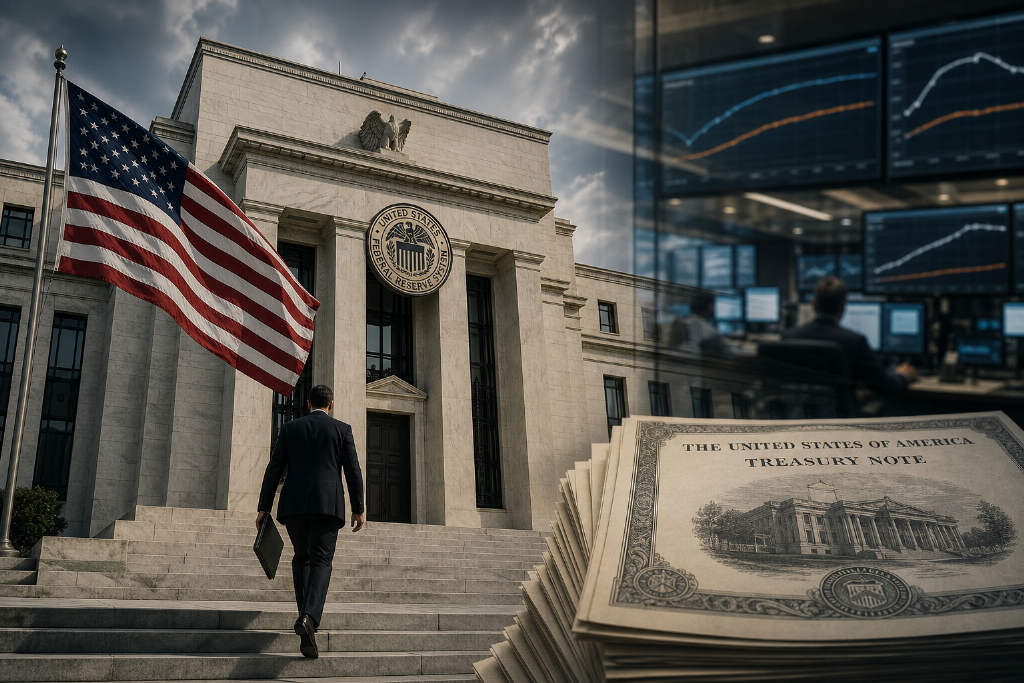
Federal Reserve Chair Kevin Warsh delivered a hawkish speech at Jackson Hole, and that drove up bets on a September rate hike. But several big bond investors still are not buying the idea that the Fed will actually pull the trigger.
ABN AMRO, Brandywine, and DWS have all stayed underweight long-dated U.S. Treasurys. Their argument is simple: talk is cheap. Hard-line inflation rhetoric does not, by itself, mean action is coming.
Written by Zhang Yaqi, Wallstreetcn
After Warsh repeated on Friday that he is committed to bringing inflation down, swap traders put the odds of a rate increase at the Fed’s next meeting in mid-September at about 60%. The policy-sensitive 2-year U.S. Treasury yield had its biggest jump in more than two months on Friday, then later slipped 2 basis points to 4.32% in Asian trading.
Even with that repricing, doubt has not gone away in the bond market. Investors keep coming back to one point: Warsh left rates unchanged in both June and July, even after months of tough inflation remarks. So the question hangs there. Will this latest burst of hawkish messaging actually turn into a move in September?
There is a credibility issue too. If the Fed stays put again, investors fear the market may grow even more skeptical about whether it is willing to act. The report says those worries had already helped send long-end Treasury yields to their highest levels in nearly two decades. What comes next will depend heavily on incoming data, with this week’s monthly employment report and the inflation figures after that seen as the main inputs for the September call.
Investors stick with caution on the long end
Tracy Chen, a portfolio manager at Brandywine Global Investment Management, put it bluntly: “Talking is one thing, but action is the real proof.” She is still underweight long-dated Treasurys, though she has pared that position slightly after the U.S. Treasury said this month it would buy at least double the amount of 10- to 30-year bonds.
Christophe Boucher, chief investment officer at ABN AMRO Investment Solutions, took much the same line. He said: “The reaction function is still unclear. If Warsh again does not support a September rate hike, while inflation stays sticky, concerns about credibility could resurface.”
Since Warsh took over in May, investors have had to get used to a communication style with less forward guidance. ING said in a Friday research note that while Warsh seems reluctant to offer explicit forward guidance, his wording still has a forward-guidance effect.
June and July left markets with mixed signals
Warsh’s first post-meeting press conference in June helped settle markets after he reaffirmed the Fed’s 2% inflation target. At that point, 2-year yields jumped and the yield curve flattened.
July brought the reverse. The steepening in the curve was the largest since August 2025, and long-dated Treasury yields climbed after investors decided Warsh had not clearly explained why rates were left unchanged.
Treasury buybacks add another support for long bonds
Fiscal policy is now part of the long-end story too. The U.S. Treasury said this month it would buy at least double the amount of outstanding debt in the 10- to 30-year sector. That shift led some investors to scale back their underweight positions in longer maturities.
Chen said she is still underweight long bonds, but she cut the size of that position after the Treasury announcement. Daniel Siluk, global head of short duration and liquidity at Janus Henderson, said he remains somewhat cautious on duration at the back end of the curve and would rather hold duration at the front end instead.
Jobs and inflation data now take center stage
Friday’s monthly U.S. employment report is now the big near-term variable. Earlier data showed that U.S. job growth over the year through March was softer than previously reported. Warsh said the labor market is “performing well” and added that he is more concerned about the price-stability side of the mandate. He also said recent inflation data have improved, but not enough to establish a meaningful trend.
George Catrambone, head of fixed income for DWS Americas, warned that markets risk “doing the Fed’s job” by pricing in too much tightening even if the central bank does not deliver because the data remain unremarkable. In his view, recent retail sales and employment reports do not show the economy is reaccelerating, and U.S. Treasurys are “quite attractive.”
Goldman Sachs analysts, including George Cole, stressed the need for follow-through. They wrote: “Without clearly favorable inflation news, follow-through will be key. If September is seen as a close call, and the Fed again stays on hold without offering a clear explanation, the risk of the curve repeating the July FOMC pattern will be fairly high.”
Edward Harrison, a macro strategist at Markets Live, said the initial decline in the 30-year yield after Warsh’s hawkish speech suggests Fed credibility has improved. In his view, that could support long-duration fixed-income assets by pushing down real yields and breakeven inflation.
So now the market turns to Friday’s jobs report and the inflation data after that. Both could trigger yet another repricing of September hike expectations.
