

A market analysis published by MarsBit argues that Web3 is not short on business models, but that many of its strongest revenue engines are frequently ignored because they are not directly reflected in token prices. Rather than looking at FDV, airdrops, exchange listings, or shifting narratives, the article suggests focusing on a simpler set of questions: who is paying, why they pay, how those payments become revenue and profit, and whether the model can remain durable over time.

Using that framework, the piece identifies five validated cash flow models already operating across the crypto sector: trading fees, stablecoin reserve income, interest spreads, block space sales, and protocol-level infrastructure service fees. According to the author, these categories do not capture every possible future path for Web3, but they are among the clearest and most trackable examples of real onchain business activity today.
Trading fees remain the most visible model, with Hyperliquid as the clearest example
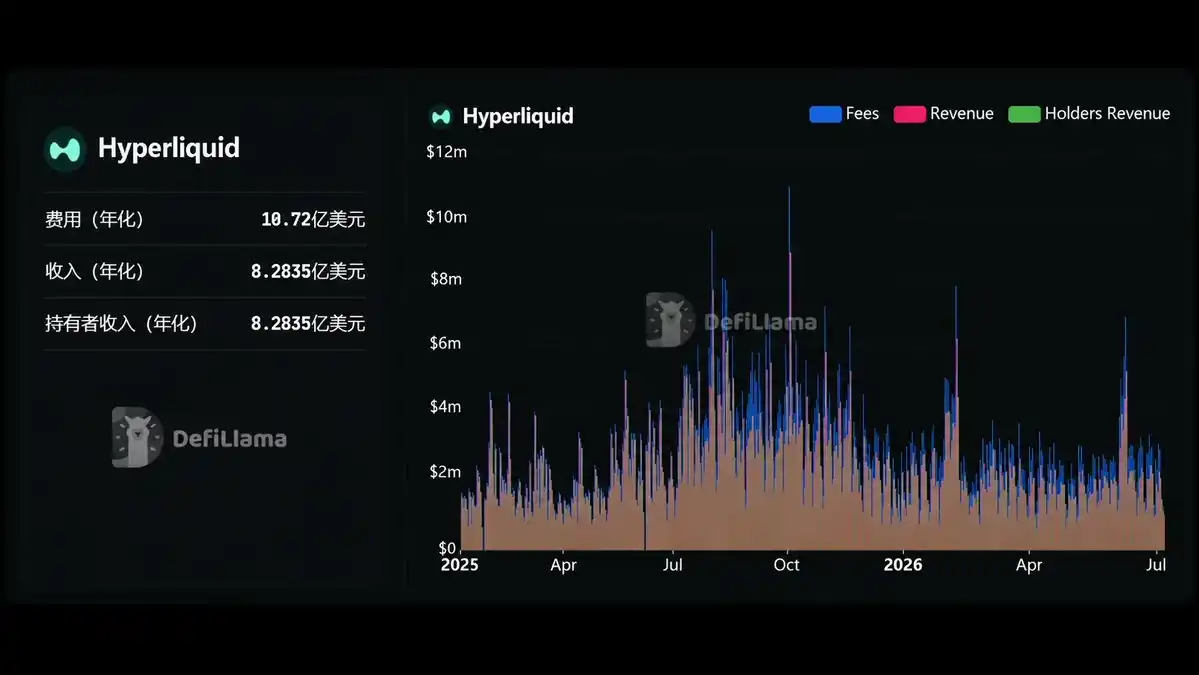
The first category is trading fees, one of the earliest revenue models proven in crypto across centralized exchanges, decentralized exchanges, and cross-chain bridges. The article highlights Hyperliquid as the strongest current example of the model because its structure is relatively straightforward and transparent. In simple terms, more trading volume leads to more fees, which translates into more protocol revenue and supports additional value capture mechanisms such as buybacks.
The piece notes that, based on DeFiLlama’s methodology, Hyperliquid’s fee figures include perpetual trading fees and Builder fees, but do not include spot trading. That means users opening positions, placing orders, taking orders, market making, or using Builder Code all contribute to fee generation at different levels. The upside of this model is clear visibility into revenue and cash flow. Its weakness is also obvious: it is highly cyclical. In bull markets, revenues can surge quickly, while in bear markets they can contract just as fast.
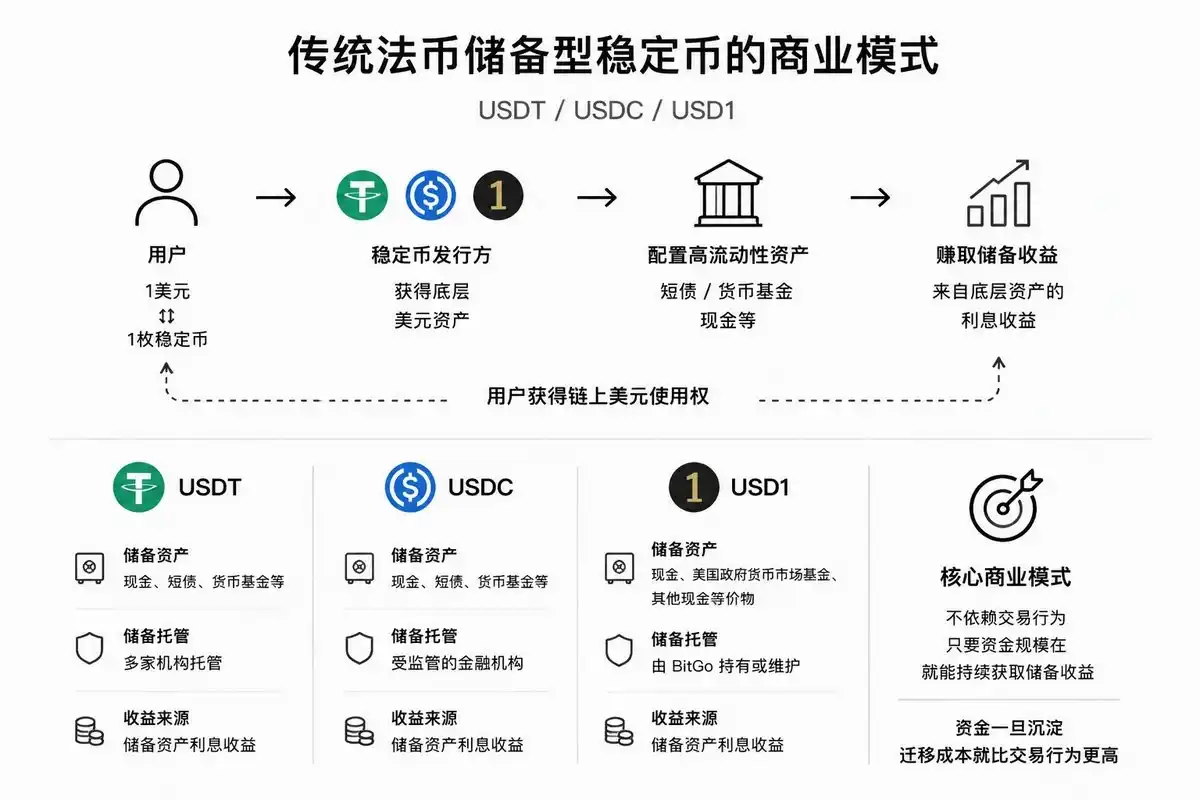
Stablecoin reserve income depends on scale and retained deposits, not trading activity
The second model is reserve income from fiat-backed stablecoins, represented by USDT, USDC, and USD1. The article distinguishes this category from products like Ethena, which generate yield from crypto-native funding rates and basis trades rather than from conventional reserve assets. For traditional reserve-backed issuers, the business model resembles an onchain money market fund: users exchange one dollar for one stablecoin, and the issuer then allocates the underlying dollars into short-duration Treasuries, money market funds, cash, and other highly liquid instruments to earn reserve yield.
The article says USD1 follows a similar logic, while citing World Liberty Financial documentation that describes its backing as cash, U.S. government money market funds, and other cash equivalents. In this setup, users receive onchain dollar utility, while issuers retain the economic rights to income generated by the underlying reserve assets. That is why the author views stablecoin issuance as such a powerful business: it does not require users to trade every day. As long as supply remains large and capital stays in the system, reserve income can continue to accrue. The key variable is not transaction frequency, but whether enough funds are willing to remain parked inside the network.
Interest spread models split into crypto basis strategies and lending market take rates
The article places Ethena and Aave under the broader category of interest spread models, while emphasizing that they monetize different forms of capital pricing. Ethena’s flagship product is also a stablecoin, but its yield source is different from reserve-backed issuers. Instead of earning on dollar reserves, Ethena generates returns primarily through funding rates and basis spreads created by delta-neutral hedging strategies using spot BTC and ETH against derivatives positions. The article adds that a smaller portion of its returns also comes from Ethereum staking income.
Aave, by contrast, is presented as the clearest example of an onchain lending spread model. The article compares its economics to traditional banking, where institutions gather funds at a lower cost, lend them out at a higher rate, and keep the spread. Aave does not intermediate in the same way as a bank, but it organizes depositors, borrowers, collateral, interest rate curves, and liquidation rules through smart contracts. Users deposit assets into liquidity pools, borrowers post collateral and borrow assets, and borrowing rates rise or fall based on utilization levels within each pool. In effect, the protocol automatically prices capital onchain.
The protocol’s own revenue comes from taking a cut of borrower-paid interest. Most of that interest is passed through to depositors, while a smaller portion enters the protocol treasury via the reserve factor. This is what makes Aave’s model more than simple usage growth: it captures a recurring share of capital demand as long as borrowers continue to seek leverage or liquidity against deposited collateral.
Ethereum monetizes scarce block space across both execution and data availability
For public blockchains, the article argues that what networks really sell is not TPS as a headline metric, but block space. In Ethereum’s case, transaction fees are split into a base fee and a priority fee. The base fee is dynamically adjusted according to network congestion and is burned after payment. The priority fee acts as a tip to validators, increasing the likelihood that a transaction is included faster. As a result, the total cost of a transaction depends on gas used multiplied by the sum of the base fee and priority fee.
The author also stresses that Ethereum now sells two forms of space. The first is standard execution space for ordinary transactions. The second is blob data space used by rollups. A blob can be understood as a temporary data package carrying batched Layer 2 transaction data back to Ethereum mainnet. That data also carries a separate pricing standard through blob gas, distinct from regular execution gas. In other words, Ethereum does not monetize only L1 transactions, but also the settlement and data availability needs of the broader L2 ecosystem built around it.
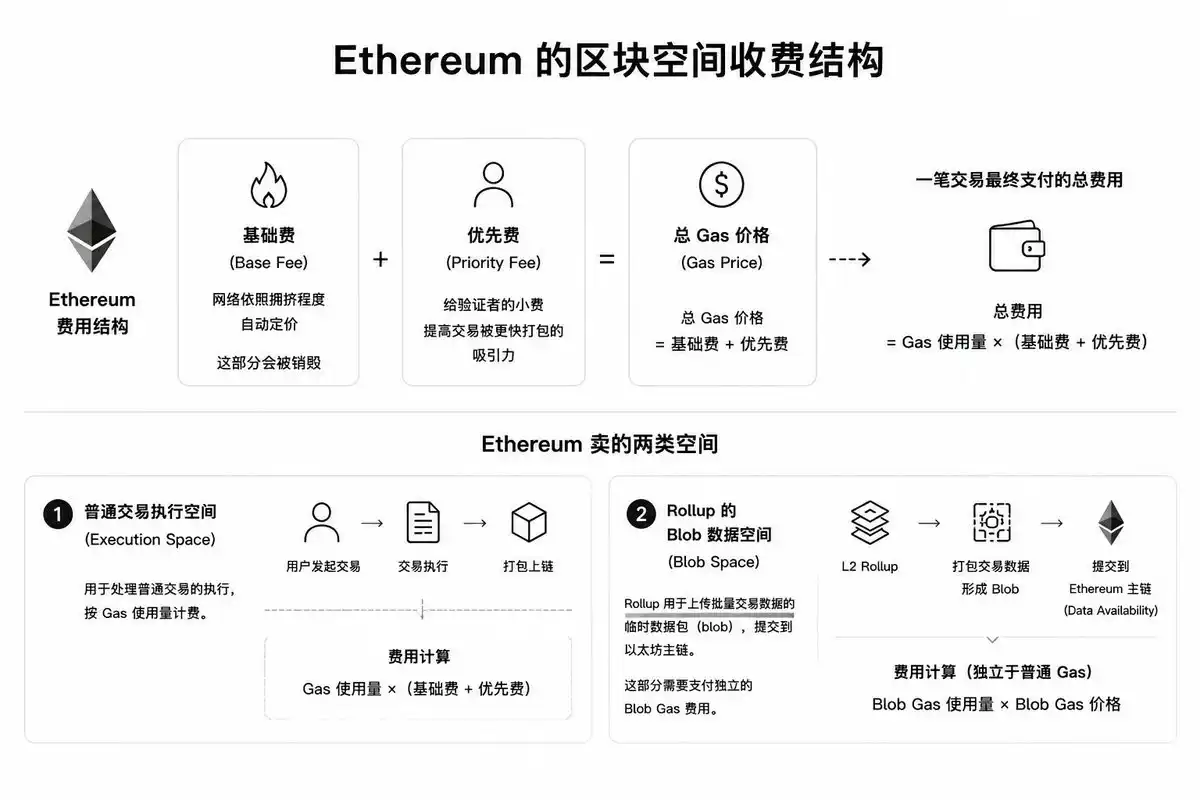
This framing is important because it treats Ethereum’s business model as the sale of scarce network resources rather than simple network usage. As more activity settles through rollups and other scaling systems, the article suggests the monetization surface expands beyond base-layer transfers into a wider market for execution capacity and data publication.
Protocol-level service fees are turning Web3 infrastructure into a recurring-revenue business
The fifth model identified by the article is infrastructure service fees, often structured in a way that resembles subscriptions. Unlike trading fees, this model does not take a cut every time an end user trades. Unlike reserve-backed stablecoins, it does not depend on investing pooled dollar assets into short-term instruments. Instead, projects, applications, and even blockchains themselves pay recurring fees to access critical infrastructure services.
The article argues that as the sector matures, more crypto protocols are shifting from being token-centric projects to becoming infrastructure vendors. It lists deBridge as one example. Beyond offering user-facing bridging, deBridge can help chains and business clients deploy cross-chain connectivity. In that sense, what it sells is cross-chain communication capacity: messages, instructions, and liquidity movement across networks.
A second example is Optimism’s OP Stack, which the article describes as selling chain-launch capability and access to a shared ecosystem network. Member chains inside the Superchain benefit from a standardized development stack and ecosystem coordination, while a portion of revenue flows back to the Optimism Collective. A third example is Chainlink, which monetizes oracle services, trusted data delivery, and cross-chain message verification. Those are not one-off purchases. DeFi protocols need price feeds continuously, derivatives protocols require repeated market data updates, and cross-chain systems rely on ongoing message validation.
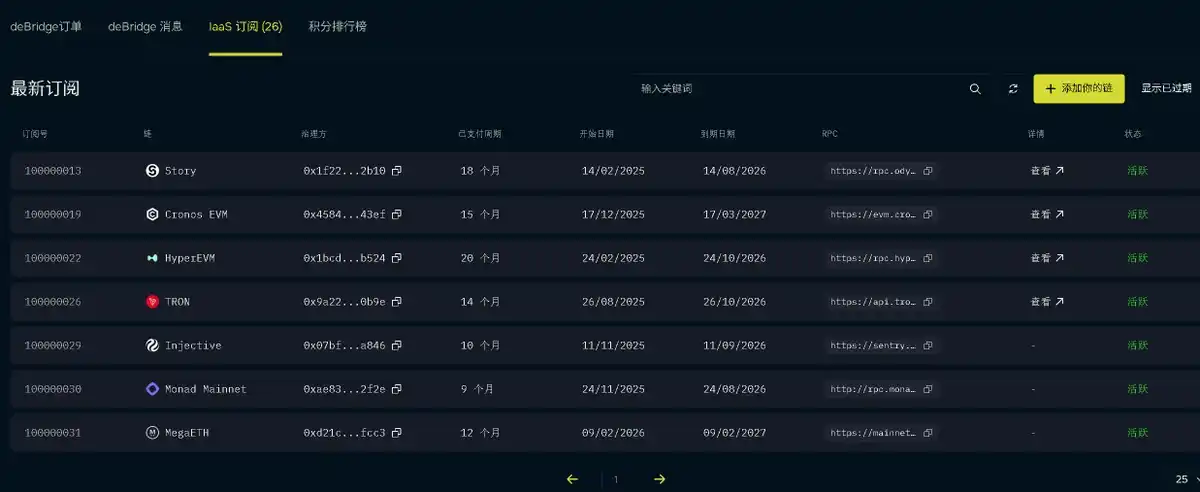
The author characterizes this category as a Web3 version of SaaS. The product is not a software seat license, but a set of foundational capabilities such as bridging, chain deployment, oracles, automation, and data validation. The article notes that this revenue may not appear as explosive as transaction-driven income in the short term, but it can be strategically more valuable over time because infrastructure integrations tend to create high switching costs once core applications are built on top of them.
The broader takeaway is that Web3 cash flow is becoming clearer, even if token prices do not fully reflect it
In its conclusion, the article again summarizes the five categories through representative examples: Hyperliquid for trading fees; USDT, USDC, and USD1 for reserve income; Ethena and Aave for capital spreads; Ethereum for block space sales; and Chainlink, OP Stack, and deBridge for protocol-level service fees. Viewed together, the author argues, these examples show that Web3 is no longer driven purely by narrative. It is increasingly producing clearer and more explainable cash flows.
At the same time, the piece emphasizes that it is only addressing how these models make money, not where the money ultimately flows or what factors determine the quality of a given business model. Those questions are left for a future follow-up. The central claim, however, is already clear: the issue in Web3 is not the absence of business models, but the fact that many of the sector’s most durable revenue streams remain underappreciated because they are not immediately visible through token price performance alone.