
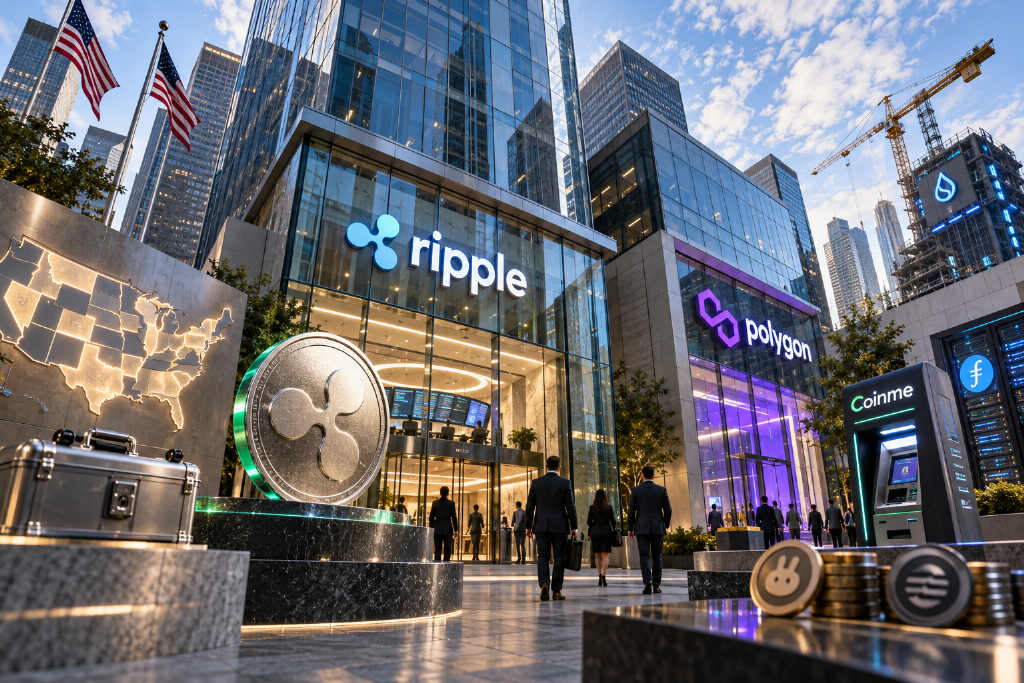
Major crypto projects disclosed a fresh batch of developments during the week of Oct. 12 to Oct. 18, covering products, partnerships, financing, business restructuring and tokenomics.
Ethereum and Binance
On Ethereum, BitMine said it holds about 6.03 million ETH, equal to roughly 4.9% of total supply. The company said it has 「basically completed」 the purchase.
Binance is set to shut down its mining pool and cloud mining businesses on Nov. 10, narrowing its focus away from non-core operations.
Ripple expands institutional ties and launches a new product
Ripple signed four institutional partners during the week. Cross River Bank integrated RLUSD, Ripple’s U.S. dollar stablecoin, into its core banking system. DriveWealth is using RLUSD for settlement in Europe. Meritz Securities became Ripple’s first brokerage client in South Korea. Privy is providing embedded wallets for XRPL.
On the product side, Ripple Prime launched 24/7 RWA perpetual contracts for institutions, with RLUSD available as collateral.
Hyperliquid, Sui and Polygon
Hyperliquid listed pre-market perpetual contracts for PAPER with leverage of up to 3x. PAPER is the token of Papertrade, a third-party perpetual trading platform on HyperEVM that offers leverage of up to 1000x and went live on Oct. 10. The contract was deployed by third party Paragon through HIP-3.
Sui Foundation invested $30 million in DATA Network. DATA previously operated in connection with Story, a well-known South Korean public chain focused on IP licensing. After its founder left, the project shifted this year to AI training data registration. DATA plans to shut down its own chain and migrate to Sui.
Polygon said it has completed the acquisition of Coinme. The deal gives Polygon payment licenses covering 37 U.S. states, making it a licensed payments company that can directly handle fiat on- and off-ramps.
Jupiter, Filecoin and PancakeSwap
Jupiter launched an unaudited beta version of YOLO with leverage of up to 1000x.
Filecoin said genesis vesting ended on Oct. 15, cutting daily new circulating supply by about 75%. After the Solstice upgrade is activated next week, block rewards will shift toward service providers that bring in paid storage, while any unallocated portion will be burned.
On Oct. 14, PancakeSwap introduced a proposal called The Flip. It would reduce daily token emissions from 22,500 to 7,000, a drop of about 69%, and raise the LP revenue share to 88%. The proposal is still under discussion.
Aptos, Celestia and Starknet
Aptos said the four-year unlock period for team and investor tokens has ended, and those tokens have now been fully released.
Celestia launched Eden, an EVM chain that uses TIA for gas fees and stores data on Celestia. It is positioned as a sandbox for AI agent trading experiments.
Starknet opened a non-binding Snapshot vote lasting seven days and ending on Oct. 22 to discuss whether it should study a path away from Ethereum and become an independent quantum-resistant Layer 1 network.
Derive and Plasma
Derive raised the share of protocol fees allocated to buybacks from 35% to 50%.
Plasma and Stripe are jointly developing a multi-currency stablecoin card, with Plasma serving as a design partner. The disclosed information says Stripe’s related infrastructure already covers more than 30 countries, while the launch schedule and fee structure for the new product have not been disclosed.
The original report said the roundup only provides information leads and does not fully present the background, conditions or risks behind each development. It also said the content does not constitute investment advice.



