
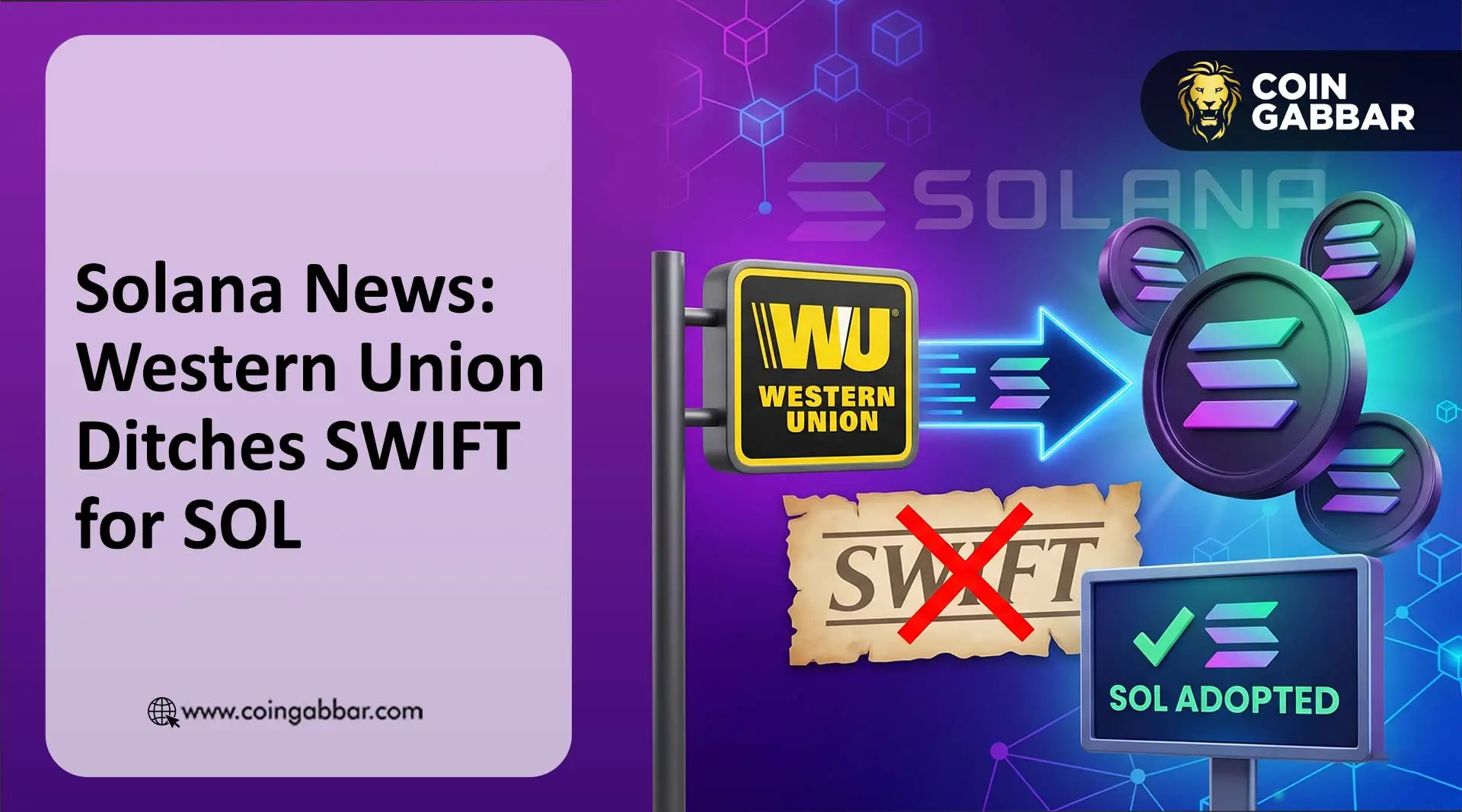
Western Union, the 170-year-old money transfer giant, is gearing up to become one of the most prominent legacy financial players on Solana. CEO Devin McGranahan confirmed this week that the company’s Solana-based stablecoin, USDPT, is in its final preparation phase and will launch next month.
This is not a pilot or a whitepaper — it is a live product shipping to real markets within weeks, deployed directly on the Solana blockchain.
USDPT: Replacing SWIFT for Agent Settlements
USDPT is a U.S. dollar-backed stablecoin built entirely on Solana. Western Union intends to use it as a direct alternative to SWIFT for settling transactions with its global agent network. SWIFT currently powers most cross-border bank transfers, but it is slow, expensive, and closed on weekends. USDPT settles on Solana in seconds at a fraction of the cost.
The rollout begins in select countries with key partners before expanding globally. Western Union has not disclosed the initial markets but confirmed a phased approach to ensure compliance in each jurisdiction.
Alongside USDPT, Western Union is building the Digital Asset Network — a bridge that connects crypto wallets directly to its retail and agent network worldwide. Western Union has over 500,000 agent locations in more than 200 countries. Any crypto wallet plugged into that network gains instant access to cash pickup at half a million points globally.
The company also plans to launch a USD Stable Card later this year across dozens of markets. The card allows users to spend stablecoin balances at standard merchant terminals, requiring no crypto knowledge.
Why Solana Over Ethereum or BNB Chain
Western Union did not choose Ethereum or BNB Chain — it chose Solana. The reason: Solana processes thousands of transactions per second with fees under one cent. For a remittance company handling millions of transfers daily, that cost structure is the only one that makes commercial sense at scale.
This move validates the broader Solana narrative from April 2026. Earlier this month, GSR listed a Solana-inclusive ETF on Nasdaq. Anchorage Digital enabled institutional SOL staking. Forward Industries held nearly $1 billion in SOL. Now Western Union brings its 170-year brand and 500,000-agent network onto the same chain.
Solana is no longer just a blockchain for DeFi traders — it is becoming financial infrastructure for the real world.
Expert Analysis: Real-World Usage Set to Spike
Western Union processed 4.5 billion transactions in 2024. Even a fraction of that volume moving through USDPT on Solana would represent a significant increase in real-world blockchain usage.
The Digital Asset Network launch is the more important announcement in the long run. It creates a direct bridge between crypto wallets and physical cash pickup, removing the biggest barrier that has kept crypto remittances out of reach for billions of unbanked users globally.
Watch for the initial country rollout announcement next month. The markets Western Union chooses first will signal exactly which remittance corridors it sees as the highest opportunity for stablecoin adoption.