
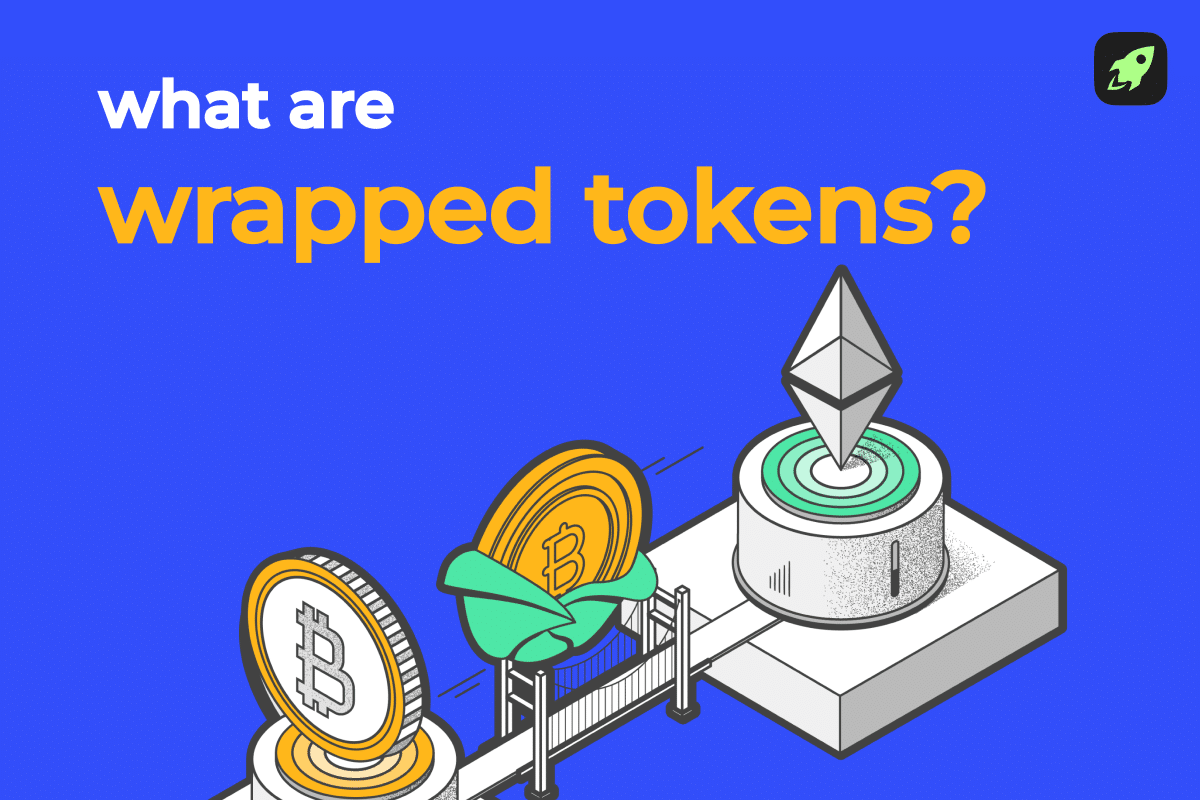
Wrapped tokens are like superheroes in disguise—Bitcoin wears an Ethereum cape and becomes Wrapped Bitcoin (WBTC), suddenly able to trade, lend, and farm yield on DeFi protocols it couldn’t access before. According to CryptoComLearn’s latest guide, the total value locked in major wrapped tokens now exceeds $10 billion, with WBTC dominating the market.
Lock-and-Mint vs. Burn-and-Release: Two Standard Models
The core mechanism is lock-and-mint: users deposit native assets (e.g., BTC) into a custodian-managed reserve, and an equivalent wrapped token is minted on another chain at a 1:1 ratio. The burn-and-release model reverses the process—wrapped tokens are burned first, then the original asset is released from custody. RenBridge previously used this model to avoid permanent locks. Both models ensure the supply of wrapped tokens matches reserve assets exactly, maintaining the peg.
Centralized vs. Decentralized: Trust Trade-offs
Wrapped tokens split along governance lines. Centralized models place custody in trusted institutions like BitGo for WBTC, offering efficiency but relying on a single point of trust. Decentralized models use distributed networks or smart contracts, as RenVM attempted, replacing institutional trust with validator consensus. However, decentralized versions face scalability and security hurdles. Currently, most high-volume wrapped tokens remain centralized for reliability.
Popular Wrapped Tokens: WBTC, WETH, WBNB, and More
Wrapped Bitcoin (WBTC) is the most prominent, letting BTC enter Ethereum’s DeFi ecosystem on Uniswap and Aave. Wrapped Ether (WETH) standardizes ETH into an ERC-20 token, solving its incompatibility with many smart contracts. Similarly, WBNB, WMATIC, and WAVAX wrap BNB, Polygon MATIC, and Avalanche AVAX into standard tokens usable in their respective DEXs and lending markets. renBTC and HBTC are alternative Bitcoin wrappers—renBTC is decentralized, while HBTC is custodied by Huobi exchange.
Use Cases: Unlocking Liquidity Across Chains
Wrapped tokens enable “outsider” assets to participate in DeFi. For instance, plain Bitcoin cannot lend on Aave, but WBTC can. They also fuel liquidity pools, yield farming, and multi-chain lending. Cross-chain bridges act as gateways: when a user sends AVAX to Ethereum via a bridge, the bridge automatically mints WAVAX for use in Ethereum-based protocols.
Risks to Know: Custodian Trust and Smart Contract Bugs
Wrapped tokens carry real risks. Custodian credit risk: if the centralized custodian is hacked or goes rogue, the underlying reserves may be lost, causing the wrapped token to de-peg. Smart contract vulnerabilities: cross-chain bridges and wrapping contracts have been exploited for billions of dollars. Proof-of-Reserves audits may be infrequent or opaque. Users should prioritize projects with a track record of audits and transparency.
The Future: Toward Trust-Minimized Wrapping
As Layer 2 networks mature and interoperability protocols like Chainlink CCIP advance, wrapping will become more automated and less reliant on single custodians. Regulators may push for higher transparency and security standards. Wrapped tokens won’t disappear—they will become safer, more integrated, and indispensable to mainstream DeFi infrastructure.