
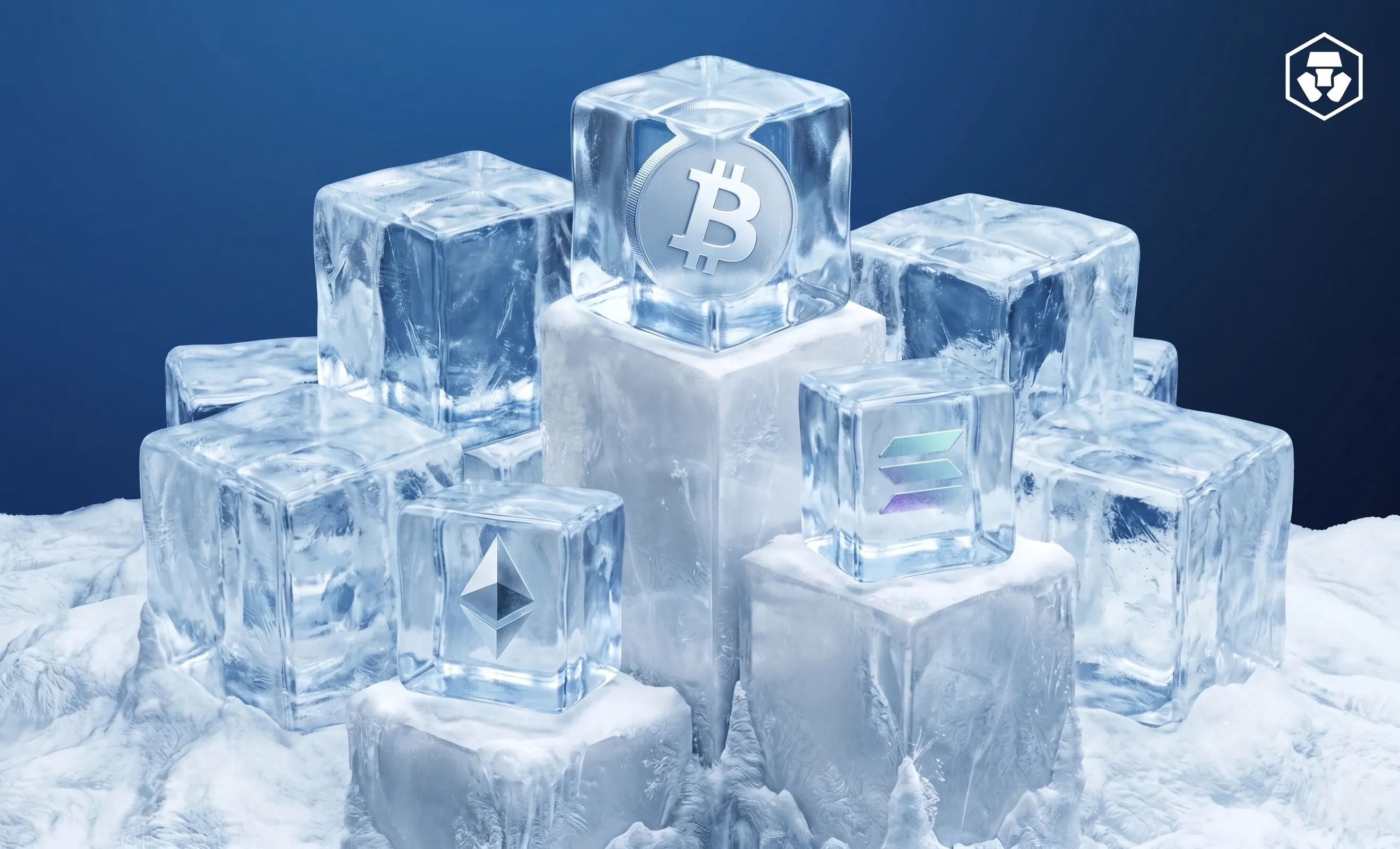
The digital asset market is defined by pronounced cycles. Periods of breakneck expansion are almost always followed by long, subdued stretches of consolidation. These cooling phases, while often nerve‑wracking for investors, have historically served as the breeding ground for the industry's most meaningful technological breakthroughs. In this comprehensive guide, we explore how these market cycles function, how to recognize the warning signs of an approaching crypto winter, and how past winters have shaped today's blockchain landscape.
Defining a Crypto Winter: The Anatomy of a Market Freeze
A crypto winter refers to an extended period of sustained price contraction and dramatically reduced trading activity. Unlike a routine market dip that lasts days or weeks, a winter sees asset prices remain significantly below their all‑time highs for months or even years. The freeze goes far beyond price charts: it chills venture capital funding, slows the launch of new protocols, and drains the collective enthusiasm from the community.
At its core, a crypto winter acts as a structural reset for the entire industry. When the adrenaline of a bull run subsides, the market is forced to shift its focus from speculative price action to genuine utility. This phase operates like a harsh filter, separating projects built on sustainable technology from those that existed only because of cheap capital and retail hype. During the depths of a winter, only teams that deliver real-world infrastructure tend to survive and later thrive.
Bear Market vs. Crypto Winter: Understanding the Distinction
Though often used interchangeably, a crypto bear market and a crypto winter represent very different levels of severity. A bear market is a technical price event—commonly defined as a decline of 20% or more from recent highs. A crypto winter, by contrast, describes the entire climate of the industry: an extended period of negative sentiment that permeates venture capital, developer activity, and institutional hiring.
| Feature | Crypto Bear Market | Crypto Winter |
|---|---|---|
| Duration | Short to medium term (months) | Long term (12–18+ months) |
| Sentiment | Pessimism or panic | Apathy and low engagement |
| Primary Focus | Driven by price action | Driven by macroeconomic factors and lack of catalysts |
| Industry Impact | Temporary drop in trading volume | Slowdown in hiring, funding freezes, project delays |
Put simply, a bear market is what you see on the charts; a crypto winter is what you feel across the entire ecosystem—a deep chill that tests every participant's resilience.
A Historical Tour of Three Major Crypto Winters
History shows that these cycles are not anomalies—they are an inherent part of how the crypto market matures. Each winter had a unique trigger, yet all followed a familiar pattern of sharp correction, prolonged low‑volume consolidation, and eventual rebirth.
| Event | BTC Peak‑to‑Trough Decline | Description |
|---|---|---|
| Post‑Mt. Gox (2014–2015) | 85% | Triggered by the catastrophic collapse of Mt. Gox, then the world's largest Bitcoin exchange. Prices plummeted and the industry spent years overhauling security standards, ultimately giving rise to more robust custody solutions. |
| Post‑ICO Bubble (2018–2019) | 84% | The frenzy of 2017 saw countless Initial Coin Offerings raise billions, only for most to fail. Bitcoin's subsequent crash forced a reckoning, but out of these ashes emerged the first major DeFi protocols that would reshape finance. |
| FTX & CeFi Contagion (2022–2023) | 77% | Sparked by rising global interest rates and the implosion of the Terra (LUNA) ecosystem, followed by the fraudulent collapse of FTX. The resulting contagion wiped out multiple centralized lenders and sparked a global push for transparency and self‑custody. |
Six Warning Signs That a Crypto Winter Is Approaching
While nobody can call a market top with absolute certainty, several signals frequently emerge before the market settles into a long‑term deep freeze. Monitoring these indicators can help gauge the broader health of the ecosystem.
1. Sustained Decline in Trading Volume
When on‑chain and exchange volumes dwindle for weeks on end, it usually means both retail and institutional participants are stepping away, leaving a market starved of liquidity and momentum.
2. Macroeconomic Tightening
As central banks hike interest rates to combat inflation, capital flows out of risk‑on assets like cryptocurrencies and into traditional safe havens such as government bonds or money market funds. This shift sucks liquidity out of the market and accelerates price declines.
3. Dominance of Negative Sentiment
If the widely followed “Fear & Greed Index” lingers in the “extreme fear” zone for multiple months, it is a strong indication that the market has entered a psychological winter, where irrational despair replaces rational analysis.
4. Absence of New Narratives
In bull runs, stories like DeFi, NFTs, or metaverse hype attract waves of capital. When those stories fade and no compelling new narrative emerges to take their place, market momentum evaporates and prices drift sideways.
5. Global Regulatory Crackdowns
Heightened enforcement actions, lawsuits against major exchanges, or restrictive legislation often coincide with—and sometimes trigger—a market cooldown. As the industry scrambles to adapt to new compliance burdens, short‑term growth stalls.
6. Widespread Industry Layoffs
One of the most visible signs of a deepening winter is when prominent crypto firms—from exchanges to development studios—announce waves of layoffs. These cost‑cutting measures signal a long‑term revenue crunch and a collective retreat to survival mode.
How Long Does a Crypto Winter Typically Last?
Historical data suggests that a classic crypto winter lasts between 12 and 18 months, though each cycle is influenced by its own unique set of macroeconomic, regulatory, and technological factors. Many in the community look to the Bitcoin halving as a primary signal for a cycle shift. This pre‑programmed event, which occurs roughly every four years, slashes the new supply of Bitcoin in half. In the past, it has historically helped lead the market out of its prolonged cold phase by reigniting supply‑driven narratives.
During these sideways, low‑volatility periods, many long‑term believers turn to dollar‑cost averaging (DCA). Instead of trying to pinpoint the exact bottom—a fool's errand in turbulent markets—DCA involves purchasing a fixed amount of an asset at regular intervals (e.g., $100 every week). This systematic approach lowers the average entry price over time and removes the paralyzing stress of trying to time the market's exact turning point.
Navigate the Market with Confidence, Whatever the Season
- Download the Crypto.com App to manage your digital assets in one seamless, secure place.
- Track market movements by regularly visiting our Price page, which shows live data and historical trends so you never lose context.
- Set custom alerts in the app to receive real‑time notifications during periods of high volatility, ensuring you catch every major market shift.
- Commit to lifelong learning by exploring our Learn Hub, where you'll find in‑depth guides on market cycles, tokenomics, and blockchain infrastructure.
Frequently Asked Questions About Crypto Winters
Is it possible to predict when a winter will end?
There is no exact formula. The end of a crypto winter is typically driven by a confluence of factors, including clearer regulations, a reaffirmation of institutional interest, and a stabilizing macroeconomic backdrop. Historically, the Bitcoin halving has served as an important turning point, but it is never a guarantee.
Why do these cycles keep happening?
Financial markets, and especially nascent ones like crypto, tend to move in extremes. Periods of explosive, speculative growth overshoot the technology's actual utility. Corrections inevitably follow to bring valuations back to levels that reflect real‑world adoption and infrastructure.
Does every project survive a winter?
Absolutely not. Prolonged winters function as unforgiving stress tests. Projects with weak fundamentals, no product‑market fit, or unsustainable tokenomics are often wiped out. In contrast, those that continue building meaningful technology often emerge stronger when the next bull cycle begins.
Is it safe to buy crypto during a crypto winter?
Accumulating assets during a winter is a strategy employed by those who have high conviction in the long‑term potential of blockchain technology. However, this approach carries substantial risk: there is no assurance that prices will ever return to previous highs, and the timeline for recovery may stretch far beyond initial expectations.
Can I still earn rewards during a crypto winter?
Yes, to an extent. Even when asset prices are depressed, some decentralized finance protocols continue to distribute staking rewards or liquidity mining incentives to users who lock up their tokens. However, it is crucial to remember that the value of these rewards fluctuates with market conditions, and the underlying asset’s price decline can offset or surpass any yield earned.