
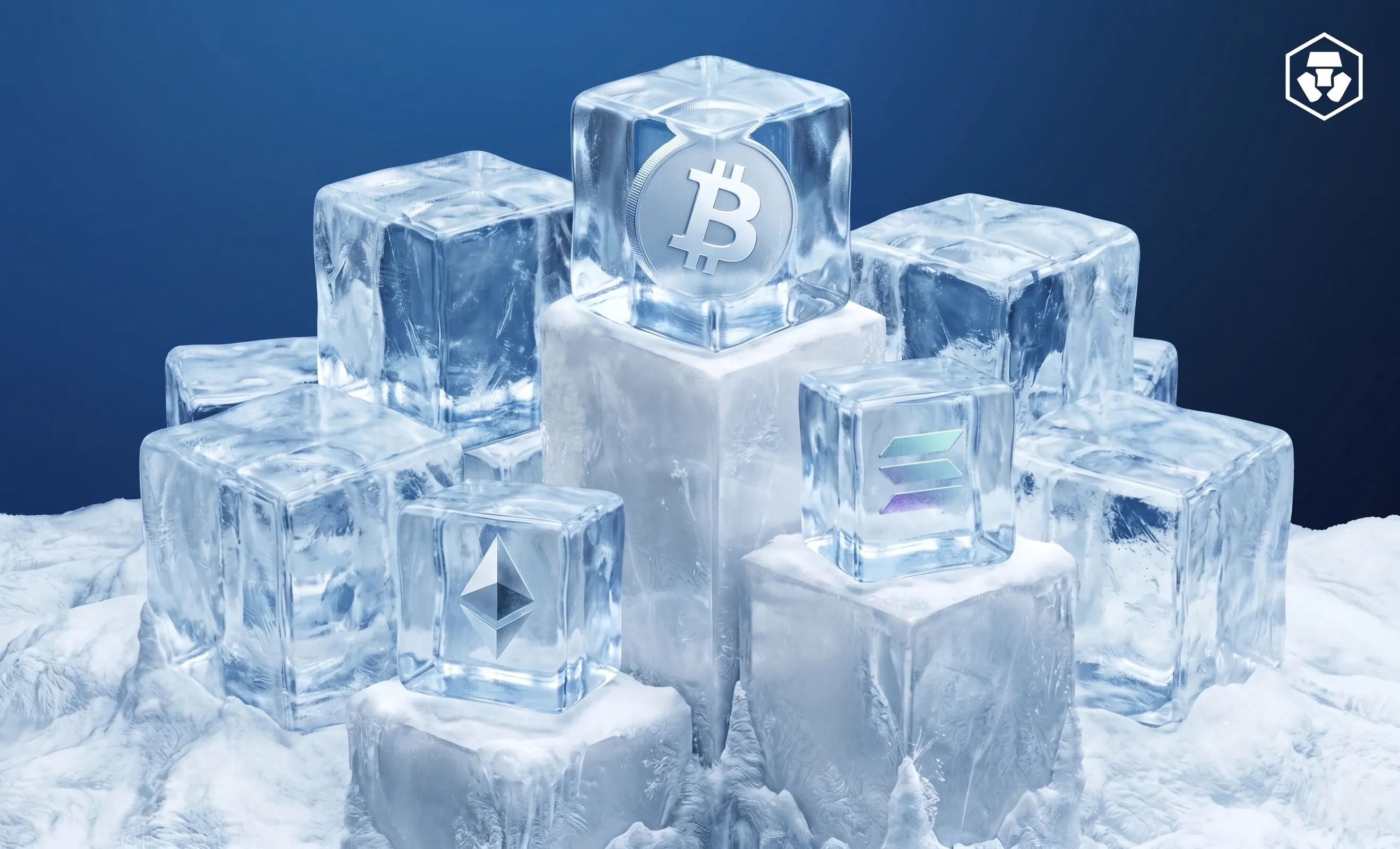
The digital asset market is defined by its rhythmic cycles. Periods of explosive growth are almost inevitably followed by long, quiet stretches of consolidation. While these cooling phases stir anxiety, they have historically served as the bedrock for the industry's most significant technological breakthroughs.
In this guide, you will gain a clear understanding of how these market cycles work, learn to spot the early signs of an approaching cold snap, and review how previous winters have shaped today's crypto and blockchain landscape.
What Is a Crypto Winter in a Market Cycle? Dissecting the Term
A crypto winter is an extended period of sustained price contraction and severely reduced trading activity. Unlike an ordinary market dip or a flash crash that resolves within days or weeks, a crypto winter sees asset prices languishing far below their previous peaks for months or even years, accompanied by a broad exhaustion of market enthusiasm.
The freeze extends beyond price charts, chilling everything from venture capital inflows to the pace of new protocol launches. Think of these periods as the market's structural reset. When the adrenaline of a bull run subsides, the entire industry is forced to redirect its focus from speculation to genuine utility.
Winters act as ruthless filters, separating projects built on sustainable technology from those that only floated on cheap capital and retail hype. You can monitor real-time prices on the Crypto.com Price page to see how current cycles stack up against historical data.
Crypto Bear Market vs. Crypto Winter: What's the Difference?
Many use these terms interchangeably, but they reflect different severities. A bear market is a technical price move—analysts commonly peg it as a 20% decline from recent highs. A crypto winter, on the other hand, describes the broader industry climate: negative sentiment that persists for ages and ripples through venture funding, hiring, and development velocity.
| Feature | Crypto Bear Market | Crypto Winter |
| Duration | Short to medium term (months) | Long term (usually 12 to 18+ months) |
| Sentiment | Pessimism or panic | Apathy and low engagement |
| Focus | Driven by price action | Driven by macro factors and lack of catalysts |
| Industry Impact | Temporary drop in trading | Slowdown in hiring and project funding |
A History of Past Crypto Winters
History proves that these cycles are a recurring feature of a maturing market. Every winter had a different trigger, yet all shared a pattern of sharp correction followed by a slow, grinding consolidation.
| Event | BTC Peak-to-Trough | Description |
| Post-Mt. Gox (2014–2015) | 85% | Triggered by the collapse of the world's largest exchange at the time. Bitcoin prices fell dramatically, and the industry spent years bolstering security standards. |
| Post-ICO Bubble (2018–2019) | 84% | BTC crashed after the 2017 boom in which many ICOs failed to deliver. This era eventually spawned the first major DeFi protocols. |
| FTX & CeFi Contagion (2022–2023) | 77% | Caused by rising global rates and the collapse of major ecosystems like Terra (LUNA) and FTX, spurring a call for greater transparency. |
Common Signs That a Crypto Winter Is Coming
While no one can call the exact market top, certain signals often surface before the market settles into a prolonged freeze. Monitoring these metrics can help gauge overall health.
1. Sustained Volume Drop
A persistent decline in trading activity often signals that both retail and institutional buyers are retreating to the sidelines.
2. Macroeconomic Shifts
When central banks hike interest rates, investors tend to rotate out of risk-on assets like crypto and into traditional cash equivalents.
3. Dominance of Negative Sentiment
If the Fear and Greed index lingers in the "extreme fear" zone for months, it's a strong sign that the market is entrenched in a winter phase.
4. Lack of New Narratives
When hype around sectors such as DeFi or NFTs cools down without a fresh catalyst to replace it, momentum often stalls.
5. Regulatory Crackdowns
Increased global scrutiny or restrictive policies may coincide with market cooling as the industry adjusts to new compliance requirements.
6. Widespread Industry Layoffs
A hallmark of winter is when major crypto firms begin reducing their workforce to preserve capital during low-revenue periods.
How Long Does a Crypto Winter Usually Last?
Historical data suggests a crypto winter typically lasts between 12 and 18 months. Yet every cycle is unique, shaped by distinct global dynamics. Many participants watch the Bitcoin halving as a primary signal for a cycle shift. Occurring roughly every four years, the halving cuts the supply of new BTC, which has historically helped lead the market out of its cold phase.
During these sideways stretches, some investors turn to a strategy called dollar-cost averaging (DCA). Instead of trying to pinpoint the bottom, DCA involves buying a fixed amount at regular intervals. This smooths the average purchase price and removes the emotional strain of timing a volatile market.
Navigate the Market with Confidence, No Matter the Season
- Download the Crypto.com App to manage your digital assets in one place.
- Track the market using our Price page to stay informed on live movements and historical trends.
- Set alerts in the app to receive notifications during periods of high volatility so you never miss a shift.
- Engage in lifelong learning by visiting our Learn Hub to read more guides on market cycles and blockchain technology.
FAQs About Crypto Winters
Is it possible to predict when a winter will end?
There is no exact formula. Factors like regulatory clarity, institutional adoption, and macroeconomic stability all contribute to the market's recovery timeline.
Why do these cycles keep happening?
Markets can swing to extremes. Bursts of rapid, speculative growth are usually corrected as prices realign with the real-world utility of the technology.
Does every project survive the winter?
No. Prolonged winters act as a stress test. Projects with weak fundamentals or unsustainable models are more likely to fail, while those building tangible technology tend to endure.
Is it safe to buy crypto during a crypto winter?
Buying during a winter is a strategy embraced by some who believe in the long-term potential of blockchain. However, it carries significant risk since there's no guarantee prices will reclaim previous highs.
Can I still earn rewards during a crypto winter?
Even with lower prices, some protocols still offer rewards for users who lock up assets. But the value of those rewards is subject to the same market volatility as the underlying asset.