
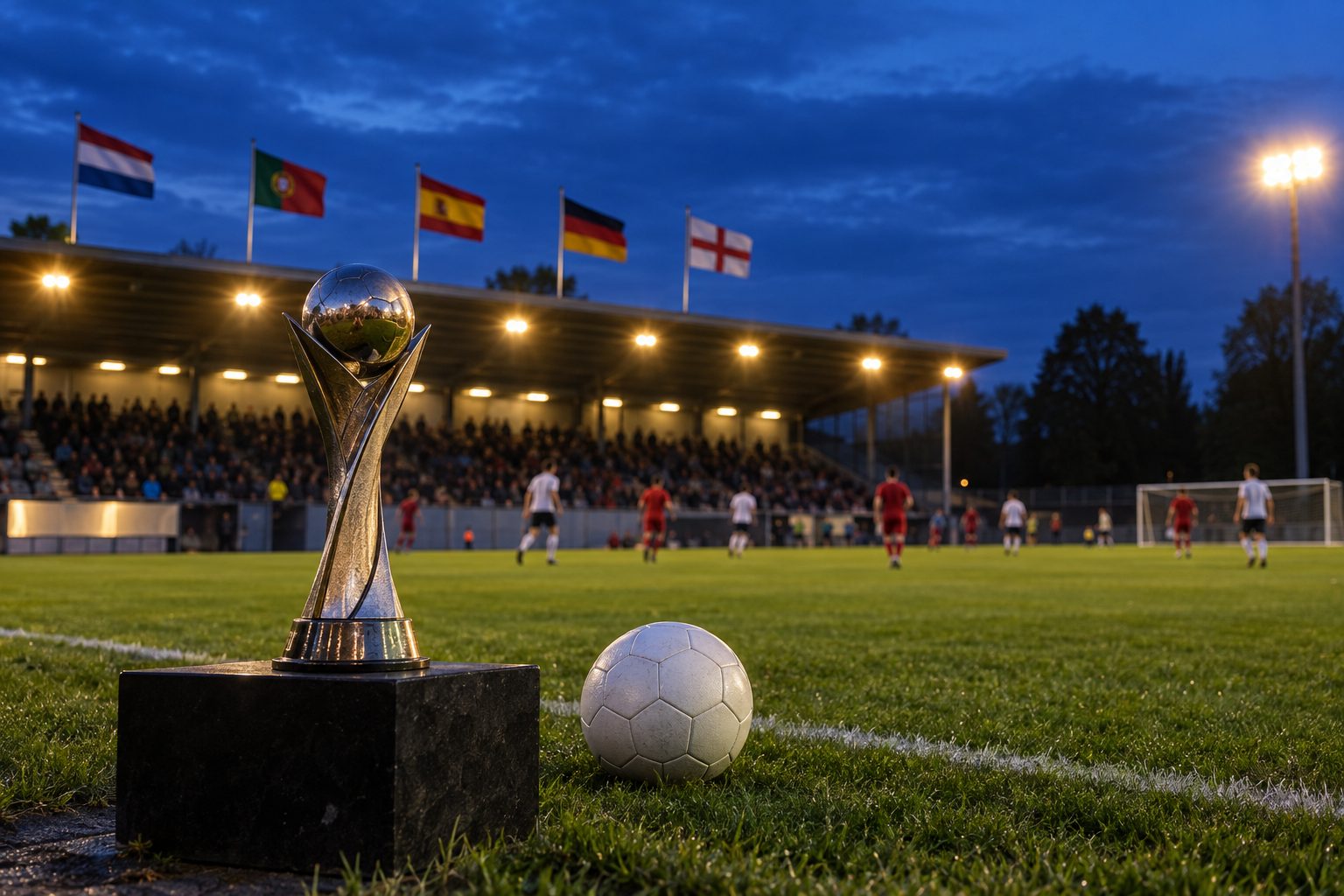
The Premier League International Cup is an Under-21 competition featuring the top 16 finishers in Premier League 2 and 16 invited clubs from abroad. It started in 2014/15 and has been a 32-team tournament since 2024/25.
What the competition is
The tournament sits within the International Programme for the Professional Development Phase and runs alongside the domestic league season. Its purpose is straightforward: Premier League 2 sides get regular matches against overseas opposition in a structured competition.
It is an Under-21 event, but matchday squads are not limited to only U21 players. Clubs may name 3 overage outfield players and 1 overage goalkeeper, which adds experience without changing the youth focus of the competition.
How the format works
| Stage | Structure | Rules |
|---|---|---|
| Group stage | 4 groups of 8 clubs, with 4 Premier League 2 teams and 4 invited international clubs in each group | Each club plays 4 group matches, always Premier League 2 opposition against international opposition; the top 2 in each group qualify; Premier League 2 clubs host group games at their main stadium or an approved alternative venue |
| Knockout stage | Quarter-finals, semi-finals and final | All ties are one-off matches; if level after 90 minutes, they go to extra time and then penalties; the semi-finals and final are played at the host club's main stadium |
The group stage is built to keep the international element front and center. Premier League 2 clubs do not play other Premier League 2 clubs in that phase, and invited overseas sides do not face each other there either.
How the competition grew
| Period | Number of teams | Change |
|---|---|---|
| 2014/15 | 16 | Competition introduced |
| 2016/17 | 24 | First expansion |
| Since 2024/25 | 32 | Set at 16 Premier League 2 clubs and 16 invited international clubs |
The competition has grown twice since it began.
Past winners
| Season | Winner |
|---|---|
| 2024/25 | Nottingham Forest |
| 2023/24 | Crystal Palace |
| 2022/23 | PSV Jong |
| 2020/21 | Not held |
| 2019/20 | Not finished (season curtailed) |
| 2018/19 | Bayern Munich |
| 2017/18 | Porto B |
| 2016/17 | Porto B |
| 2015/16 | Villarreal B |
| 2014/15 | Manchester City |
The winners list includes both English and overseas clubs. Manchester City, Crystal Palace and Nottingham Forest have all won it, while Porto B lifted the trophy in consecutive completed editions.
The competition has also featured players before they became established first-team names. The Premier League's examples include Kobbie Mainoo of Manchester United, Jarell Quansah of Liverpool and Alfie Gilchrist of Chelsea.
FAQ
How many teams are in the Premier League International Cup?
It has had 32 teams since 2024/25. The field is split evenly between 16 Premier League 2 clubs and 16 invited international clubs.
Can over-21 players play in the Premier League International Cup?
Yes, within set limits. A club may name 3 overage outfield players and 1 overage goalkeeper on its team sheet.
Which English clubs have won the Premier League International Cup?
Manchester City, Crystal Palace and Nottingham Forest are the English winners listed by the Premier League. The most recent English winner on that list is Nottingham Forest in 2024/25.
Who won the most recently listed edition?
In the Premier League's winners table published in November 2025, Nottingham Forest are the latest listed champions for 2024/25. The 2025/26 winner is not named there.