
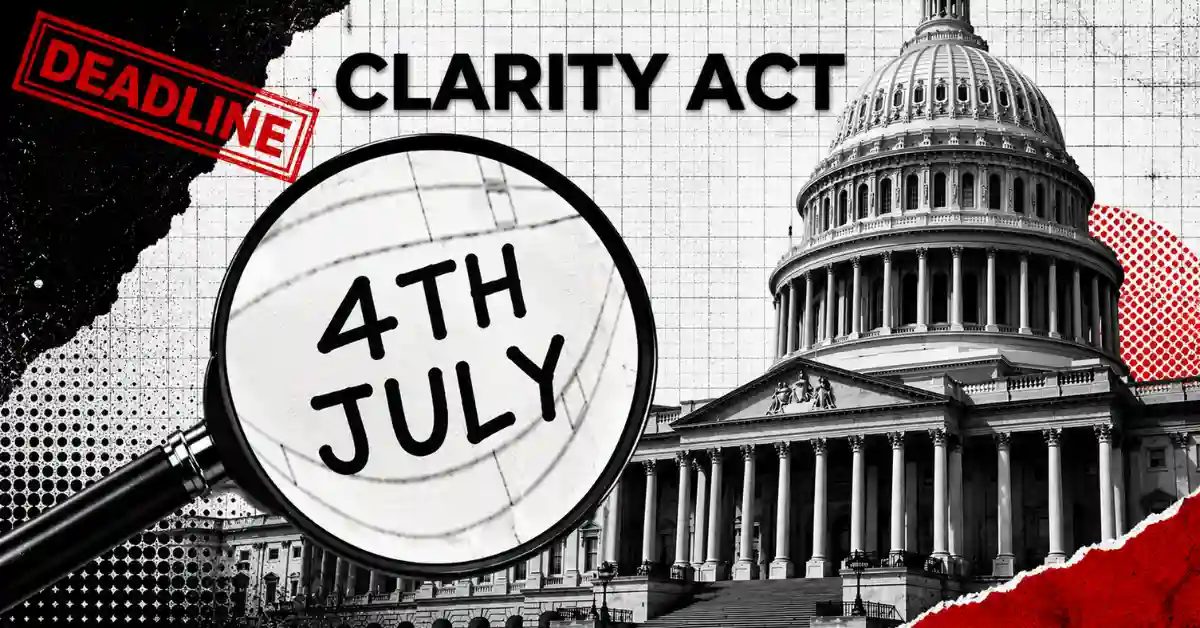
The White House is pressing for the Digital Asset Market Clarity Act, or CLARITY Act, to pass before July 4. Patrick Witt, the administration’s digital assets adviser, said the Senate Banking Committee is expected to move the bill this month and that most major disputes have already been worked through.
Witt said the fight over stablecoin yield, one of the hardest issues in the negotiations, has reached a compromise. Neither the crypto industry nor banks are satisfied with the outcome. Even so, he described himself as “very bullish, cautiously optimistic” on the bill’s chances. Senate Banking Committee Chairman Tim Scott said the legislation is “in the red zone,” while CFTC Chair Mike Selig said he hopes to see it signed by July 4.
The bill would split crypto oversight between the SEC and CFTC
If enacted, the CLARITY Act would draw clearer lines between SEC and CFTC jurisdiction over digital assets, set rules for stablecoin yields, and create a regulatory framework for crypto exchanges and institutions. It would also reduce the reliance on enforcement actions as the main form of crypto oversight in the United States.
That would address one of the longest-running policy disputes in the US digital asset market: which regulator controls what. The bill is also designed to put more formal compliance rules around stablecoin products, trading venues, and institutional participation.
Gillibrand says ethics language is a requirement
The measure still faces conditions from key lawmakers. Senator Kirsten Gillibrand, the lead Democratic negotiator on the bill, said at the Consensus 2026 conference on Wednesday that she will not back the legislation unless it includes provisions banning crypto insider trading by lawmakers and government officials.
Gillibrand, who wrote the 2012 STOCK Act barring congressional insider trading in equities, said three issues must be resolved before the Senate Banking Committee moves to markup: ethics rules, consumer protections, and safeguards against illicit finance and terrorism financing. Her timeline was less aggressive than the White House target. She said the bill could be done by August if negotiations go well.
Trump family conflict concerns remain part of the debate
Many Democrats are focused on possible conflicts of interest involving the Trump family. Bloomberg has estimated that the family has earned at least $1.4 billion from the crypto industry, adding political pressure to the negotiations around ethics standards.
The White House said it is working on ethics rules that would apply broadly to all government officials rather than targeting a specific person or family. How that language is drafted could shape whether the bill keeps bipartisan support as it moves forward.
Strategic Bitcoin Reserve update expected in coming weeks
Witt also said new details on the proposed US Strategic Bitcoin Reserve are expected in the coming weeks. The administration is currently auditing and centralizing crypto assets held by federal agencies after President Trump’s executive order, with structural details about the reserve still to come.
The next major checkpoint is the Senate Banking Committee markup in May. If the bill clears that stage, the July 4 target remains within reach. If it stalls there, passage is more likely to slip to August at the earliest.