
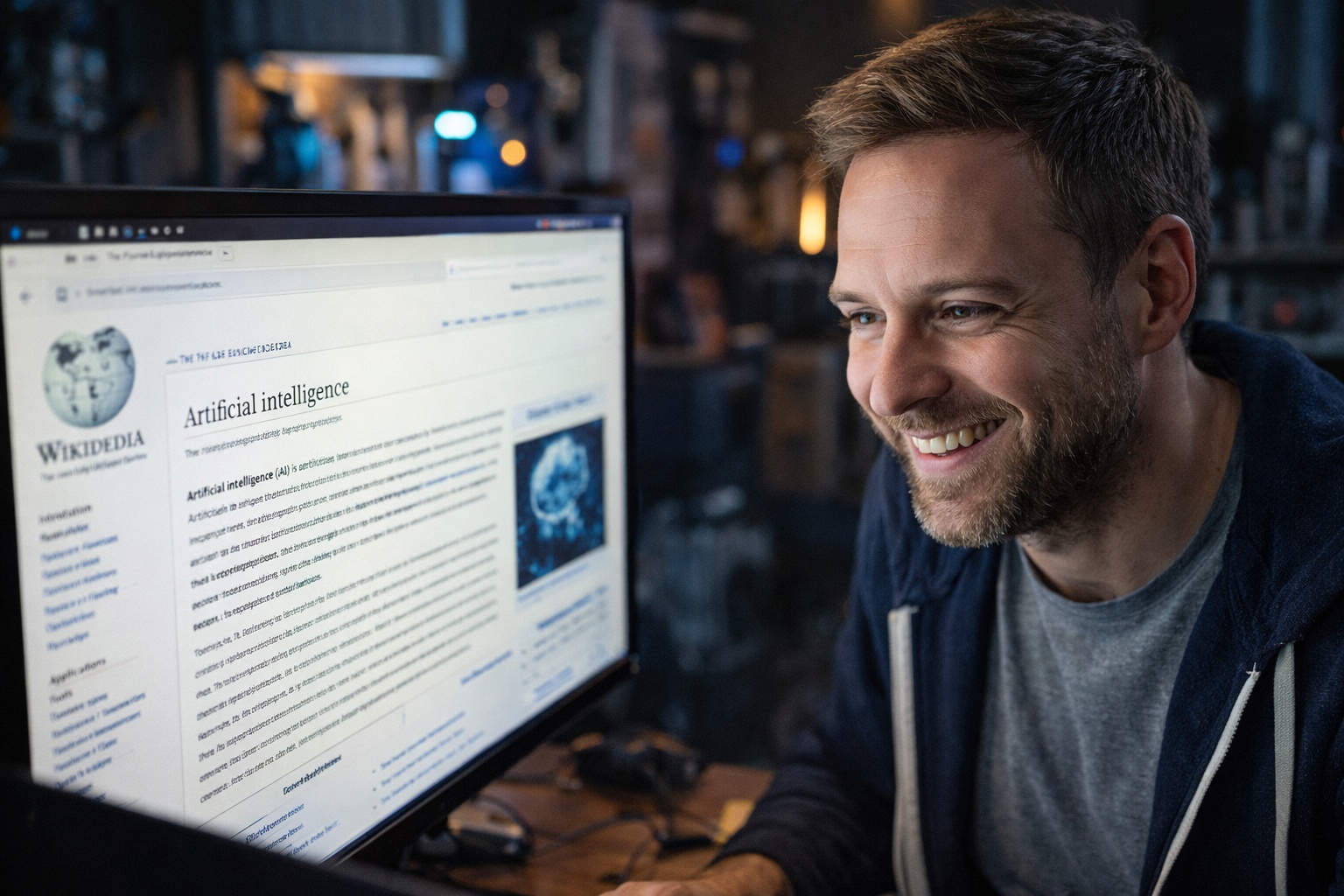
Wikimedia Foundation marked Wikipedia's 25th anniversary by formally commercializing its content. The world's largest online encyclopedia has signed licensing agreements with major AI players, moving beyond the era of free data scraping. With over 65 million articles across 300+ languages and nearly 15 billion monthly page views, Wikipedia remains the only non-profit among the top 10 global websites. It also ranks as one of the most valuable open datasets for training large language models.
AI Giants Switch to Paid Licensing
Rising demand from generative AI pushed Wikimedia to create Wikimedia Enterprise, a commercial product for large-scale content reuse. The foundation announced Ecosia, Microsoft, Mistral AI, Perplexity, Pleias, and ProRata have joined existing partners like Amazon, Google, and Meta. Companies that once scraped Wikipedia content freely now license data through APIs or data streams tailored to latency, stability, and format needs. Payment flows back to the non-profit, funding server operations, cross-language community support, and infrastructure investments.
Why Wikipedia Holds Strong Bargaining Power
Wikimedia claims Wikipedia is consistently rated a "highest-quality" open dataset for LLM training. Reason: approximately 250,000 active volunteer editors maintain content under strict policies of neutrality, verifiability, and reliable sourcing, backed by extensive version history and community review. This structural asset is hard for model developers to replicate. For AI firms, accessing Wikipedia content addresses licensing legality, ethical pressure, and model output accuracy. For Wikimedia, it turns passive traffic into predictable revenue – sustaining long-term investment in servers, multilingual editors, and tech development.
Human Editors Stay in Control, AI Only Assists
Despite deep licensing ties, Wikimedia's own AI strategy maintains a "human-first" stance. AI tools will help detect vandal edits, flag problematic articles, assist translation, and surface content – allowing volunteers to focus on source evaluation, writing, and community governance. CEO Maryana Iskander stressed that Wikipedia's core value lies in "human-driven" knowledge production. Even in the AI era, the platform will retain its global volunteer governance structure. AI is a tool to lower participation barriers, not to take over content decisions.