
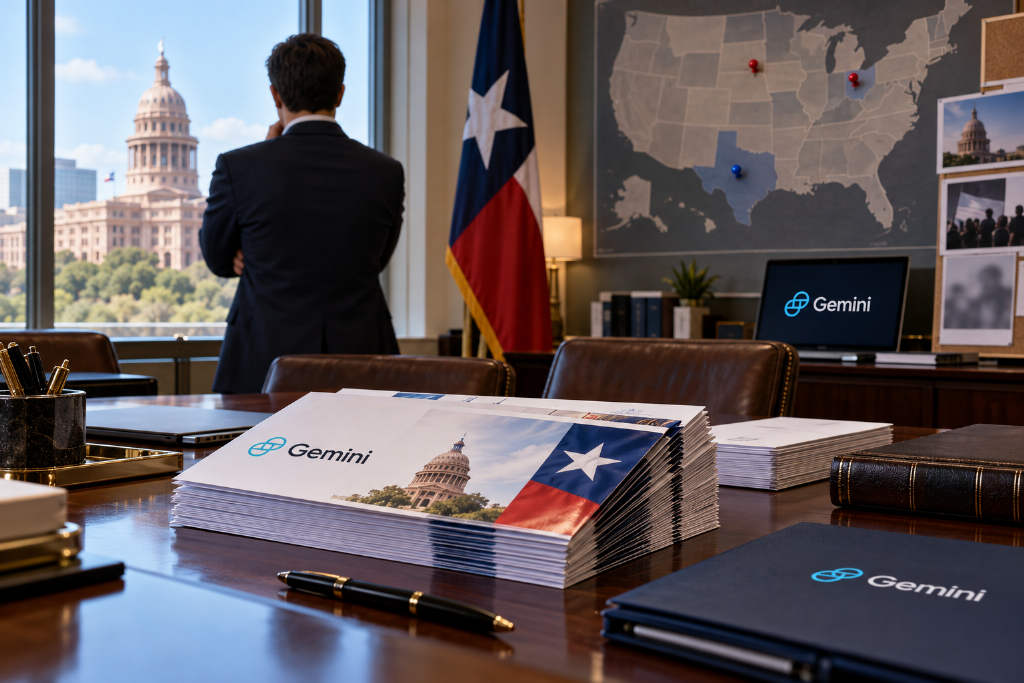
Digital Freedom Fund, the super PAC launched in 2025 by Gemini co-founders Cameron and Tyler Winklevoss, has started spending in Texas’ US Senate race as crypto-aligned political committees widen their reach beyond Ohio.
In a Tuesday filing with the US Federal Election Commission, the committee disclosed its first ad spending in Texas to back Republican candidate Ken Paxton for one of the state’s Senate seats. The PAC said it spent more than $81,000 on direct mail supporting Paxton and opposing Democratic candidate James Talarico. Early voting in Texas had already begun at the time of the filing.
Digital Freedom Fund expands its 2026 midterm spending
Digital Freedom Fund said the new expenditures were part of a broader effort in Senate races tied to the 2026 midterm elections, with activity aimed at voters in Texas, Iowa and Ohio.
The Winklevoss-backed super PAC, which reported raising about $34 million as of Sept. 30, is not limiting its spending to Texas. It also disclosed additional ad activity in Ohio’s Senate race between Republican Jon Husted and Democrat Sherrod Brown, bringing its total support for Husted to about $7 million.
The spending is flowing toward candidates the committee sees as more likely to support crypto policy and legislation. That push comes as event contracts on prediction market platforms Kalshi and Polymarket heavily favored Democrats to retake majority control of both the House of Representatives and the Senate in 2027.
Control of each chamber would matter for bills such as the Digital Asset Market Clarity Act. The market structure measure failed to pass a procedural vote in the Senate last month.
Paxton had already received support from another crypto-linked PAC
Paxton had already benefited from $500,000 in supportive ads ahead of the May Republican primary, where he defeated incumbent Senator John Cornyn.
Those ads were funded by Fellowship PAC, which the report said was backed by Anchorage Digital and Cantor Fitzgerald. The ad buy went through Nxum Group, a marketing company co-founded by Bo Hines, a former crypto adviser to US President Donald Trump who became CEO of Tether US after leaving the White House.
According to an October report from The Wall Street Journal, Nxum profited from Hines’ government role as he helped push a stablecoin bill while still holding a stake in the company. The report said Nxum received $6.3 million as part of a deal with stablecoin issuer Tether, and that the first payment was made while Hines was still serving at the White House.
Early voting in Texas began on Oct. 19, and Election Day is set for Nov. 3. Cointelegraph said it contacted the Talarico and Paxton campaign teams for comment but did not receive an immediate response.
Fairshake steps up spending in the Ohio Senate race
Fairshake, a separate PAC aligned with crypto industry interests and largely funded by Ripple Labs, Coinbase and Andreessen Horowitz, also reported a fresh round of spending this week. The committee disclosed more than $13 million combined for a direct mail campaign supporting candidates it described as pro-crypto.
Its latest FEC filing showed more than $4 million spent to oppose independent candidate Dan Osborn in Nebraska’s Senate race, along with another $9 million to support Husted over Brown in Ohio.
The Ohio Senate contest has already drawn heavy PAC spending. As of Wednesday, Fairshake had invested about $56 million, while Digital Freedom Fund reported $7 million in total media purchases.
Texas has also become a focus for Republican donors trying to stop Democrats from taking the state’s Senate and gubernatorial seats for the first time in more than 30 years, according to the report.
FEC filings also show major funding tied to Elon Musk
FEC filings showed that Elon Musk, the world’s richest person and founder of SpaceX, had poured more than $150 million into the Senate Leadership Fund. That PAC supports Republican Senate candidates and sent the same amount Musk donated to the Texas PAC that has backed Paxton through ads.



